Loiseleuri Primrose
Primula × loiseleurii · hybrid auricula primrose · Primula × loiseleurii
The Gardening Year
Best months in UK gardens · full planting calendar →
🖨 Printable care card (PDF)At a Glance
| Botanical name | Primula × loiseleurii |
|---|---|
| Common name(s) | Loiseleuri primrose, hybrid auricula primrose, Primula × loiseleurii |
| Family | Primulaceae |
| Plant type | perennial (semi-evergreen perennial, forming a basal rosette of simple leaves) |
| Height × Spread | 10–50 cm × 0–50 cm |
| Position | Partial shade, Full sun |
| Soil | gritty, well-drained, slightly alkaline; sharply drained alpine compost |
| Flowering | March–May |
| Toxicity | — |
| Native range | Cultivated hybrid of garden origin (Primula allionii × Primula auricula, both European alpine species); not found in the wild. |
Loiseleur's primrose is a compact alpine hybrid for a stone trough, crevice bed or alpine house, where its rosettes can enjoy bright light, cool roots and shelter from persistent winter rain. Its spring flowers sit close above the foliage, making this a plant best displayed near eye level rather than lost in a border.
Overview
Primula × loiseleurii belongs to the specialist group of alpine primulas associated with auriculas and Primula allionii. The multiplication sign in its name indicates hybrid origin, although its precise treatment is not uniform across botanical and horticultural databases: Kew currently places the name in synonymy under Primula × obovata, while the Royal Horticultural Society continues to list garden cultivars as P. × loiseleurii. For garden records and plant labels, retaining the familiar RHS form is practical, while recognising that it is a hybrid rather than a naturally occurring British species.
This is not the moisture-loving primrose of a damp woodland edge. It is a small alpine subject whose success depends on open compost, excellent drainage around the crown and protection from prolonged rain. In many UK gardens, the most reliable setting is a raised stone trough, crevice garden, cold frame or unheated alpine house. Such positions let the grower control winter moisture without depriving the plant of the cool conditions and fresh air it needs.
Its scale makes thoughtful placement important. A rosette only a few centimetres high can disappear beside vigorous perennials, coarse gravel or spreading ground cover. A shallow terracotta pan on an alpine bench, or a pocket near the rim of a trough, displays the flowers and foliage properly. Companion plants should be equally restrained: small saxifrages, compact pinks and other slow alpines can work, provided none casts dense shade or encroaches on the rosette.
The plant is grown primarily for its early display and collector interest. Named selections provide dependable flower colour and form, whereas seedlings may vary. UK gardeners should buy from an alpine or auricula specialist when possible, keep the label, and avoid assuming that every white-flowered P. allionii hybrid is correctly named P. × loiseleurii.
Appearance
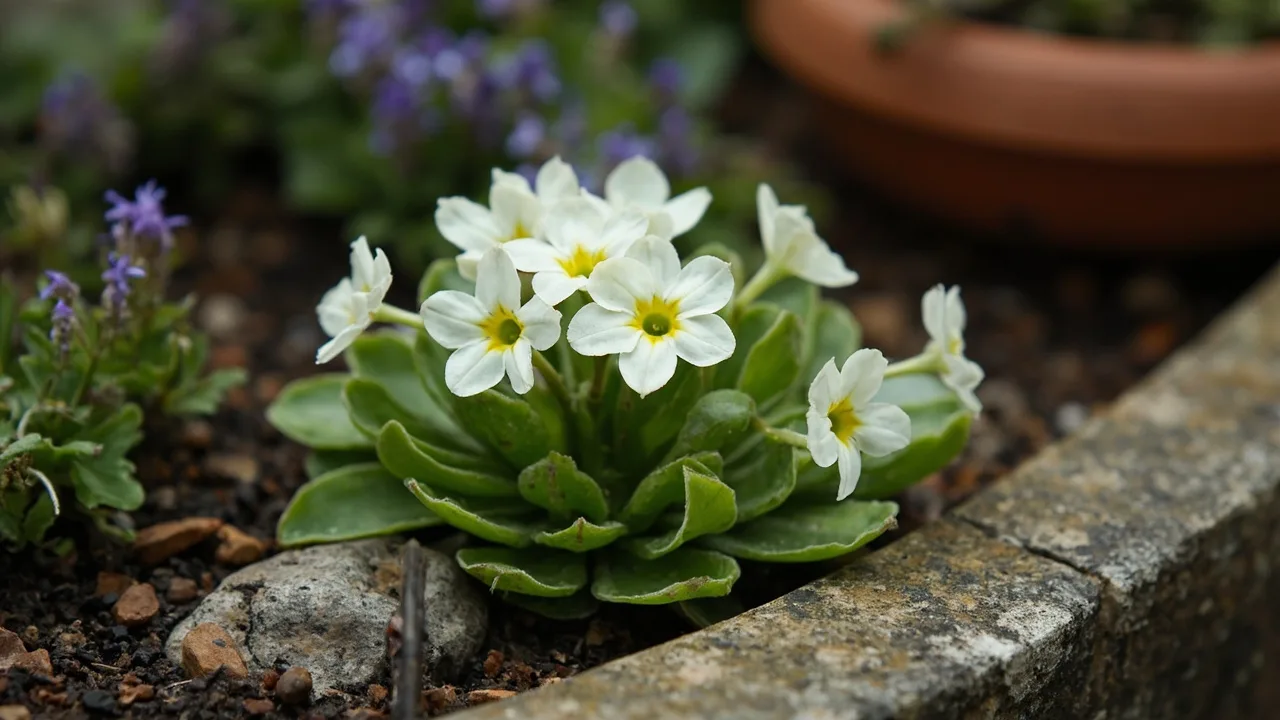
Loiseleur's primrose forms tight basal rosettes which slowly increase into a low clump. Established plants are commonly about 5-10 cm tall and 15-20 cm wide, though an old specimen may make a broader cushion if it remains healthy. The compact habit is a principal part of its appeal: the plant appears neat and architectural even when it is not flowering.
Leaves are simple, fleshy and spoon-shaped to obovate, often pale or mid-green and sometimes greyish. They may be slightly toothed towards the tip. Accounts of the hybrid group often note a sticky upper surface, a feature associated with P. allionii, but foliage details vary among named selections. Rosettes can remain evergreen in a protected site or become semi-evergreen after difficult winter weather.
Flowers are carried singly or in small numbers on very short stems, so they appear to rest just above the leaves. They are generally broad and flat, with five overlapping lobes and a contrasting central eye. The named forms most frequently documented by the RHS are white or pale-coloured. 'Aire Waves', for example, has fragrant pure-white flowers with a greenish-yellow eye and spoon-shaped, toothed foliage. Other selections show differences in petal shape, eye colour and shade, so descriptions should be attached to a cultivar rather than applied to the entire hybrid group.
In the UK, the principal flowering period is early spring, most often March and April. A plant under unheated glass may open earlier than one in an exposed outdoor trough, while a cold northern garden may delay the display. Flowers are vulnerable to prolonged rain and splashing compost; overhead cover helps keep them clean and extends their useful life without requiring artificial heat.
After flowering, the rosette remains the main ornamental feature. Seed capsules are not generally important to the display and may be removed unless seed is wanted. Plants raised from seed can vary and should not be distributed under a parent's cultivar name. Vegetative propagation is therefore the appropriate method for maintaining a named selection.
Growing Conditions
The essential requirement is sharp drainage. In a pot, use a loam-based compost opened with roughly one-third to one-half horticultural grit, fine pumice or another stable mineral aggregate. The mix should retain enough moisture for active roots but must not slump into a dense, airless mass. A thin grit top-dressing keeps wet compost away from the leaf bases, reduces splashing and makes it easier to see whether the crown has been planted too deeply.
A neutral to slightly alkaline root environment suits the limestone associations of the parentage. Where local water or compost is strongly acidic, a loam-based alpine mixture is usually easier to manage than a peat-heavy multipurpose compost. Avoid rich, moisture-retentive material, thick organic mulch and congested planting pockets. These promote lush growth while increasing the risk of crown and root decay.
Give bright light with protection from intense midday sun. An east-facing trough, a north- or east-facing crevice, or a well-ventilated alpine house bench is suitable. Under glass, light shading during the hottest part of late spring and summer can prevent scorching, but permanent heavy shade produces weak, open growth and poor flowering. Outdoors, shelter from prevailing winter rain is more useful than enclosing the plant in a humid cover.
Air movement is crucial. A closed cold frame may exclude rain yet remain dangerously stagnant, especially when mild autumn weather keeps the foliage damp. Prop the lid whenever conditions allow and remove dead leaves before they collect in the rosette. The aim is cool, bright and airy cultivation, not warmth. Heated glass is unnecessary and can encourage premature, soft growth.
Stone troughs and terracotta pans are particularly effective because they drain freely and suit the plant's modest root system. A rock-garden pocket can also work where the bed is raised, the soil is gritty and the crown is shielded from repeated winter saturation by a projecting stone. Heavy clay borders, bog gardens and positions beneath dripping shrubs are unsuitable. In wetter western and northern districts, movable containers or an alpine house provide valuable control; in drier eastern and southern gardens, a sheltered outdoor crevice may be sufficient.
Planting and Care
Plant pot-grown specimens in spring after the main flowering display or in early autumn while the soil remains workable. Spring planting gives roots a full growing season before their first winter and is the safer default in cold or wet districts. In mild, free-draining gardens, September planting can also establish well. Do not disturb a plant merely because it is flowering when purchased; keep it in its pot until the display finishes, then move it carefully.
Choose a shallow pot with an unobstructed drainage hole, or prepare a trough pocket with a deep layer of open mineral material beneath the root zone. Ease the rootball from its nursery pot and loosen only circling outer roots. Set the plant so the base of the lowest leaves remains above the compost surface. Firm gently, water once to settle the mix, then add a thin layer of clean horticultural grit without burying the crown.
During active growth from spring into early autumn, water thoroughly and allow excess to drain. In pots, watering from below or directing water onto the compost rather than into the rosette reduces wet foliage. Let the surface approach dryness between applications, but do not allow the fine roots to become repeatedly bone dry. Container plants can need regular attention during a sunny April spell even though the air remains cool.
Reduce watering as growth slows. Winter compost should stay only lightly moist, never saturated. Rain exclusion is especially valuable at this stage, but an occasional careful watering may still be necessary for a pot under cover. Check the compost rather than following a rigid schedule. A terracotta pan in a breezy frame dries at a different rate from a plastic pot in a shaded trough.
Feed sparingly. A half-strength balanced or high-potash liquid feed every two or three weeks from bud development until flowering ends is sufficient for a container plant. Stop feeding after the spring display and do not feed during winter. Excess nitrogen encourages oversized, soft leaves that trap moisture and obscure the compact form.
This plant does not require conventional pruning. Deadhead after flowering if seed is not needed, and remove damaged or decaying leaves with clean, narrow scissors or tweezers. Inspect the centre of each rosette in early autumn and clear trapped debris. Avoid cutting into sound evergreen foliage simply to make the plant look tidier.
Propagate named cultivars by division. After flowering, lift a mature, multi-rosetted clump and separate offsets only where each division has roots or a sound basal piece. Pot divisions individually into fresh gritty compost, place them in bright shade and keep them just moist while roots establish. Seed may be collected and sown, but hybrid seedlings will vary and must not inherit the cultivar name of the parent.
Repot when drainage deteriorates, roots crowd the container or the plant becomes difficult to water evenly. Annual repotting is useful in small pans, while a stable trough specimen may be left longer if it remains vigorous. Replace collapsed compost, trim dead roots, refresh the grit and inspect for root pests. Seasonal care is chiefly preventive: ventilate in autumn, shelter from winter rain, resume careful watering as buds expand, and shade only when spring sunshine becomes strong.
Common Problems
Crown and root rot are the greatest cultural threats. Early signs include yellowing leaves, a loose rosette, wilting despite damp compost, or soft brown tissue at the base. Waterlogging, a buried crown and stale, compacted compost are common causes. Remove affected material, cut back to sound tissue if possible, repot into a clean, sharply drained mixture and improve ventilation. A badly rotted single rosette may be impossible to save, so prevention is more reliable than treatment.
Grey mould, or botrytis, develops where fading flowers and dead foliage remain damp in still air. Grey, fuzzy growth and soft patches can spread through a compact rosette. Remove affected material promptly, space pots so air can circulate and avoid overhead watering late in the day. Under glass, regular ventilation is more valuable than keeping the frame tightly shut.
Vine-weevil adults make irregular notches around leaf edges, but their cream, C-shaped larvae cause the more serious damage by eating roots. A plant may loosen in its pot or collapse unexpectedly. Examine roots when repotting and isolate suspect nursery stock. Biological controls based on beneficial nematodes can be used when compost temperatures match the product instructions; application timing and storage requirements vary, so follow the current label rather than relying on a fixed calendar date.
Aphids can cluster around flower buds and tender leaves, particularly under cover. Small infestations can be removed by hand or washed away while keeping the crown from remaining wet. Repeated outbreaks often indicate soft growth or poor ventilation. Inspect neighbouring primulas and weeds, as these may maintain the population.
Slugs and snails chew holes in leaves and petals, sometimes removing a small rosette's centre. Inspect after dark, keep the bench and trough surroundings free of hiding places, and use barriers or controls appropriate to the garden. Grit top-dressing keeps foliage cleaner but should not be treated as a complete slug barrier.
Failure to flower may follow deep shade, excessive feeding, deteriorated compost or a plant that has become congested. Move the pot into brighter conditions gradually, reduce nitrogenous feeding and divide or repot after the normal flowering period. Plants newly divided into single rosettes may need time to rebuild before producing a strong display.
Leaf scorch appears as pale or brown patches after sudden exposure to strong spring sun, especially under glass. Increase ventilation and introduce shading gradually rather than moving a protected plant directly into full midday light. Conversely, elongated, lax rosettes point to insufficient light. Balanced exposure should produce compact leaves without bleaching.
Popular Varieties
Named selections are specialist alpine plants, and availability varies from year to year. The RHS currently records several cultivars under Primula × loiseleurii, while UK nursery listings provide an additional check that at least some remain in cultivation. Buyers should use the full cultivar name and confirm identity with the supplier, because related P. allionii hybrids are sometimes catalogued together.
- 'Aire Mist' has white flowers and a neat, low habit. It is recorded by the RHS and has also appeared in current UK specialist-alpine nursery listings, making it the most readily evidenced choice for gardeners seeking the familiar white form.
- 'Aire Waves' is described by the RHS as compact and evergreen, with spoon-shaped, toothed pale-green foliage and fragrant pure-white flowers centred by a greenish-yellow eye. Its flower edges give a softer, waved effect than a plain, flat-petalled selection.
- 'Starlight' is an RHS-listed selection. Publicly available descriptions are less detailed than for 'Aire Waves', so its exact colour and dimensions should be confirmed with the supplying nursery rather than inferred from its name.
- 'White Waves' is also listed by the RHS under this hybrid. As with any scarce alpine cultivar, verify the current nursery description and plant label before purchase.
Other names may appear in collections, but not every cultivar sold among P. allionii hybrids necessarily belongs under P. × loiseleurii. 'Clarence Elliott', 'Elizabeth Burrow', 'Anna Griffith' and 'Marjorie', for example, should not be presented as cultivars of this nothospecies without a specific authoritative record. This distinction matters in an enthusiast group where parentage and naming have changed over time.
Sources & Further Reading
- Royal Horticultural Society, Primula × loiseleurii 'Aire Waves': https://www.rhs.org.uk/plants/118094/primula-loiseleurii-aire-waves-(au)/details, accessed 2026-07-22.
- Royal Horticultural Society, Primula × loiseleurii 'Aire Mist': https://www.rhs.org.uk/plants/214773/primula-loiseleurii-aire-mist-(au)/details, accessed 2026-07-22.
- Royal Horticultural Society, Primula × loiseleurii 'Starlight': https://www.rhs.org.uk/plants/158358/primula-loiseleurii-starlight-(au)/details, accessed 2026-07-22.
- Royal Botanic Gardens, Kew, Plants of the World Online, Primula × loiseleurii: https://powo.science.kew.org/taxon/urn:lsid:ipni.org:names:702209-1, accessed 2026-07-22.
- National Auricula and Primula Society, European Primula hybrids: https://www.auriculaandprimula.org.uk/galleries/european_primula_hybrids.html, accessed 2026-07-22.
- Border Alpines, Primula × loiseleurii 'Aire Mist': https://borderalpines.co.uk/products/primula-x-loiseleurii-aire-mist, accessed 2026-07-22.
Pests and Diseases
| Problem | Symptoms | Management |
|---|---|---|
| Primula rust (Puccinia primulae) | Clusters of tiny, cup-like orange or brown spore structures appear on the undersides of leaves. | Remove and destroy infected leaves immediately to prevent spread; avoid overhead watering. |
| Leaf spot | Yellow spots with brown centers develop on foliage, which may drop out leaving holes in the leaves. | Improve air circulation and remove affected leaves; ensure good garden hygiene by clearing debris. |
| Slugs and snails | Irregular holes chewed into young shoots, leaves, and flower buds, often accompanied by slime trails. | Use physical barriers like copper tape or eggshells, and hand-pick pests at night. |
| Powdery mildew | A white, dusty fungal growth covers the upper surfaces of leaves and stems. | Ensure good air circulation around plants and avoid wetting foliage when watering. |
| Root rot | Leaves turn yellow or brown and wilt despite adequate moisture, often due to waterlogged soil. | Plant in well-draining soil and avoid overwatering, especially during winter dormancy. |
For step-by-step help, read Dealing with Slugs and Snails and Treating Powdery Mildew. Or browse the full plant problem solver to diagnose an issue by symptom.
Recommended Products
GardenWizz earns a commission from qualifying purchases made through affiliate links on this page (including links within the article) — as an Amazon Associate, and from Thompson & Morgan via the Awin network. This does not affect the price you pay. See our disclaimer for details.