Prunus Cistena
Prunus × cistena
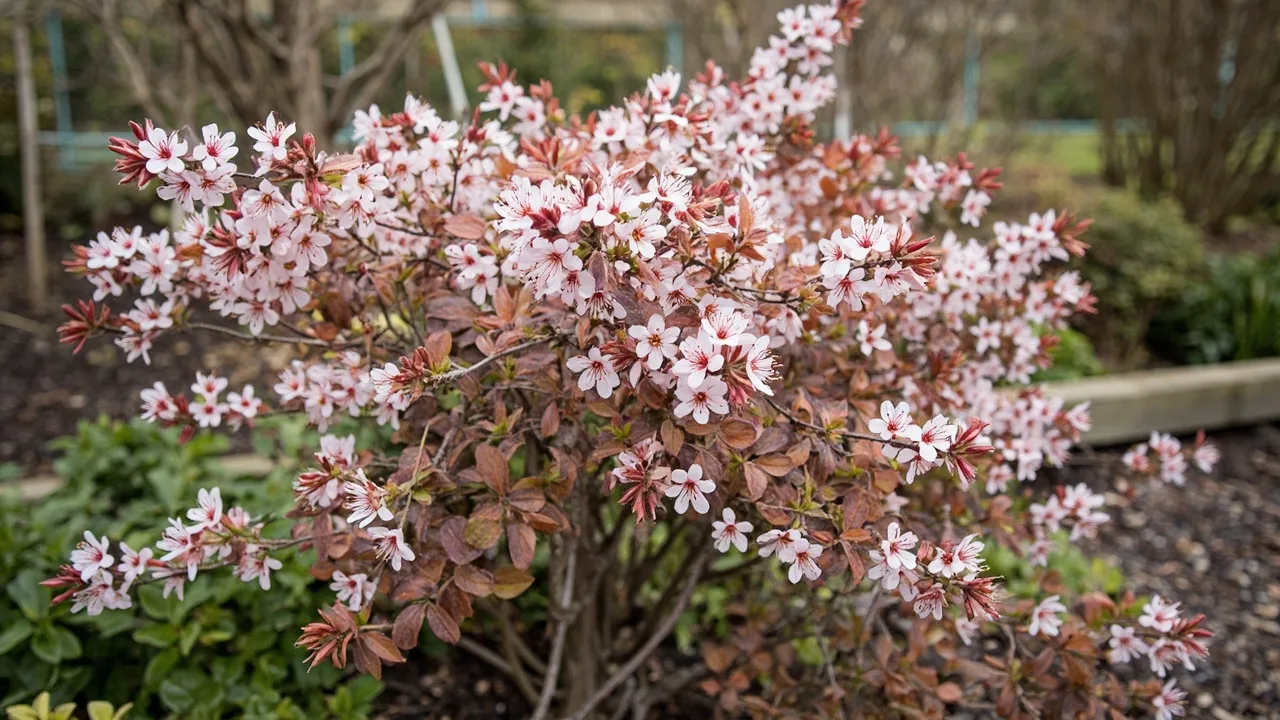
The Gardening Year
Best months in UK gardens · full planting calendar →
🖨 Printable care card (PDF)At a Glance
| Botanical name | Prunus × cistena |
|---|---|
| Common name(s) | Prunus cistena |
| Family | Rosaceae |
| Plant type | shrub (deciduous) |
| Height × Spread | 1–2.5 m × 1–2.4 m |
| Position | Full sun, Partial shade |
| Soil | moist but well-drained or well-drained; chalk, clay, loam, sand; acid, alkaline, or neutral pH |
| Flowering | April–May |
| Toxicity | — |
| Native range | — |
Overview
Purple-leaf sand cherry (Prunus × cistena) is one of the most reliable shrubs for season-long foliage colour in UK gardens. A hybrid of the North American sand cherry (Prunus pumila) and the purple-leaved cherry plum (Prunus cerasifera 'Atropurpurea'), raised in the United States in the early twentieth century, it carries deep red-purple leaves from spring leaf-out through to autumn, with a flush of small white-to-blush flowers in April or May. In the UK it is usually grown as a bushy deciduous shrub about 1.5–2.5 m tall and wide, although nursery stock is often top-worked onto a clear stem to form a small weeping standard for lawns and patios. It belongs to the Rosaceae family and behaves as a hardy deciduous shrub across all UK regions, including the colder parts of Scotland and northern England. [Source: rhs.org.uk/plants/47608/prunus-x-cistena/details, accessed 2026-07-21; plants.ces.ncsu.edu/plants/prunus-x-cistena/, accessed 2026-07-21]
Appearance
The defining feature of Prunus × cistena is its foliage. Leaves are narrow-ovate to lanceolate, 5–7 cm long, with a finely serrated margin, arranged alternately along the stem. In full sun they emerge a deep red-purple and deepen to almost black-purple through the summer; in shade the colour fades towards a duller bronze-green, which is one of the easiest ways to spot a plant that has been sited too dimly.
In mid- to late spring — typically April into May across most of the UK — the previous year's wood carries a dense display of single, five-petalled, white-to-blush-pink flowers, each about 1.5 cm across and mildly fragrant. On a well-grown bush the blossom smothers the branches for two to three weeks and is one of the earliest useful nectar sources for solitary bees and hoverflies. The flowers are followed by small (1–1.5 cm) purple-black cherries that are technically edible but very tart and astringent; they rarely set heavily in the UK, but where they do, birds take them quickly.
Mature size depends on training. As a shrub, expect roughly 1.5–2.5 m tall and wide. As a top-grafted standard on a 1–1.2 m stem, plants reach 2.5–3.5 m tall with a slightly weeping head. Stems are slender, upright and dark purple-brown; on grafted plants any suckers that appear from the rootstock at the base should be rubbed off as soon as they are seen. Bark on older wood becomes grey and slightly fissured with age. Autumn colour is briefly reddish-purple before leaf fall.
[Source: rhs.org.uk/plants/47608/prunus-x-cistena/details, accessed 2026-07-21; gardenia.net/plant/prunus-cistena-purple-leaf-sand-cherry, accessed 2026-07-21]
Growing Conditions
Prunus × cistena performs best in full sun, where the leaf colour deepens and the spring flower display is heaviest. It tolerates light dappled shade, but the foliage greens up and the plant loses much of the contrast that makes it worth growing in the first place.
Soil should be moist but well-drained and moderately fertile — a typical loam is ideal. The species tolerates a wide pH range (roughly 5.5–7.5) but dislikes shallow, hungry chalk and any ground that stays waterlogged through winter. Many gardeners in the UK set it against a south- or west-facing wall, where the extra warmth intensifies the leaf colour and the wood ripens well before winter.
It is rated hardy across the UK; the RHS hardiness badge for the plant indicates a rating consistent with reliable garden performance throughout the country, including colder inland districts. (The actual H-code is held in the structured field and rendered by the badge — no number is stated here.) It tolerates exposed sites and urban pollution better than many Prunus, although young plants benefit from a sheltered position while they establish. [Source: rhs.org.uk/plants/47608/prunus-x-cistena/details, accessed 2026-07-21]
Planting and Care
Plant container-grown stock in autumn (October–November) or early spring (March); bare-root plants, where available, should be planted during the dormant season. Set the top of the rootball level with the surrounding soil. On grafted standards, keep the graft union well clear of the soil and rub off any suckers from the rootstock as soon as they appear at the base.
Water thoroughly during the first growing season; once established, Prunus × cistena is reasonably drought-tolerant and copes well with the typical UK summer. Mulch annually in late winter or early spring with well-rotted garden compost or bark, and apply a balanced slow-release fertiliser on poorer soils. In a container, use a loam-based compost such as John Innes No. 3 and keep the plant well watered through the summer; standards in pots will need staking.
Prune immediately after flowering in late May or June, shortening the flowered shoots and removing any dead, crossing or weak wood. Like most Prunus, it dislikes hard renovation cuts — limit these to one major cut per year on established plants. On grafted standards, remove rootstock suckers at the base throughout the year. Pruning in mid-winter should be avoided, as open wounds are vulnerable to the fungal disease silver leaf (Chondrostereum purpureum), whose spores are airborne in damp winter weather.
Propagation is by semi-ripe heel cuttings in early summer, or by soft cuttings under mist in June. Commercial stock is usually budded onto a Prunus rootstock.
[Source: rhs.org.uk/disease/silver-leaf, accessed 2026-07-21; rhs.org.uk/plants/47608/prunus-x-cistena/details, accessed 2026-07-21]
Common Problems
Black knot (Apiosporina morbosa) — Elongated, swollen, black corky galls on the stems. Slow-developing but disfiguring. Cut affected shoots 10–15 cm below the knot during the dormant season and dispose of them (do not compost). Less common in the UK than in North America, but it does occur on Prunus species here.
Silver leaf (Chondrostereum purpureum) — The classic Prunus disease. Causes silvering of leaves and eventual dieback. Prune only in dry summer weather (July–August) when the spores are not airborne and wounds heal quickly. There is no cure once a branch is infected; remove it promptly.
Bacterial canker (Pseudomonas syringae) — Sunken lesions on bark and dieback of shoots, often after wet winters. Avoid overhead watering, prune in dry conditions, and remove badly affected wood.
Cherry blackfly / aphids — Spring colonies on young shoots causing leaf curl and stickiness. Encourage natural predators, knock off with water jets, and consider a winter wash on established plants.
Powdery mildew — Possible in dry summers, especially on stressed plants in shade. Improve airflow around the shrub.
Short lifespan — As a grafted shrub, Prunus × cistena is generally considered relatively short-lived (10–20 years is typical). Bacterial canker, silver leaf and the demands of regular pruning shorten this further if the plant is neglected.
[Source: rhs.org.uk/disease/silver-leaf, accessed 2026-07-21; rhs.org.uk (general Prunus advice), accessed 2026-07-21; extension.umn.edu/garden-problems/black-knot, accessed 2026-07-21]
Popular Varieties
Prunus × cistena is itself usually sold as a species plant, and there is a narrow range of named selections in UK trade. The following are the forms most commonly listed by UK nurseries; availability varies year to year and is worth confirming before ordering.
- Prunus × cistena (species form) — The standard purple-leaf sand cherry, sold as a bushy shrub or top-grafted standard. The default choice and the form most often pictured in catalogues. [Source: rhs.org.uk/plants/47608/prunus-x-cistena/details, accessed 2026-07-21]
- Prunus × cistena 'Crimson Dwarf' — A compact selection with a slightly more restrained habit than the species, useful where space is tight. (Confirm current UK availability before listing in print.) [Source: ornamental-trees.co.uk, accessed 2026-07-21]
- Prunus × cistena (standard / tree form) — Top-grafted onto a 1–1.2 m stem, forming a small weeping specimen suitable for a lawn, courtyard or large container. Widely stocked in UK garden centres. [Source: hedgesdirect.co.uk/purple-leaf-sand-cherry, accessed 2026-07-21]
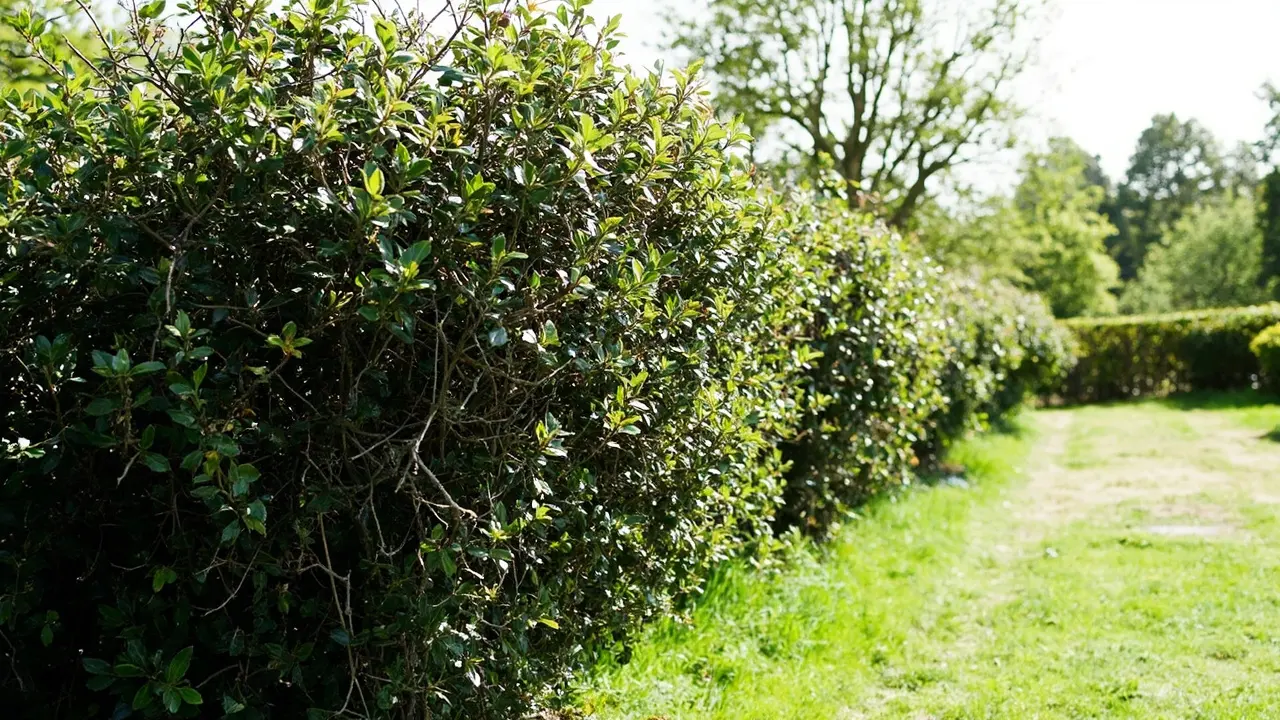
- Prunus × cistena (hedging form) — Grown and trimmed as a low informal hedge at 60–80 cm spacing; the purple foliage makes a striking boundary. [Source: hopesgrovenurseries.co.uk, accessed 2026-07-21]
Sources & Further Reading
- Royal Horticultural Society: rhs.org.uk/plants/47608/prunus-x-cistena/details, accessed 2026-07-21
- Royal Horticultural Society (Silver Leaf): rhs.org.uk/disease/silver-leaf, accessed 2026-07-21
- NC State Extension (Prunus × cistena plant profile): plants.ces.ncsu.edu/plants/prunus-x-cistena/, accessed 2026-07-21
- Gardenia.net: gardenia.net/plant/prunus-cistena-purple-leaf-sand-cherry, accessed 2026-07-21
- University of Minnesota Extension (Black knot): extension.umn.edu/garden-problems/black-knot, accessed 2026-07-21
- Hopes Grove Nurseries (hedging notes): hopesgrovenurseries.co.uk/shop/hedging/prunus-x-cistena-hedging/, accessed 2026-07-21
Pests and Diseases
| Problem | Symptoms | Management |
|---|---|---|
| Silver leaf | Leaves develop a silvery sheen and the plant may show stunted growth or dieback. | Remove and burn affected branches well below the visible symptoms to prevent spread. |
| Powdery mildew | A white, dusty fungal growth appears on leaves and shoots, often causing distortion. | Improve air circulation and apply a fungicide if severe; avoid overhead watering. |
| Leaf spot and canker | Dark spots appear on leaves which may drop prematurely, with sunken lesions on stems. | Prune out infected wood during dry weather and dispose of fallen leaves to reduce inoculum. |
| Slugs and snails | Irregular holes in young leaves and seedlings, often accompanied by slimy trails. | Use physical barriers like copper tape or apply iron phosphate-based pellets around the base. |
| Vine weevil | Notched edges on leaves above ground and root damage causing wilting below. | Apply systemic insecticides to the soil in autumn to control larvae before they pupate. |
For step-by-step help, read Dealing with Slugs and Snails and Treating Powdery Mildew. Or browse the full plant problem solver to diagnose an issue by symptom.
Recommended Products
GardenWizz earns a commission from qualifying purchases made through affiliate links on this page (including links within the article) — as an Amazon Associate, and from Thompson & Morgan via the Awin network. This does not affect the price you pay. See our disclaimer for details.