Hoary Willow
Salix eleagnos
The Gardening Year
Best months in UK gardens · full planting calendar →
🖨 Printable care card (PDF)At a Glance
| Botanical name | Salix eleagnos |
|---|---|
| Common name(s) | Hoary willow |
| Family | Salicaceae |
| Plant type | shrub (deciduous, dioecious) |
| Height × Spread | 3 m × 5 m |
| Position | — |
| Soil | moisture-retentive, tolerates wet |
| Flowering | March–May |
| Toxicity | — |
| Native range | central and southern Europe and south west Asia |
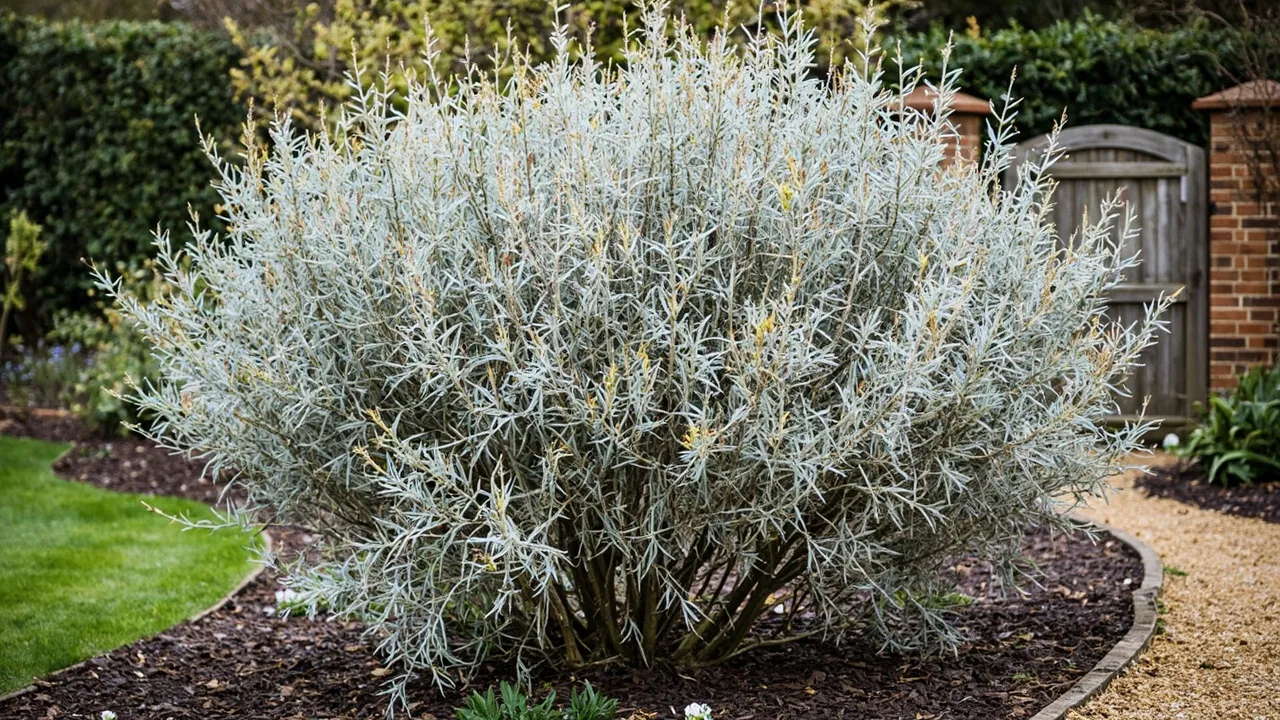
With its narrow, silver-backed leaves and soft, downy young shoots, hoary willow brings a lighter, finer texture than most willows. This vigorous deciduous shrub or small tree suits sunny UK gardens with enough room and reliably moist soil.
Overview
Salix eleagnos is a vigorous member of the willow family, Salicaceae, native from Europe to Türkiye and Morocco. It occurs naturally beside streams and on gravelly, seasonally moist ground. In Britain it is non-native and only rarely naturalised, but it grows well as an ornamental shrub where its roots can reach steady moisture.
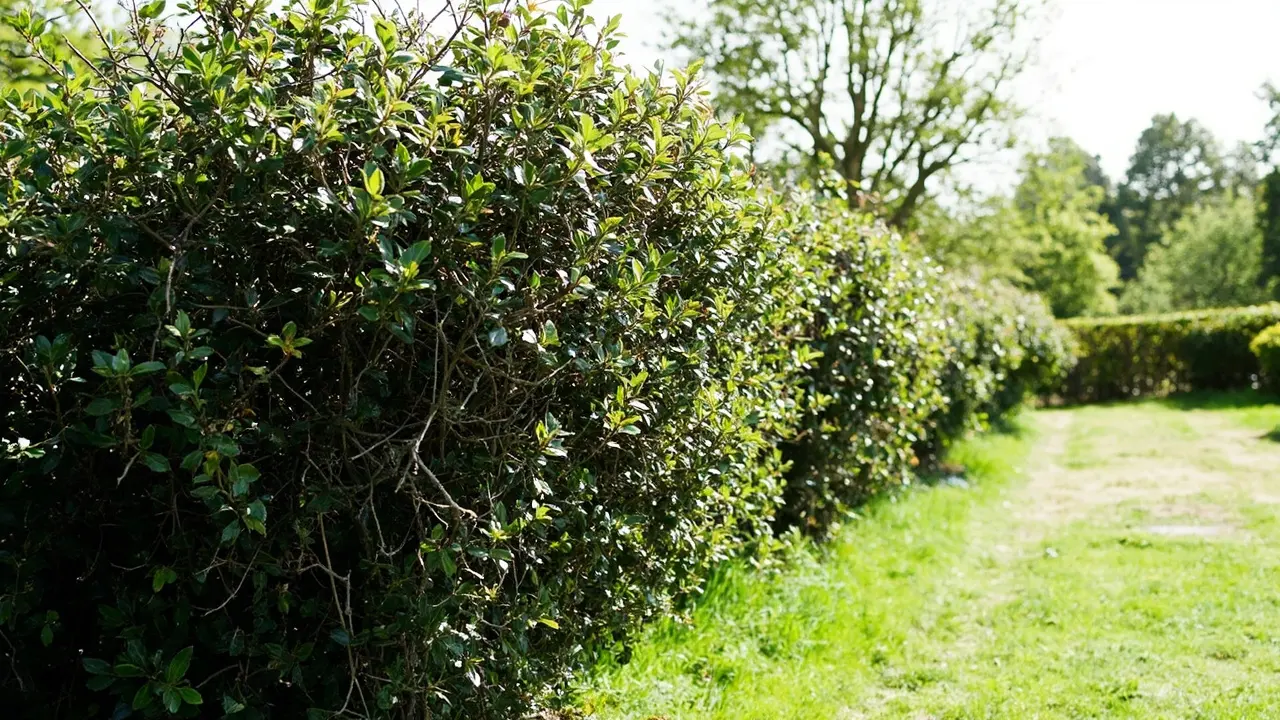
The species is also called rosemary willow because its long, narrow leaves resemble rosemary foliage from a distance. Unlike culinary rosemary, however, it is a large, fast-growing deciduous plant that needs several metres of space unless it is regularly coppiced. Its rounded, spreading outline works best in a generous mixed shrubbery, beside a large wildlife pond, in a damp garden or as an informal screen.
Hoary willow is dioecious, so male and female catkins grow on separate plants. The catkins provide spring interest and may offer pollen or nectar to early insects, although the foliage is generally the main ornamental feature. A single plant will grow perfectly well without a partner, but fruit and seed require both sexes nearby.
The species has received the RHS Award of Garden Merit. This does not remove the need to choose the site carefully: vigorous roots, a broad crown and a preference for moisture make it unsuitable for a tiny border or a position close to drains, paving, walls or small ponds with liners.
Appearance
Hoary willow usually forms an erect, densely branched shrub that broadens with age. It may be trained as a small multi-stemmed tree, while coppicing produces a lower framework carrying long, upright shoots. An unpruned specimen commonly reaches around 3m in height and may spread to approximately 5m, though soil, moisture and management can alter its eventual dimensions.
The young shoots are covered in fine grey down, the feature behind the name 'hoary'. As stems mature they become less conspicuously hairy. The slim branchlets and dense foliage create a soft outline that moves readily in the breeze, making the shrub particularly effective against a dark evergreen hedge or a background of deep green leaves.
Leaves are narrowly elliptic to lance-shaped, often 15-20cm long but only a few millimetres wide. Their upper surfaces are glossy dark or grey-green, while the paler, finely hairy undersides give the whole plant a silvery cast when wind turns the leaves. Margins are smooth or subtly rolled under. The leaves commonly develop yellow tones before falling in autumn.
Slender catkins appear with the leaves in mid-spring. They are less showy than the large, silky catkins of some ornamental willows, but they add close-up detail. Male and female catkins occur on different individuals; females can later produce small capsules containing the light, woolly seeds typical of willows.
The combination of narrow leaves, pale undersides and downy young growth distinguishes the species from broader-leaved sallows. Its fine texture also explains the alternative names olive willow and rosemary willow, although it is botanically unrelated to either olive or rosemary.
Growing Conditions
Choose an open position in full sun. The foliage is densest and the silver colouring most effective with good light, while shaded plants may become open and lean towards brighter areas. Shelter is rarely necessary in an ordinary UK garden, but newly planted specimens benefit from secure staking if exposed to strong winds.
Deep soil that remains moist yet drains freely is ideal. Loam and clay are both suitable when their structure allows excess winter water to move away, and the plant also copes with seasonally damp ground beside a stream or large pond. Avoid a permanently stagnant planting hole: even moisture-loving willow roots need oxygen. Shallow chalk is specifically unsuitable because it combines limited rooting depth with rapid drying and alkaline conditions.
Although mature plants can endure brief dry spells, hoary willow is not a good choice for a thin, drought-prone border. On free-draining sand, incorporate well-rotted organic matter across a broad area and maintain a generous mulch. Do not enrich only the planting hole with soft compost, as roots should be encouraged to spread into the surrounding ground.
Allow at least 2.5-3m between hoary willow and another large shrub, and more room if the plant is to develop naturally. Keep it well away from buildings, drainage runs and other structures that could be affected by a vigorous, moisture-seeking root system. This precaution is especially important on shrinkable clay soils.
The plant is suitable across most UK regions when established. Planting in autumn gives roots time to settle in mild, moist soil; in colder or exposed northern gardens, early spring is a sound alternative. Avoid planting into frozen, waterlogged or exceptionally dry ground.
Planting and Care
Container-grown plants can be set out from October to March whenever conditions are workable, while bare-root plants must be planted during dormancy. Soak a dry root ball before planting. Dig a hole no deeper than the root ball but substantially wider, loosen compacted sides, and place the root flare level with the surrounding soil. Backfill with the excavated soil, firm gently and water thoroughly.
Stake a tree-form specimen low enough to let the stem move slightly while preventing root-rock. Bushy plants usually need no stake unless the site is exposed. Finish with a 5-8cm layer of composted bark, leaf mould or well-rotted garden compost, leaving a clear collar around the stems to discourage decay.
Water deeply during dry weather for the first two growing seasons. A thorough weekly soak is more useful than frequent light sprinkling because it encourages roots to explore deeper soil. Established plants on naturally damp sites generally need little supplementary water, but those on lighter ground may still require irrigation during prolonged summer drought.
Routine feeding is unnecessary on reasonable garden soil. Apply an annual late-winter mulch to conserve moisture and improve soil structure. If growth is weak despite adequate water and light, a modest application of balanced general fertiliser in spring may help; excessive nitrogen encourages soft, crowded growth that is more susceptible to aphids and disease.
Minimal pruning is required for a naturally shaped specimen. Remove dead, damaged, crossing or badly placed branches in late winter, using clean, sharp tools and cutting back to a healthy branch union. Hoary willow also responds to coppicing: cut established stems near the base in February or early March, before growth starts, to stimulate vigorous rods and fresh silver foliage. A rotation of one to three years can restrain size, but creates a managed stool rather than a mature tree-like specimen. Avoid casual severe pruning of old, neglected trunks; renovation is safer when spread over more than one winter.
Propagation is straightforward from hardwood cuttings taken after leaf fall. Insert pencil-thick sections of healthy one-year wood into a prepared outdoor trench so that only the upper buds remain above the soil, then keep the bed moist. Semi-ripe cuttings taken in summer can also root in a sheltered propagating bed. Label propagated plants carefully, as the sex may not be apparent until flowering.
In autumn, clear heavily diseased fallen leaves rather than leaving them beneath the canopy. Check ties and stakes each winter and remove them once the plant is stable. Renew mulch before spring growth, and water newly coppiced plants in dry spells because their vigorous replacement shoots need consistent moisture.
Common Problems
Hoary willow is robust, but the soft growth and dense canopy can attract pests or hold the damp conditions favoured by fungal disease. Good spacing, balanced feeding and prompt removal of badly affected material reduce recurring trouble.
Aphids may cluster on shoot tips and leaf undersides in spring or early summer. Curled leaves, sticky honeydew and sooty mould are typical signs. Small colonies can be dislodged with water; ladybirds, hoverfly larvae and other predators usually control them. Avoid broad-spectrum insecticides, which can kill those useful predators.
Willow leaf beetles include metallic or dark adults and larvae that chew holes or skeletonise leaves. Damage is often conspicuous in mid-summer but an otherwise healthy, established willow normally recovers. Inspect young plants regularly, remove beetles or larvae by hand where practical, and tolerate light damage rather than treating it unnecessarily.
Sawfly larvae and other caterpillars can also strip patches of foliage. Check the undersides of leaves from late spring, particularly on small or newly established shrubs. Hand-picking is usually sufficient. Extensive defoliation warrants checking that drought, root damage or another source of stress is not weakening the plant.
Willow anthracnose, scab and black canker can cause spotted, distorted or blackened leaves, dieback of shoot tips and dark lesions on twigs or branches. Wet spring weather and poor air movement favour infection. Prune affected shoots back into healthy wood during dry weather, disinfect tools between suspect cuts, collect infected fallen leaves and thin congested growth without stripping the canopy.
Powdery mildew appears as a pale, powdery coating, particularly when roots are dry but the foliage sits in humid, crowded air. Water the soil thoroughly, retain a moisture-conserving mulch and improve air circulation. Avoid repeatedly wetting foliage late in the day.
Willow scale may appear as small fixed shells on stems and can weaken crowded or stressed growth. Prune out heavily infested shoots and support plant vigour through correct watering and mulching. When symptoms are severe, confirm the diagnosis before taking further action because lenticels and old bark marks can be mistaken for scale.
Popular Varieties
Named selections of Salix eleagnos are scarce in UK horticulture. It is misleading to offer three supposed cultivars simply to lengthen a list, so the following distinctions reflect verified botanical or trade usage rather than invented names.
The species, Salix eleagnos is the form most often listed by UK specialist nurseries. It develops the broad, vigorous habit, downy young shoots and narrow grey-green leaves described above. It is the best choice where there is room for a natural specimen or a coppiced foliage shrub.
Salix eleagnos subsp. angustifolia is an accepted infraspecific taxon in Kew's Plants of the World Online. It is associated in horticulture with particularly narrow, rosemary-like foliage and a finer-textured appearance. Nursery naming varies, and plants may instead be sold under the spelling S. elaeagnos subsp. angustifolia, so check the label and the supplier's description.
Salix eleagnos 'Angustifolia' is a horticultural name found in the trade and in herbarium records, sometimes presented as forma angustifolia. UK nursery listings use it for a narrow-leaved olive or rosemary willow with silvery-grey foliage. Because the same plant material may be labelled as a cultivar, form or subspecies, buy for the visible leaf character and mature habit rather than assuming every label represents a genetically distinct clone.
Availability is intermittent, and the straight species may be easier to obtain than any narrow-leaved selection. Purchase from a reputable UK nursery, confirm the expected mature size, and ask whether the plant is male or female if catkin sex matters. No additional cultivar names should be accepted without a reliable botanical or nursery record.
Sources & Further Reading
- RHS: Salix eleagnos (hoary willow), accessed 2026-07-22.
- RHS: willow anthracnose, scab and canker, accessed 2026-07-22.
- RHS: willow leaf beetles, accessed 2026-07-22.
- Kew Plants of the World Online: Salix eleagnos, accessed 2026-07-22.
- Kew Plants of the World Online: Salix eleagnos subsp. angustifolia, accessed 2026-07-22.
- Shire Plants: Salix elaeagnos (rosemary willow), accessed 2026-07-22.
Pests and Diseases
| Problem | Symptoms | Management |
|---|---|---|
| Willow aphid | Clusters of small green or black insects on new shoots causing leaf curling and sticky honeydew. | Encourage natural predators like ladybirds or use a strong jet of water to dislodge them. |
| Powdery mildew | White, dusty fungal growth on leaves and stems, potentially causing distortion. | Improve air circulation and prune out affected branches; apply fungicide if severe. |
| Willow caterpillar moth | Large groups of green caterpillars defoliating the willow, leaving only veins. | Usually harmless in one-off occurrences; prune out nests if infestation is heavy. |
| Slugs and snails | Irregular holes chewed in young leaves and seedlings, often with slimy trails. | Use beer traps, copper tape barriers, or iron phosphate-based pellets. |
| Vine weevil | Notched edges on leaves above ground and root damage below, causing wilting. | Apply nematodes to the soil in autumn or use systemic insecticides for potted plants. |
For step-by-step help, read Controlling Aphids Naturally, Dealing with Slugs and Snails and Treating Powdery Mildew. Or browse the full plant problem solver to diagnose an issue by symptom.
Recommended Products
GardenWizz earns a commission from qualifying purchases made through affiliate links on this page (including links within the article) — as an Amazon Associate, and from Thompson & Morgan via the Awin network. This does not affect the price you pay. See our disclaimer for details.