Bodnant Viburnum
Viburnum bodnantense
The Gardening Year
Best months in UK gardens · full planting calendar →
🖨 Printable care card (PDF)At a Glance
| Botanical name | Viburnum bodnantense |
|---|---|
| Common name(s) | Bodnant viburnum |
| Family | Viburnaceae |
| Plant type | shrub (deciduous) |
| Height × Spread | 2.5 m × 150 cm |
| Position | Full sun, Partial shade |
| Soil | moist |
| Flowering | January, February, March, December |
| Toxicity | — |
| Native range | — |
Viburnum x bodnantense brings strongly scented flowers to bare branches in the middle of the British winter, making it one of the most useful large deciduous shrubs for seasonal interest. Give it a sunny or lightly shaded position, moisture-retentive but well-drained soil and enough room to develop its naturally upright, spreading shape.
Overview
Viburnum x bodnantense is an artificial hybrid between Viburnum fragrans and Viburnum grandiflorum. The cross was developed at Bodnant Garden in north Wales, and its combination of winter flowers, powerful fragrance and dependable garden performance explains its enduring place in British shrub borders. It belongs to the family Viburnaceae and is normally sold under the common name Bodnant viburnum.
The plant's chief value is its timing. Rounded clusters of tubular flowers appear when most deciduous shrubs are dormant, often opening intermittently from November into March. A mild spell may bring a strong flush, while hard weather can pause the display until temperatures rise again. The flowers are best appreciated beside a front path, gate, doorway or frequently used garden route, where their sweet scent is noticeable rather than lost at the back of a border.
This is not a shrub for a cramped corner. Mature plants become tall and broad, with upright stems that arch and spread as they age. They suit mixed shrub borders, informal screens, woodland edges and winter gardens, provided nearby plants do not crowd their base. The bare winter framework also allows snowdrops, hellebores and early bulbs to provide interest beneath it, although digging close to established roots should be avoided.
Appearance
Young plants have a fairly upright framework, but established specimens develop a looser, spreading outline. The brown-grey stems are most conspicuous during winter, when they carry dense flower clusters at intervals along otherwise bare branches. This open structure is part of the plant's character: trying to clip it into a rigid shape sacrifices both grace and flowering wood.
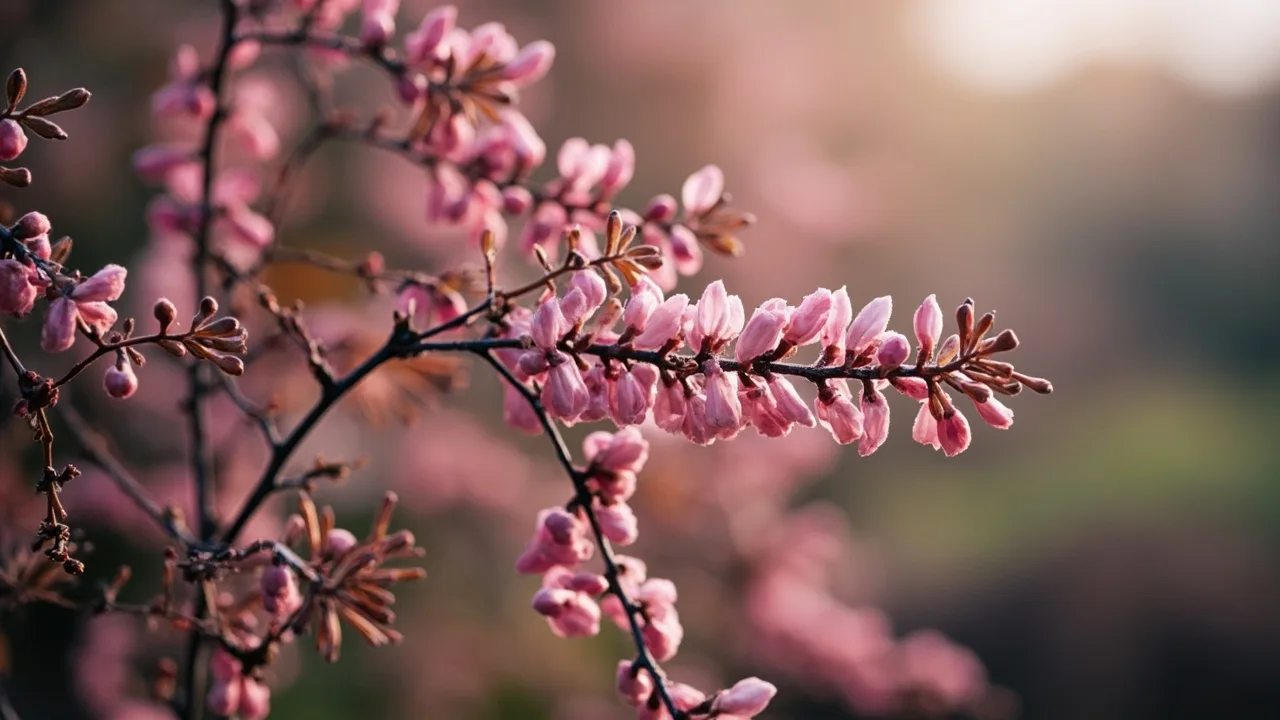
The flowers develop from deep pink buds and open into small, tubular blooms. Their colour varies between cultivars, from clear pink to very pale pink or almost white, and individual flowers commonly fade as they age. The clusters are not huge, but their number, fragrance and unexpected appearance in winter give them considerable impact. Frost may mark flowers that are already open, yet unopened buds often survive and continue the display during a later mild period.
Oval to elliptic green leaves emerge after the main winter flowering period. They are prominently veined, arranged in opposite pairs and may have toothed margins. The foliage creates a useful leafy background through spring and summer rather than an especially showy display. Autumn colour is variable, with reddish or purple tones possible before the leaves fall.
Fruit is not the main reason for growing Bodnant viburnum and may be sparse, particularly where there is no compatible viburnum nearby for cross-pollination. Garden design should therefore be based on its flowers, fragrance and architectural framework rather than an expected berry crop.
Growing Conditions
Full sun usually gives the strongest flowering, although partial shade is well tolerated. In colder or exposed gardens, a site protected from severe easterly winds helps preserve open flowers and carries the fragrance more effectively. A position beside a warm wall can encourage early bloom, but the root zone must not be allowed to become excessively dry.
The shrub accepts chalk, clay, loam and sandy soils if drainage and moisture are balanced. Its ideal ground is fertile, humus-rich and moisture-retentive without remaining saturated. Heavy clay should be improved across a broad planting area with organic matter rather than by creating a small pocket of loose compost, which can collect water around the roots. On very light soil, annual mulching is valuable because drought can restrict growth and reduce the following season's flower display.
Neutral, acid and alkaline conditions are generally suitable. More important than exact pH is avoiding extremes: persistently waterlogged soil encourages root problems, while thin, rapidly drying ground places unnecessary stress on a large shrub. Leave generous space around a new plant so air can circulate and its mature spread does not obstruct a path or window.
Container cultivation is possible only while the plant is young and is not the best permanent arrangement. A large pot requires regular watering and renewal of the top layer of compost, yet the eventual size and vigorous woody root system make open ground far more practical. Where space is limited, choose a smaller shrub rather than repeatedly cutting a Bodnant viburnum back to fit.
Planting and Care
Plant container-grown specimens in autumn or spring whenever the soil is workable, avoiding frozen, waterlogged or exceptionally dry ground. Autumn planting often suits much of the UK because the soil remains warm while rainfall helps root establishment. In colder districts or on heavy wet ground, spring planting gives the shrub a growing season in which to settle before winter.
Prepare a hole no deeper than the rootball and around twice its width. Loosen circling roots, set the root flare at soil level, backfill with the excavated soil and firm gently. Water thoroughly, then apply a 5-8 cm layer of well-rotted garden compost or other organic mulch over the root area, keeping it clear of the stems. Stake only if the rootball rocks in wind, and remove the support once the plant is secure.
Water regularly through the first one or two growing seasons, particularly during dry spells from spring to early autumn. Established shrubs normally need supplementary water only during prolonged drought, but those beside walls or under mature trees may remain in a rain shadow. Deep, occasional watering is preferable to frequent light sprinkling because it encourages roots to explore a larger volume of soil.
A spring mulch is usually more useful than routine feeding. On poor soil, apply a balanced general fertiliser at the manufacturer's recommended rate in March, but avoid heavy high-nitrogen feeding, which encourages soft leafy growth at the expense of flowers. Renew mulch after feeding and watering, without burying the base of the stems.
Pruning should be restrained. Immediately after flowering, remove dead, damaged, diseased or crossing wood, then shorten badly placed shoots to a healthy outward-facing bud. An overgrown specimen can be renovated because the plant tolerates hard pruning, but recovery is less disruptive if several old stems are removed at the base over two or three years rather than the entire shrub being cut down at once. Pruning later in summer risks removing growth that would carry the next winter's flowers.
Propagation is most reliable from cuttings, since seed would not reproduce a named hybrid cultivar faithfully. Take softwood cuttings from healthy non-flowering shoots in early summer or semi-ripe cuttings later in summer. Insert them in a free-draining propagation mix, maintain humidity without waterlogging, and protect rooted young plants through their first winter. Layering a low flexible stem is another slow but straightforward option.
Seasonal care is simple: mulch and feed if needed in March, prune after the final flowers fade, monitor new foliage through spring, and water during summer drought. In autumn, clear heavily diseased fallen material but otherwise allow a healthy leaf layer or fresh mulch to protect and improve the soil.
Common Problems
Viburnum beetle is the most distinctive pest. Cream and black-spotted larvae feed between leaf veins in spring, producing numerous irregular holes and sometimes leaving only a skeleton of foliage. Adults can cause further damage in late summer. Check leaves from April onwards, remove larvae by hand on small shrubs and encourage birds and other predators. Badly affected twigs bearing egg-laying scars can be pruned out at an appropriate time. If a pesticide is considered, consult current RHS guidance and use only a product presently authorised for the site and purpose.
Aphids may cluster on soft shoot tips and beneath young leaves, causing curling, sticky honeydew and sometimes sooty mould. A strong jet of water, hand removal and natural predators are often enough. Excess nitrogen can produce especially soft growth, so avoid overfeeding. Persistent infestations should be managed with the least disruptive currently approved method.
Root and collar diseases, including Phytophthora and honey fungus, are more serious. Warning signs include poor growth, yellowing, wilting, branch dieback or failure of an apparently watered plant. There is no value in treating these symptoms blindly: inspect the stem base and roots where possible, improve drainage, and obtain a reliable diagnosis before removing plants or changing the soil. Avoid planting into persistently waterlogged ground and do not pile mulch against the main stems.
Grey mould can affect flowers and soft tissue during prolonged damp, still weather. Remove decaying material, maintain space around the shrub and avoid wetting foliage when watering. Frost-browned flowers are not necessarily diseased; damaged open blooms can be left to fall naturally, while sound buds frequently open later.
Poor flowering is commonly cultural rather than pathological. Deep shade, summer drought, excessive nitrogen or pruning at the wrong time can all reduce bloom. Move a young plant if necessary, improve moisture retention, and restrict pruning to the period immediately after flowering. An established plant moved from deep shade may take more than one season to regain vigour.
Popular Varieties
Three established cultivars are recognised by the RHS and are available in UK horticulture. All need space for a large shrub, and nursery dimensions should be checked before purchase because ultimate size varies with site, age and growing conditions.
- 'Dawn' is the best-known selection. Dark pink buds open to fragrant rosy-pink flowers that become paler with age, creating several shades within one cluster. Its long winter display makes it a strong choice beside an entrance or main path.
- 'Charles Lamont' carries richly coloured pink flowers and is often chosen where a pronounced pink display is wanted. It shares the upright, spreading habit and fragrant winter flowering typical of the hybrid.
- 'Deben' has pink buds opening to paler flowers, often approaching white. The RHS notes that its flowering period can begin as early as October, making it valuable where a softer colour and a potentially early start are preferred.
Cultivar availability changes between nurseries, so buy from a reputable UK supplier and confirm the full label before planting. Unnamed plants may still be attractive, but a correctly named cultivar offers greater confidence about flower colour and habit.
Sources and further reading:
- Royal Horticultural Society, Viburnum x bodnantense plant profile: https://www.rhs.org.uk/plants/92788/viburnum-x-bodnantense/details (accessed 22 July 2026).
- Royal Horticultural Society, growing guide to viburnums: https://www.rhs.org.uk/plants/viburnum/growing-guide (accessed 22 July 2026).
- Royal Horticultural Society, viburnum beetle advice: https://www.rhs.org.uk/biodiversity/viburnum-beetle (accessed 22 July 2026).
- Royal Horticultural Society, winter-scented plants including 'Deben': https://www.rhs.org.uk/plants/trials-awards/using-award-winning-plants/10-award-winning-plants-for-winter-scent (accessed 22 July 2026).
- Royal Botanic Gardens, Kew, Plants of the World Online, Viburnum x bodnantense: https://powo.science.kew.org/taxon/urn:lsid:ipni.org:names:149577-1 (accessed 22 July 2026).
- BBC Gardeners' World, Viburnum x bodnantense 'Dawn': https://www.gardenersworld.com/plants/viburnum-x-bodnantense-dawn/ (accessed 22 July 2026).
Pests and Diseases
| Problem | Symptoms | Management |
|---|---|---|
| Powdery mildew | White, dusty fungal growth appears on leaves and shoots, potentially causing distortion. | Improve air circulation and apply a systemic fungicide if severe; resistant cultivars are available. |
| Vine weevil | Notched edges on leaves above ground and root damage below, leading to wilting or collapse. | Apply nematodes (Steinernema kraussei) to soil in autumn or use systemic insecticides. |
| Slugs and snails | Irregular holes chewed in leaves and silvery slime trails on foliage and stems. | Use iron phosphate pellets, copper tape barriers, or hand-pick at night. |
| Leaf spot | Small, dark brown or black spots appear on leaves, sometimes surrounded by yellow halos. | Remove affected leaves and avoid wetting foliage when watering to reduce humidity. |
| Scale insects | Small, immobile, bump-like pests cluster on stems and undersides of leaves. | Scrape off small infestations or apply horticultural oil during the dormant season. |
For step-by-step help, read Dealing with Slugs and Snails, Treating Powdery Mildew and Tackling Black Spot on Roses. Or browse the full plant problem solver to diagnose an issue by symptom.
Recommended Products
GardenWizz earns a commission from qualifying purchases made through affiliate links on this page (including links within the article) — as an Amazon Associate, and from Thompson & Morgan via the Awin network. This does not affect the price you pay. See our disclaimer for details.