Barberry
Berberis
The Gardening Year
Best months in UK gardens · full planting calendar →
🖨 Printable care card (PDF)At a Glance
| Botanical name | Berberis |
|---|---|
| Common name(s) | Barberry |
| Family | Berberidaceae |
| Plant type | shrub (deciduous and evergreen) |
| Height × Spread | 1–5 m × — |
| Position | Full sun, Partial shade |
| Soil | well-drained soil |
| Flowering | March–May |
| Toxicity | Berberis plants are toxic. Berberis berries and seeds can also be toxic, especially unripe berries and those of cultivated varieties. They should not be eaten, particularly by pregnant women, as they can cause uterine contractions. |
| Native range | temperate and subtropical regions of the world (apart from Australia) |
Quick Answer: Berberis is a versatile UK garden shrub for sunny or lightly shaded borders, hedges and wildlife-friendly planting. Give it free-draining soil, water young plants during dry spells, and prune according to whether it flowers on old or new wood.
Overview
Berberis is a large genus of deciduous and evergreen shrubs, valued in British gardens for its compact habit, small flowers, coloured foliage and, on many plants, autumn or winter berries. Spiny stems make some forms useful as defensive hedging, while smaller cultivars suit mixed borders and containers. The RHS recommends growing berberis in free-draining soil in full sun or light shade (RHS, accessed 24 July 2026).
In the UK, plant container-grown shrubs throughout the year when the ground is workable, but autumn and spring are usually the easiest seasons. Choose a sheltered site for Berberis thunbergii cultivars because late spring frosts can scorch emerging leaves. Scotland and northern gardens commonly run around two to four weeks behind the South West and London for spring growth.
Appearance
Berberis ranges from low, rounded shrubs to taller, arching plants. Many deciduous species carry small oval leaves on slender, thorn-bearing shoots; evergreen species retain leathery foliage through winter. Leaf colour may be green, purple, bronze or yellow, with the strongest colour generally developing in good light.
The flowers are usually small and cup-shaped, appearing in clusters in spring or early summer. Their yellow colouring is particularly noticeable against dark foliage, and they provide nectar for insects. After flowering, pollinated flowers can develop into red, blue-black or purple berries, depending on the species. These fruits may persist into colder months and are eaten by some garden birds.
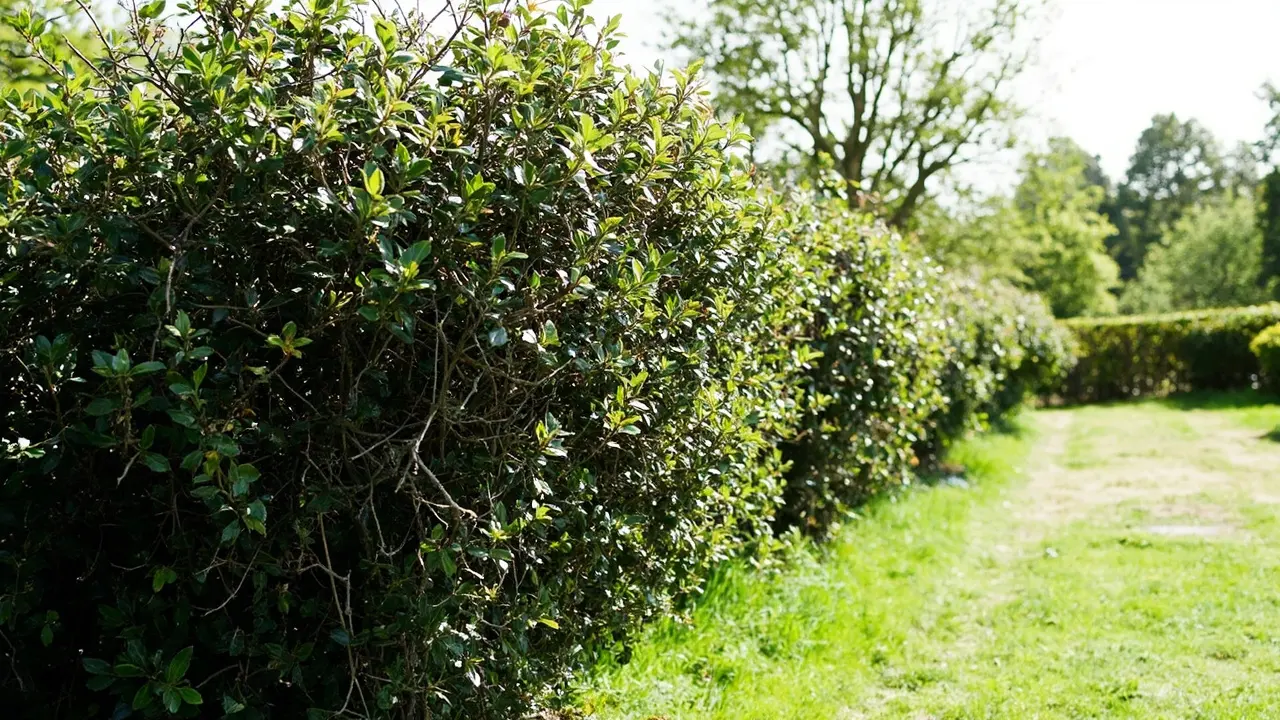
A mature shrub's outline depends on the selection: upright forms can create a narrow hedge, spreading plants make useful ground cover, and dwarf types provide low edging. The thorns are significant when planting beside paths or where children and pets regularly pass, so position spiny shrubs with enough clearance for safe maintenance.
Growing Conditions
Berberis tolerates a broad range of UK garden soils provided excess water can drain away. Improve heavy clay with organic matter and, where possible, plant on a slight mound rather than leaving the root ball in a winter-wet hollow. Avoid permanently waterlogged ground, which can weaken roots and encourage decline.
Full sun normally produces the best flowers, berries and foliage colour, although most berberis will grow in light or partial shade. Golden-leaved cultivars are more liable to scorch in strong sun, especially when dry, so give them morning sun or light afternoon shade. Purple-leaved forms can lose intensity in deep shade.
Allow enough space for the mature width rather than judging by the size of a new pot plant. A narrow hedge may need closer spacing than a specimen shrub, but the label's eventual dimensions should take precedence. Mulch around, rather than against, the stems with a 5 cm layer of garden compost or well-rotted organic matter. This conserves moisture and suppresses weeds without creating a damp collar.
Berberis is generally a low-input shrub after establishment. It is more likely to need help in its first two summers, during prolonged dry weather, and immediately after planting than once its root system has spread through the surrounding soil.
Planting and Care
Most gardeners get the best start by planting container-grown berberis between October and April, avoiding frozen or waterlogged soil. Dig a hole twice the width of the root ball and no deeper than its height. Tease out congested roots, set the shrub so the top of the root ball is level with the surrounding soil, backfill firmly, and water thoroughly. Keep the first-year root zone weed-free.
Water deeply rather than little and often. Give a newly planted shrub a thorough soak during dry periods, then check the soil before watering again. Established plants usually cope with ordinary UK rainfall, but water at the base during a prolonged summer drought. Container-grown plants dry out faster and may need checking every few days in warm weather.
Feed is rarely essential in fertile ground. In spring, apply a balanced, slow-release fertiliser at the label rate if growth is weak, then mulch with well-rotted compost. Do not pile manure against the stems or apply repeated high-nitrogen feeds, as soft, sappy growth is more vulnerable to pests and can spoil a compact habit.
Pruning depends on the plant. Many deciduous berberis flower on older wood, so remove dead, damaged or crossing stems after flowering if shaping is needed. The RHS growing guide advises pruning suitable dormant, leafless plants in mid- to late winter, while dead wood is easier to distinguish in mid-summer. Evergreen forms are often trimmed after flowering. Avoid cutting a plant hard without checking its flowering habit and the cultivar's instructions.
Wear thick gloves and eye protection when pruning thorny stems. Remove one or two of the oldest branches at the base rather than shearing the whole shrub unnecessarily. For a neglected plant, staged renovation over two or three seasons is less stressful and preserves useful cover for wildlife.
Propagation is possible from seed, but named cultivars will not necessarily come true. Semi-ripe cuttings are a practical method for many garden selections: take healthy, non-flowering shoots in summer, remove the lower leaves, insert them into a free-draining cutting compost, and keep them sheltered and evenly moist. Rooting can be slow, so protect cuttings from drying out and frost. Layering low branches is another option where a flexible shoot reaches the soil.
Seasonal care is straightforward. In spring, remove weeds and inspect new leaves for sawfly larvae. In summer, water new shrubs during drought and prune only when appropriate for the plant. In autumn, clear diseased fallen foliage and check ties on hedges. In winter, plant bare-root or container specimens when the ground is workable, and avoid walking on saturated soil around the roots.
For related seasonal tasks, see the GardenWizz planting calendar, autumn gardening guide, and how to improve <a href="/articles/improving-heavy-clay-soil">clay soil</a>.
Common Problems
Berberis sawfly
The RHS reports that berberis sawfly larvae are creamy white, spotted and black-headed; they can strip foliage from berberis and mahonia. A common mistake is to assume every defoliating larva is a caterpillar. Inspect the undersides of leaves from late spring, pick off larvae where practical, and use a strong jet of water to dislodge them. Encourage birds and avoid unnecessary insecticide. If a pesticide is used, follow the product label and current UK regulations.
Aphids
Clusters of small aphids on soft shoots can cause curling, sticky honeydew and sooty mould. Many gardeners control light infestations by squashing colonies or washing them off with water, while ladybirds, hoverfly larvae and lacewings often provide useful biological control. Remove badly distorted tips only if the plant is heavily affected.
Powdery mildew
A white coating on leaves, followed by premature leaf loss, is more likely in dry soil with still, humid air. Improve air circulation by thinning crowded growth, water the soil during drought, and remove badly affected fallen leaves. Avoid wetting foliage late in the day and do not overfeed with nitrogen.
Leaf scorch and dieback
Brown leaf edges can follow late frost, drought, wind exposure or root stress rather than a single disease. Golden cultivars are particularly prone to scorch. Check moisture at root level, mulch after the soil has warmed, and protect young plants from exposed easterly winds. Cut out dead wood to healthy tissue with clean secateurs and monitor for fresh shoots.
Rust
Orange or rusty marks may indicate a rust disease, although symptoms vary among species and seasons. Remove affected leaves, improve spacing and avoid overhead watering. If symptoms recur or spread quickly, compare them with the RHS problem guidance before treating; diagnosis matters more than spraying first.
Further help is available through the GardenWizz problem solver and the Berberis plant profile.
Popular Varieties
The following named selections are listed by the RHS and are established choices for UK gardens; availability varies between nurseries.
- Berberis thunbergii f. atropurpurea 'Rose Glow' has purple foliage marked with paler new growth and a compact, upright habit.
- Berberis × ottawensis f. purpurea 'Superba' is a larger purple-leaved shrub with arching growth and spring flowers; the RHS notes susceptibility to aphids and berberis sawfly, and to powdery mildews and rusts.
- Berberis thunbergii 'Aurea' is grown for yellow foliage and benefits from a position where strong afternoon sun will not scorch new leaves.
- Berberis darwinii is an evergreen species with prickly leaves, orange-yellow flowers and blue-black berries, suitable for a sheltered, well-drained position.
- Berberis vulgaris is a deciduous native barberry with yellow flowers and red berries. Do not eat berberis berries unless identification and food safety have been confirmed with an authoritative source.
Select by mature size and purpose first: a compact cultivar for a small border, an evergreen for year-round screening, or a thorny larger shrub for a boundary. Confirm the final label details at purchase, especially mature dimensions and the plant's hardiness rating.
Sources & Further Reading
- Source: RHS: Berberis plant guide, accessed 24 July 2026.
- Source: RHS: How to grow berberis, accessed 24 July 2026.
- Source: RHS: Berberis × ottawensis f. purpurea 'Superba', accessed 24 July 2026.
- Source: RHS: Berberis sawfly, accessed 24 July 2026.
- Source: Royal Botanic Gardens, Kew: Plants of the World Online, accessed 24 July 2026.
Pests and Diseases
| Problem | Symptoms | Management |
|---|---|---|
| Berberis sawfly | Caterpillar-like larvae feed on leaves, potentially causing complete defoliation. | Hand-pick larvae or apply biological controls like nematodes; prune affected shoots if severe. |
| Powdery mildew | White, dusty fungal growth appears on leaves and stems, often in humid conditions. | Improve air circulation, avoid overhead watering, and treat with a fungicide if necessary. |
| Aphids | Small soft-bodied insects cluster on new growth, causing leaf curling and sticky honeydew. | Spray off with water, encourage natural predators like ladybirds, or use insecticidal soap. |
| Slugs and snails | Irregular holes in leaves and silvery slime trails, particularly on young shoots. | Use physical barriers like copper tape, beer traps, or iron phosphate pellets. |
| Vine weevil | Notched leaf margins above ground and root damage below, leading to wilting plants. | Apply nematodes to the soil in autumn and winter to control larvae. |
For step-by-step help, read Controlling Aphids Naturally, Dealing with Slugs and Snails and Treating Powdery Mildew. Or browse the full plant problem solver to diagnose an issue by symptom.
Recommended Products
GardenWizz earns a commission from qualifying purchases made through affiliate links on this page (including links within the article) — as an Amazon Associate, and from Thompson & Morgan via the Awin network. This does not affect the price you pay. See our disclaimer for details.