Panicle Hydrangea
Hydrangea paniculata
The Gardening Year
Best months in UK gardens · full planting calendar →
🖨 Printable care card (PDF)At a Glance
| Botanical name | Hydrangea paniculata |
|---|---|
| Common name(s) | Panicle Hydrangea |
| Family | Hydrangeaceae |
| Plant type | shrub (deciduous) |
| Height × Spread | 1–5 m × 1.5–2.5 m |
| Position | Full sun, Partial shade |
| Soil | moist, well-drained, fertile soil; adaptable to different soil types including clay and loam |
| Flowering | July–September |
| Toxicity | poisonous if ingested due to cyanogenic glycosides (hydrangin) |
| Native range | southern and eastern China, Korea, Japan and Russia (Sakhalin) |
Overview
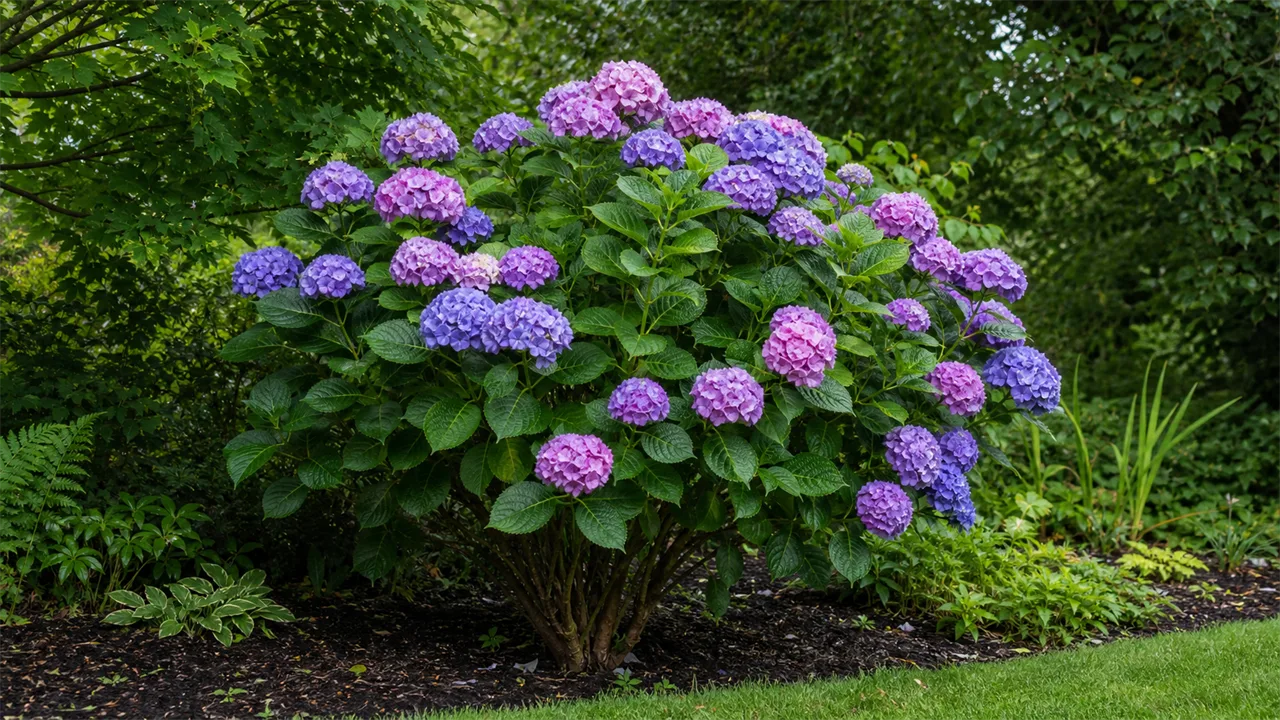
Panicle Hydrangea (Hydrangea paniculata) is a vigorous, deciduous flowering shrub native to cool-temperate regions of eastern Asia, including much of Japan, northern and eastern China, Sakhalin and the Russian Far East. It is the most sun-tolerant and the most cold-tolerant of the hydrangeas commonly grown in British gardens, and is widely planted across the UK in mixed borders, informal hedges and as a specimen shrub. Unlike the more familiar mophead and lacecap hydrangeas (Hydrangea macrophylla), panicle hydrangeas produce their flowers on the current season's wood, which makes their pruning straightforward and their display reliable even after a hard winter. The species has given rise to a substantial number of modern cultivars, many of which hold the Award of Garden Merit from the Royal Horticultural Society.
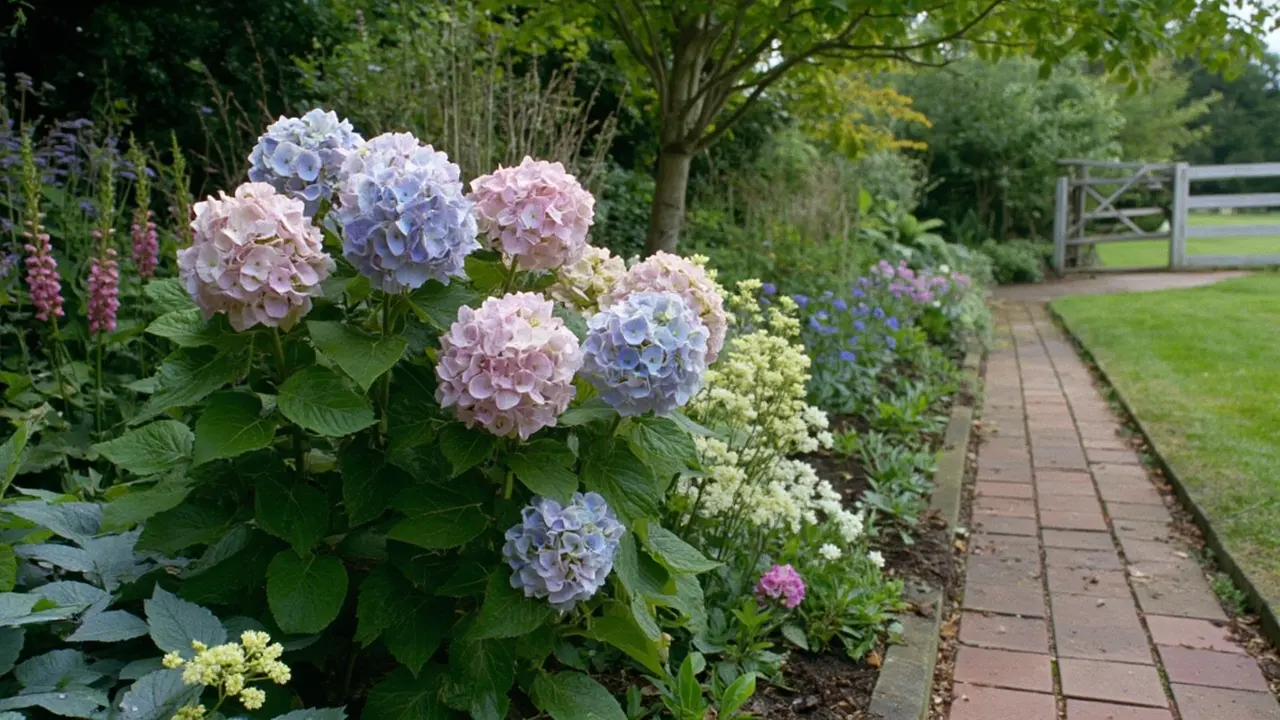
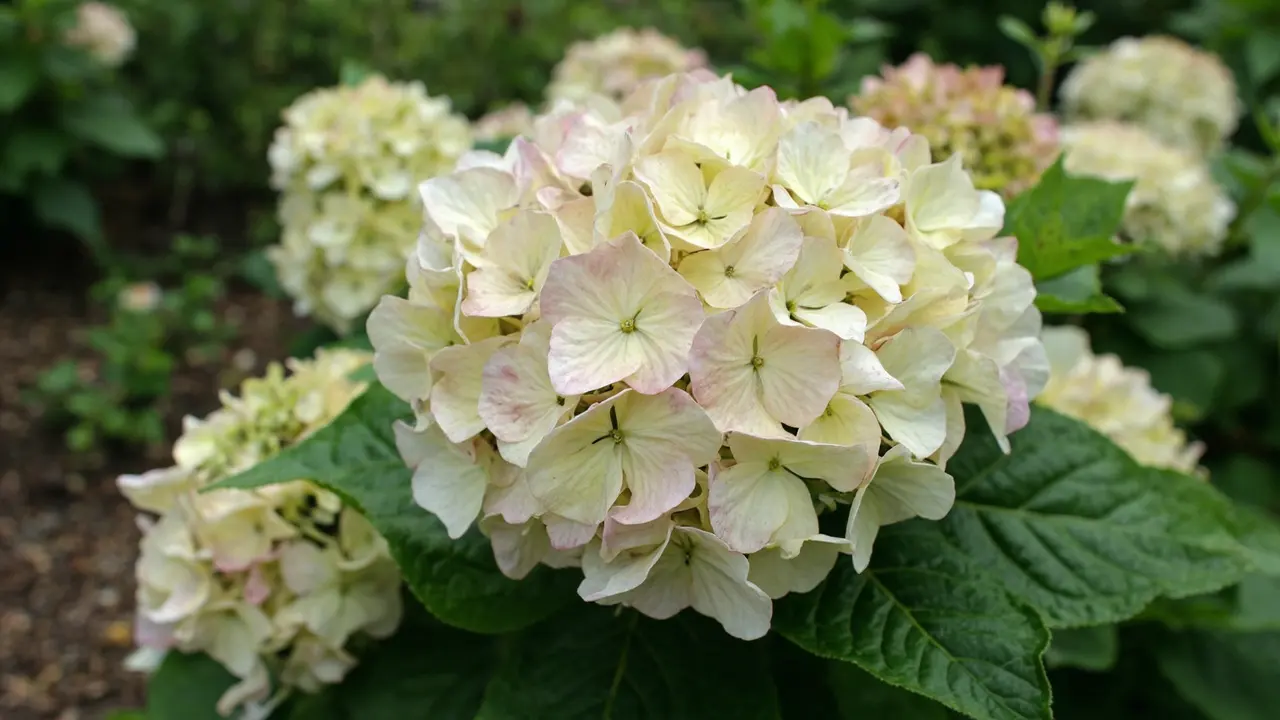
In UK gardens H. paniculata flowers from mid- to late summer, considerably later than the macrophylla types, extending the hydrangea season well into September and often October. Its conical flower heads, which open cream-white and frequently age through pink and finally to a rusty pink, are borne on stout stems and are tolerant of wind better than the heavy, ball-shaped heads of mopheads. The plant is hardy throughout the British Isles, tolerates a wide range of soils, and is generally unfussy once established. It is suitable for beginners and experienced gardeners alike.
Appearance
Hydrangea paniculata is a coarse-textured, upright to rounded shrub with a strong, suckering habit when grown on its own roots. Mature specimens commonly reach 2–3 m in height with a similar spread, although dwarf cultivars such as 'Little Lime' and 'Bobo' stay below 1.2 m. The bark on older stems is pale grey-brown and peels in thin papery strips, which is a useful diagnostic feature in winter when the plant is leafless.
The leaves are arranged in opposite pairs or occasionally in whorls of three along the stem. They are broadly ovate to elliptical, 7–15 cm long, with a finely serrated margin and a tapered tip. The upper surface is mid-green and slightly rough to the touch, while the underside is paler and softly hairy along the veins. In autumn the foliage often takes on a soft yellow tint before falling, although it is not grown primarily for autumn colour.
The defining feature of the species is the inflorescence: a large, broadly conical panicle typically 15–30 cm long, made up of two types of flower. The showy, sterile florets, which give the display its visual weight, are usually four-petalled (technically four sepals) and 3–5 cm across. They are scattered through the panicle and surround the much smaller, fertile flowers at the centre. The fertile flowers are small, creamy-white and inconspicuous on their own, but they are pollinator-friendly and produce a faint, sweet fragrance.
Flower colour in panicle hydrangeas is not governed by soil pH in the way that H. macrophylla colour is. Instead, colour is largely a function of cultivar and age. Most cultivars open creamy-white in midsummer, then pass through pale green, blush pink and finally a deep, parchment-pink by September or October, especially after cool nights. A small number of newer cultivars, such as 'Fire Light' and 'Pink Diamond' in some seasons, develop noticeably stronger pink tones. Dried flower heads persist on the plant well into winter and are often left in place for structural interest and for frost decoration.
Growing Conditions
Panicle hydrangeas are among the most adaptable hydrangeas for UK conditions and will succeed in situations that defeat the more familiar mopheads. They prefer a position in full sun or light, dappled shade, and unlike H. macrophylla they flower most freely when given at least six hours of direct summer sun. In the cooler, wetter north and west of the UK they tolerate a surprising amount of exposure, and established plants stand up well to coastal winds provided the soil is not parched.
Soil requirements are modest. The plant performs best in a moist but well-drained loam of near-neutral pH, but it accepts slightly acidic and moderately alkaline soils, and grows well on clay provided the ground does not waterlog in winter. Unlike mophead and lacecap hydrangeas, H. paniculata is not affected by soil pH in terms of flower colour, so liming the soil to correct acidity will not damage the display. Incorporating well-rotted garden compost or leaf mould at planting time improves both moisture retention and drainage and is particularly worthwhile on sandy or thin chalk soils.
The species is hardy across all but the most exposed upland sites in the UK. Plants tolerate urban pollution and are often used in town gardens, courtyard plantings and street-side borders. They are also among the better hydrangeas for container cultivation, although pots must be of generous size and the compost kept reliably moist through summer. Established plants show good drought tolerance once their root system has penetrated deeply, but young plants need careful watering in their first two summers.
Planting and Care
Planting is best carried out in autumn or early spring, when the soil is moist and the plant is not in active growth. Container-grown specimens from garden centres can be planted at any time of year provided the ground is workable and the plant is kept watered through dry spells. Set the plant at the same depth it occupied in its pot, firm the soil around the rootball and water in thoroughly. Mulching with a 5–8 cm layer of bark or composted bark after planting helps to conserve moisture and to keep the roots cool in summer.
Watering is the most critical element of routine care. H. paniculata prefers a steady supply of moisture during the growing season, particularly from late spring through to early autumn. Water deeply rather than little and often, and aim to keep the root zone damp rather than saturated. Plants in dry ground, especially those in sandy soil or against a sunny wall, will drop their leaves early and produce smaller flower heads if allowed to drought-stress. Newly planted specimens need watering roughly twice a week through their first summer; established plants usually cope with normal rainfall except in prolonged dry spells.
Feeding should be moderate. A single annual application of a balanced slow-release fertiliser in early spring, or a mulch of well-rotted manure or garden compost applied around the root zone in late winter, is sufficient on most garden soils. Over-feeding, particularly with high-nitrogen lawn or rose feeds, produces lush leafy growth at the expense of flowers and may encourage weak stems that flop under the weight of the panicles.
Pruning is straightforward and is one of the great advantages of the species over mophead and lacecap types. Because H. paniculata flowers on wood produced in the current season, it can be cut hard in late winter or early spring without sacrificing the display. The standard approach, recommended by the RHS, is to cut all stems back to within two or three buds of the framework (or to roughly 15–30 cm from the ground on young plants) in February or March, before growth resumes. Hard pruning of this kind produces fewer but larger flower heads; lighter pruning produces more, smaller panicles. Any dead, damaged or crossing wood should be removed at the same time. Deadheading as the flowers fade is optional; many gardeners leave the dried heads on the plant for winter interest and prune them off the following spring.
Propagation is easy from softwood or semi-ripe cuttings. Soft cuttings of about 10 cm, taken from non-flowering shoots in early summer and inserted into a 50:50 mix of peat-free compost and perlite, usually root within four to six weeks under a propagator or clear plastic cover. Semi-ripe cuttings taken in late summer root equally well. Plants raised from cuttings will be identical to the parent, so this is the standard method for increasing named cultivars.
Seasonal care follows the natural cycle of the plant. From April to June the new shoots grow strongly; pinching out shoot tips in late May or early June on plants that have been cut back hard can encourage branching and lead to a fuller, more floriferous shrub, although this delays flowering by a few days. Flowering begins in July, peaks in August and continues into September and October. In November and December the foliage drops and the dried flower heads remain attractive, particularly when frosted. Pruning, as noted, is carried out in February or March.
Common Problems
Panicle hydrangeas are notably trouble-free in UK gardens, but a few issues are worth noting. Powdery mildew can appear on the leaves in late summer, especially on plants grown in dry soil or in situations with poor air movement. It is rarely serious and can be managed by improving watering, mulching and, where necessary, the removal of affected leaves. Aphids, particularly the hydrangea aphid, may colonise young shoot tips in spring and can be washed off with a strong jet of water or treated with a fatty-acid-based spray if numbers build up.
Leaf chlorosis (yellowing between the veins) is occasionally seen on plants grown in very alkaline or shallow chalk soils and is usually a sign of iron or manganese lock-up rather than disease. The remedy is to mulch with organic matter, to apply a chelated iron dressing in spring, and where possible to improve the soil over time. Cold, drying winds in late spring can scorch the young foliage of newly planted specimens; a temporary screen of horticultural fleece on exposed sites prevents damage.
The species is generally resistant to honey fungus and to the more serious hydrangea diseases that affect H. macrophylla, such as Hydrangea macrophylla leaf spot. The main horticultural fault is flopping: large-flowered cultivars on rich soil, or plants that have been lightly pruned for several years, may produce stems that bend under the weight of the panicles, particularly after heavy summer rain. The remedy is harder annual pruning, avoiding excess nitrogen, and on exposed sites selecting more compact cultivars such as 'Limelight' or 'Little Lime'. Toxicity: there is limited reliable published evidence on the toxicity of Hydrangea paniculata specifically; the genus Hydrangea as a whole has been reported in horticultural references to contain cyanogenic compounds, and ingestion of foliage or flowers by people or pets may cause mild gastric upset. If precise information is required for a household with children, cats or dogs, current authoritative veterinary and toxicology sources should be consulted.
Popular Varieties
Several well-established cultivars of Hydrangea paniculata are widely available from UK nurseries and garden centres. The following are real, recognised forms that can be sourced in British horticulture; specific availability will vary by season.
'Grandiflora' is the traditional large-flowered form and has been grown in British gardens for well over a century. It reaches roughly 2.5–3 m tall and bears densely packed, broadly conical panicles of creamy-white that age through pink to bronze. It holds the Award of Garden Merit.
'Limelight' is a Dutch-raised cultivar notable for its strong lime-green flower colour in midsummer, ageing to pink and finally to a deep rose. It grows to about 2 m tall, has sturdy stems and is one of the best forms for cutting and drying.
'Vanille Fraise' ('Renhy') is a popular cultivar with very large, broadly conical panicles that open creamy-white and develop a strong strawberry-pink colour from the base of the panicle upwards as the season progresses. It typically reaches 2 m and is widely sold in UK garden centres.
'Little Lime' ('Jane') is a compact form of 'Limelight', reaching roughly 1–1.2 m, suitable for smaller gardens and large containers. It bears the same lime-green to pink flower colour progression on a much reduced scale and holds the Award of Garden Merit.
'Pinky Winky' is a vigorous, upright cultivar whose panicles continue to elongate as they flower, producing a striking two-tone effect of white at the tip and deep pink at the base. It typically reaches 1.5–2 m and is widely available in the UK.
'Phantom' is a large-flowered form with particularly heavy panicles on strong stems, reaching roughly 2–2.5 m, and is favoured for its display in late summer. 'Bobo' is a genuinely dwarf cultivar, reaching only about 70–90 cm, suitable for the front of a border or for patio containers; it is widely stocked in UK nurseries.
Other cultivars frequently encountered in UK horticulture include 'Silver Dollar', 'Kyushu' (a more lacy, fertile-flowered form), 'Early Sensation' ('Bulk') and 'Wim's Red'. Cultivar availability and performance vary by region and by season; local nursery advice is the best guide to current stock.
Cultivars and Varieties
| Cultivar | Height | Flower | Notes | AGM |
|---|---|---|---|---|
| 'Big Ben' | — | — | RHS AGM (H5) | ✓ |
| 'Limelight' | — | — | RHS AGM (H5) | ✓ |
| 'Phantom' | — | — | RHS AGM (H5) | ✓ |
| 'Silver Dollar' | — | — | RHS AGM (H5) | ✓ |
Pests and Diseases
| Problem | Symptoms | Management |
|---|---|---|
| Hydrangea scale | White, oval waxy patches on stems and leaves with reduced plant vigour. | Prune out heavily infested branches or treat with horticultural oil during dormancy. |
| Powdery mildew | White, dusty fungal growth on leaves and stems, often causing distortion. | Improve air circulation and spray with a fungicide or bicarbonate solution if severe. |
| Aphids | Clusters of small insects on new growth causing curled leaves and sticky honeydew. | Blast off with water, encourage natural predators, or use insecticidal soap. |
| Vine weevil | Notched leaf edges and root damage leading to wilting in potted plants. | Apply systemic insecticide granules to the soil in spring and autumn. |
| Leaf spot | Dark, irregular spots on foliage that may cause premature leaf drop. | Remove affected leaves and avoid wetting foliage when watering. |
For step-by-step help, read Controlling Aphids Naturally and Treating Powdery Mildew. Or browse the full plant problem solver to diagnose an issue by symptom.
Recommended Products
GardenWizz earns a commission from qualifying purchases made through affiliate links on this page (including links within the article) — as an Amazon Associate, and from Thompson & Morgan via the Awin network. This does not affect the price you pay. See our disclaimer for details.