Smooth Azalea
Rhododendron arborescens
The Gardening Year
Best months in UK gardens · full planting calendar →
🖨 Printable care card (PDF)At a Glance
| Botanical name | Rhododendron arborescens |
|---|---|
| Common name(s) | Smooth Azalea |
| Family | Ericaceae |
| Plant type | shrub (deciduous) |
| Height × Spread | 2.4–5.5 m × 2.5–4 m |
| Position | Full sun, Partial shade |
| Soil | moist but well-drained, leafy, humus-rich acid soil |
| Flowering | April–September |
| Toxicity | Harmful if eaten. Contains andromedotoxins (grayanotoxins). Symptoms include depression, vomiting, diarrhea, difficulty in breathing, coma, drooling, burning sensation in mouth, muscular weakness, weak vision, bradycardia, hypotension. |
| Native range | eastern seaboard of the United States |
Overview
Rhododendron arborescens, commonly known as the sweet azalea or smooth azalea, is a deciduous flowering shrub in the family Ericaceae. Native to the Appalachian Mountains of eastern North America, it is prized in British gardens for its fragrant late-spring flowers, its tolerance of UK winters, and its reliable autumn leaf colour. It holds the Royal Horticultural Society's Award of Garden Merit (AGM), confirming its standing as a dependable garden plant in the UK climate.
Unlike many of the evergreen rhododendrons more familiar to British gardeners, R. arborescens is fully deciduous and belongs to the group of azaleas within the genus Rhododendron. It is relatively slow-growing but forms an upright, open shrub that suits woodland edges, acid borders, and the fringes of larger plantings. Its flowering period bridges the gap between the main rhododendron flush of late April–May and the mid-summer shrubs that follow, making it a useful continuity plant in mixed borders.
Appearance
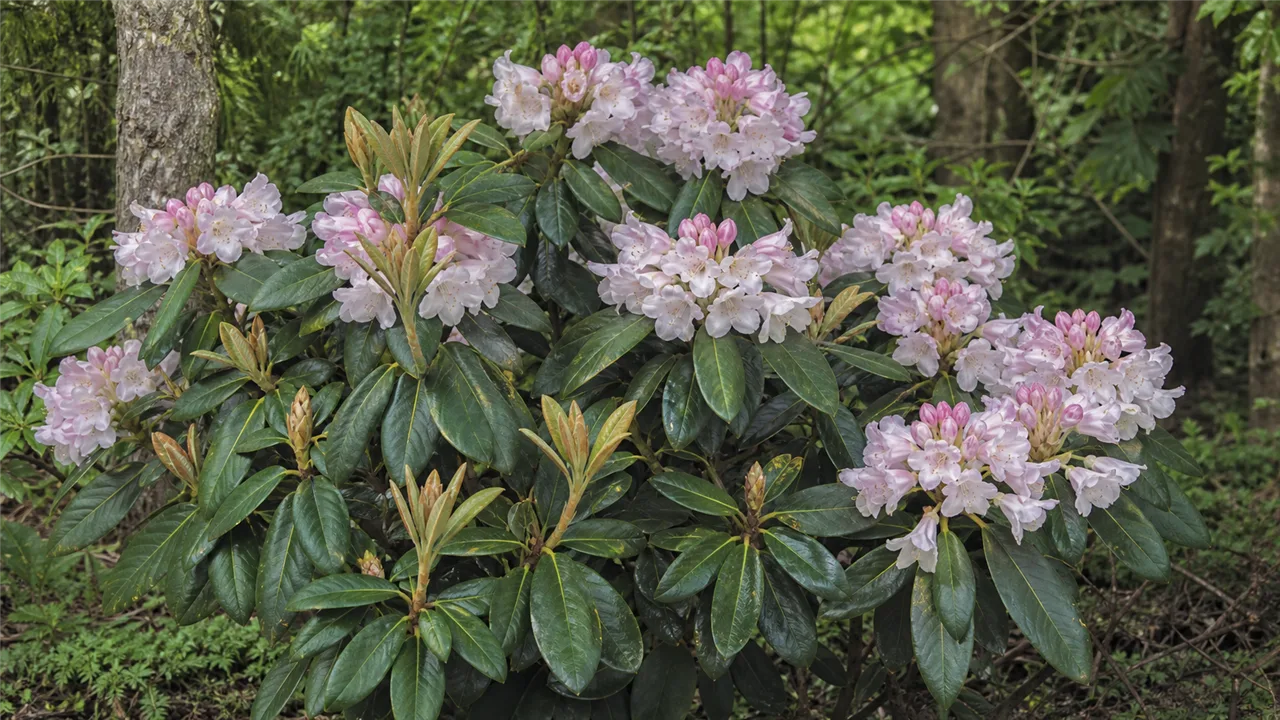
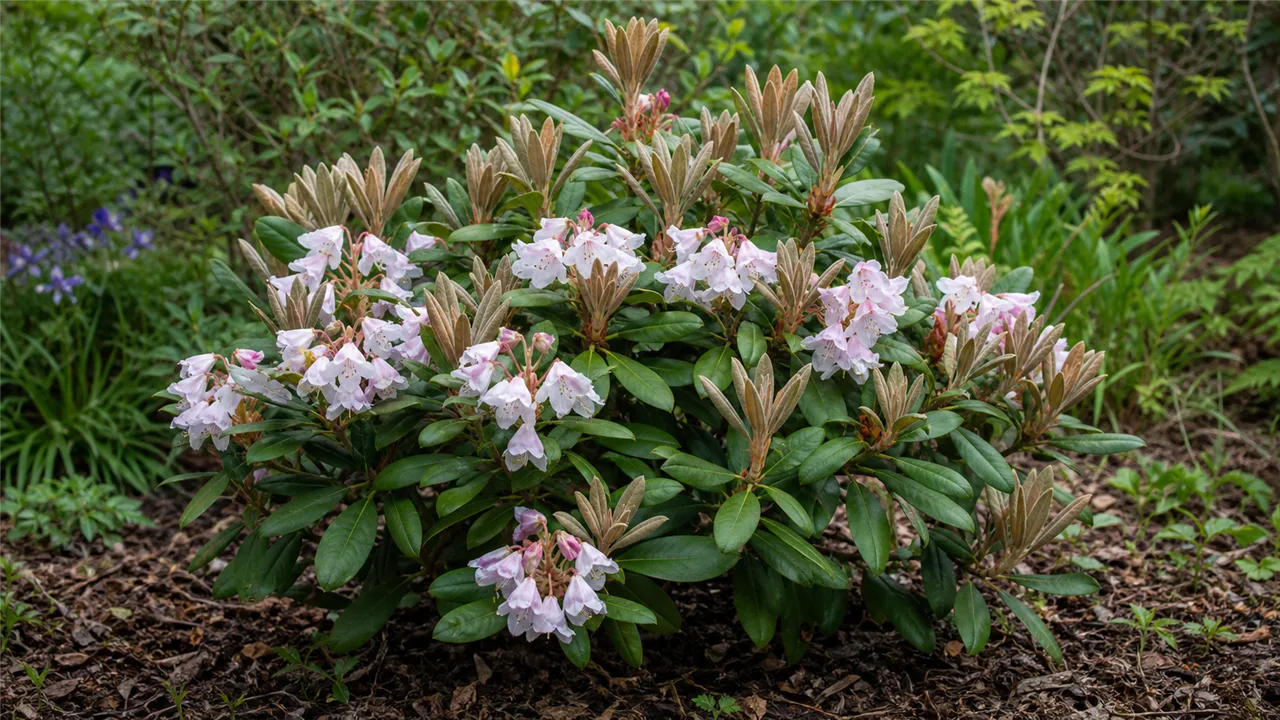
Rhododendron arborescens is a medium to large shrub, eventually reaching around 2–4 m in height with a similar spread when grown in favourable conditions. The overall habit is upright to broadly rounded, with branching that becomes more horizontal and slightly arching on older specimens. Mature plants develop attractive smooth, reddish-brown bark that peels in thin papery strips, providing winter interest even when the shrub is leafless.
The leaves are elliptic to oblong, typically 5–10 cm long, with a glossy dark green upper surface and a paler, slightly glaucous underside. They emerge in spring with a bronze tint before maturing to deep green. In autumn, before falling, the foliage turns vivid shades of red, orange, and yellow, often with several colours present on the same plant at once. This autumn colour is one of the distinguishing ornamental features of the species compared with evergreen rhododendrons.
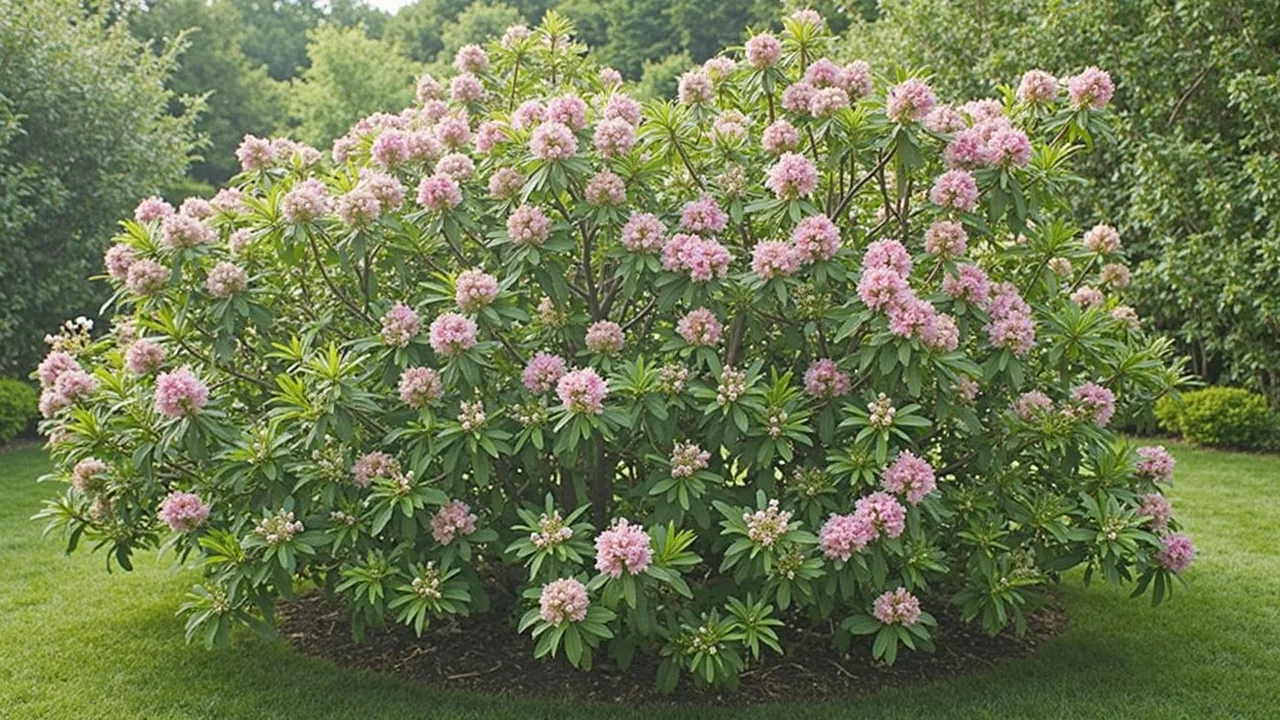
Flowers appear in late May and June, typically just as the new growth is hardening off. The blooms are openly funnel-shaped, around 3–5 cm across, with five spreading lobes and a slender tube. They range in colour from pure white to pale pink, often with a yellow or greenish blotch on the upper lobe, and are carried in loose terminal trusses of several flowers each. The species name "arborescens" refers to the tree-like (arborescent) habit rather than the flowers, but the most celebrated feature is the scent: the flowers carry a strong, clove-like, sweet fragrance that is unusual among rhododendrons and gives the plant its common name.
Following pollination, woody seed capsules develop, ripening over summer and persisting into winter. The dried capsules can be useful in cut arrangements and add subtle structure to the bare winter silhouette.
Growing Conditions
Rhododendron arborescens requires the same general growing conditions as other rhododendrons and azaleas: an acidic, humus-rich, moisture-retentive but well-drained soil. A pH of around 4.5–6.0 is ideal; the species will not thrive in chalky, alkaline, or strongly limed ground, where leaves quickly become chlorotic (yellow between the veins) and the plant declines.
In the UK, it performs best in partial shade or dappled shade, particularly under the high, light canopy of deciduous trees such as silver birch, oak, or beech. Full shade reduces flowering noticeably; full sun, especially in the south and east of England, can scorch the leaves and dry the soil too rapidly. A sheltered position is preferable because the young growth and large leaves can be damaged by cold, drying winds in spring.
Moisture is critical. The species naturally grows along stream sides and on moist mountain slopes, so it does not tolerate prolonged drought, particularly in its first few years after planting. Where rainfall is low or soil drains sharply, regular watering with collected rainwater (tap water in hard-water areas is often alkaline) is essential. Mulching with acidic organic matter helps to conserve moisture and keep root temperatures even.
The species is fully hardy across the UK, including Scotland and the colder inland counties, and is listed by the RHS at hardiness rating H6 to H7, indicating tolerance of severe frosts down to around −20 °C.
Planting and Care
Plant container-grown specimens at any time when the soil is workable, although autumn and early spring are traditional and give the roots a full season to establish before the stress of summer. Dig a wide, shallow planting hole — wider than the root ball but no deeper — and set the plant so that the top of the root ball is just at or slightly above the surrounding soil level. Rhododendrons are surface-rooting and suffer if buried too deeply. Backfill with a mix of the native soil and ericaceous compost or well-rotted leaf mould, firm gently, and water in thoroughly.
Watering should be regular and consistent during the first two growing seasons, and during any prolonged dry spell thereafter. Use rainwater where possible. An annual mulch of pine bark, leaf mould, or ericaceous compost, applied 5–8 cm deep in spring, helps to conserve moisture, suppress weeds, and maintain soil acidity.
Feeding is generally light. If growth is poor or the soil is marginal, apply a slow-release ericaceous fertiliser in spring as new growth begins. Avoid general-purpose feeds and especially avoid lime, bone meal, or anything high in phosphorus or calcium, which can lock out micronutrients in acid-loving plants.
Pruning is minimal. Remove dead, damaged, or crossing branches immediately after flowering, and lightly shape if needed. Hard pruning is not recommended: rhododendrons regenerate very slowly from old wood, and severe cutting back usually produces weak regrowth or kills the plant. If size reduction is essential, do it gradually over several years.
Propagation is straightforward from semi-ripe cuttings taken in mid- to late summer, rooted in a free-draining ericaceous medium under mist or in a propagator. Simple layering of a low flexible shoot in autumn is reliable on established plants.
Common Problems
The most common problem in unsuitable soil is chlorosis: leaves turn pale green or yellow while the veins remain darker green. This indicates iron or manganese deficiency, almost always caused by alkaline soil or by using alkaline tap water over time. Treat by switching to rainwater, applying chelated iron as a foliar feed or soil drench, and mulching annually with acidic organic matter.
Powdery mildew can affect the leaves in late summer, producing a white powdery coating, especially on plants under stress from dry roots or poor air movement. Improve watering, increase spacing where possible, and clear fallen leaves. Severe outbreaks can be treated with a suitable fungicide.
Leaf spot fungi occasionally cause brown or black markings on the foliage; this is usually cosmetic and self-limiting, and no treatment is required beyond good hygiene.
Bud blast, caused by the fungus Briosya azaleae, can be a more serious issue: flower buds turn brown, dry, and fail to open. Remove and destroy affected buds promptly to reduce the spread of spores, and improve air circulation around the plant.
Root rot caused by Phytophthora can occur in poorly drained or waterlogged ground. The key is prevention: plant in well-drained soil, avoid burying the root ball, and do not allow the plant to sit in standing water during wet winters.
Aphids, particularly the azalea lace bug, and adult vine weevils can be occasional pests. Vine weevil notching on leaf margins and grubs in the rootball are signs to act on promptly with biological or chemical controls.
Popular Varieties
Rhododendron arborescens is most often grown as the straight species, and named cultivars are uncommon in British cultivation. Where selections have been recorded, they tend to focus on flower colour, fragrance intensity, and autumn leaf colour rather than dramatic differences in habit.
The species itself is widely sold and is the form most gardeners will encounter. Plants propagated from seed show some natural variation, but the species is notably consistent in flower colour, fragrance, and habit.
Named forms occasionally offered by specialist ericaceous nurseries include selections raised for particularly strong clove fragrance and for intensified red autumn foliage. Cultivar names in general circulation for this species are limited, and gardeners seeking named clones should source them from specialist rhododendron or azalea nurseries rather than general garden centres.
If a wider range of named deciduous azaleas with similar late-spring flowering and fragrance is desired, related species and hybrids such as Rhododendron viscosum (swamp azalea), Rhododendron arborescens × viscosum crosses (sometimes sold under the Exbury or Knaphill group names), and Rhododendron 'Luteum' offer more named variety, but strictly speaking these are not R. arborescens cultivars and have their own characteristics.
Pests and Diseases
| Problem | Symptoms | Management |
|---|---|---|
| Powdery mildew | White powdery fungal growth appears on leaves, buds, petals and shoots, potentially causing distortion. | Tolerate unless severe; improve air circulation and avoid overhead watering to reduce humidity. |
| Bud blast | Flower buds turn brown, shrivel and fail to open, often due to late frost or fungal infection. | Remove and destroy infected buds promptly if practical to prevent spread. |
| Vine weevil | Notched edges on leaves above ground; larvae damage roots underground causing wilting. | Use nematode treatments in autumn or apply biological controls like Steinernema carpocapsae. |
| Silver leaf | Leaves develop a silvery sheen underneath and stems may show black fruiting bodies at the base. | Prune out infected branches well below the visible symptoms and destroy them immediately. |
| Pieris caterpillars | Large green caterpillars with yellow stripes defoliate shoots, leaving only midribs. | Hand-pick caterpillars early in spring or use biological controls like nematodes. |
For step-by-step help, read Treating Powdery Mildew. Or browse the full plant problem solver to diagnose an issue by symptom.
Recommended Products
GardenWizz earns a commission from qualifying purchases made through affiliate links on this page (including links within the article) — as an Amazon Associate, and from Thompson & Morgan via the Awin network. This does not affect the price you pay. See our disclaimer for details.