Daphne Rhododendron
Rhododendron campylogynum
The Gardening Year
Best months in UK gardens · full planting calendar →
🖨 Printable care card (PDF)At a Glance
| Botanical name | Rhododendron campylogynum |
|---|---|
| Common name(s) | Daphne Rhododendron |
| Family | Ericaceae |
| Plant type | shrub |
| Height × Spread | 0–3 cm × 50–100 cm |
| Position | Partial shade, Full sun |
| Soil | moist but well-drained, leafy, humus-rich acid soil |
| Flowering | March–May |
| Toxicity | Harmful if eaten |
| Native range | northeast India and northeast Myanmar |
Rhododendron campylogynum is a small, evergreen rhododendron species native to the eastern Himalayas, where it grows on rocky slopes and moist moorlands in parts of Arunachal Pradesh, northern Myanmar and south-eastern Tibet. It belongs to subsection Campylogyna, a small group of dwarf rhododendrons distinguished by their small leaves, waxy, bell-shaped or widely funnel-shaped flowers, and a preference for cooler, well-drained conditions than most larger rhododendrons. In British gardens it is grown for its compact habit, its unusually coloured flowers, and its reliability in the cooler, wetter parts of the UK where many Himalayan species thrive.
Overview
Rhododendron campylogynum was described by the Franchet in 1885 from material collected in the eastern Himalayas, and it has been grown in British collections since the early years of plant hunting into Sikkim and the surrounding ranges. It is one of the most popular dwarf rhododendrons for rock gardens, peat beds and the front of woodland borders, because it stays genuinely compact and produces flowers in shades that are unusual for the genus.
In the wild it behaves as a low, sometimes prostrate shrub, creeping over rocks and through mossy ground. Cultivated plants in the UK behave similarly if given cool roots, good drainage and a soil that does not dry out in summer. It is well suited to the climate of Scotland, northern England, Wales and Ireland, and performs reliably in cooler, upland parts of southern England provided soil conditions are right. It is less suited to hot, dry gardens in the south-east, where summer drought and alkaline tap water quickly cause stress.
Although there is no formal Royal Horticultural Society Award of Garden Merit (AGM) rating listed in current public records for this species at the time of writing, it has been a fixture of specialist rhododendron collections in the UK for well over a century and is widely considered one of the better dwarf species for British gardens.
Appearance
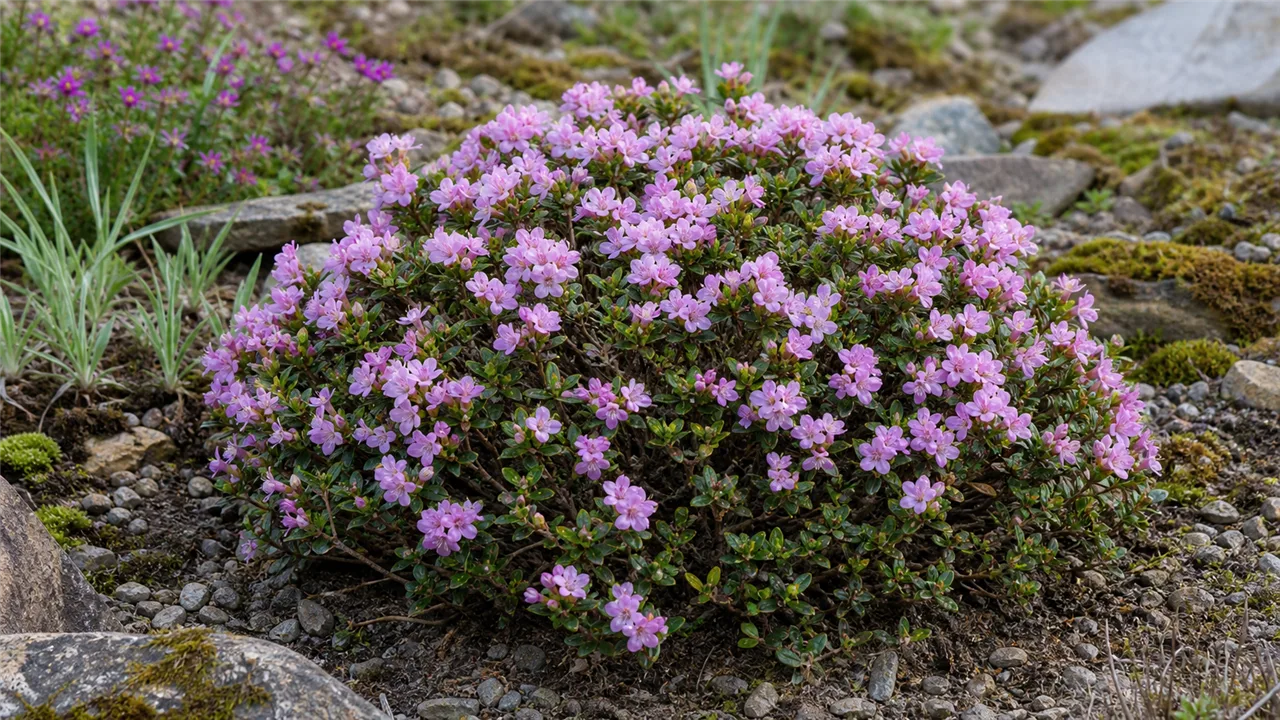
Rhododendron campylogynum forms a low, often mounded shrub that builds up slowly into a dense, twiggy framework. Mature plants in cultivation typically reach 20–60 cm in height with a slightly wider spread over time; very old, well-grown specimens in favoured Scottish gardens can spread further but rarely exceed about 1 m tall. The branching is fine and the plant tends to layer itself where stems touch the ground, so a single plant slowly broadens into a small colony.
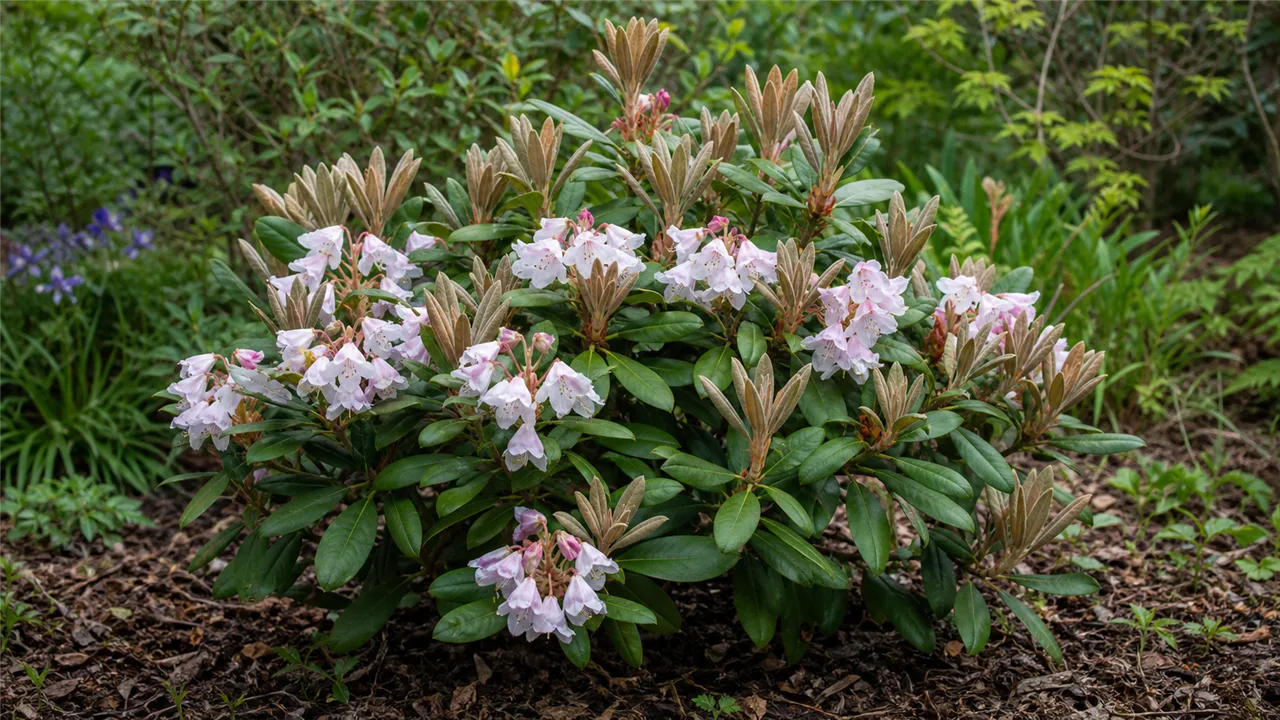
The leaves are small, elliptic to obovate, usually 1.5–3 cm long, dark glossy green above and distinctly pale, often grey-green or glaucous, beneath. New growth in spring is often tinged bronze. As with other members of subsection Campylogyna, the undersides carry fine scales or dots that can be seen with a hand lens; these are diagnostic for the subsection and help distinguish the species from small-leaved evergreen rhododendrons in other subsections.
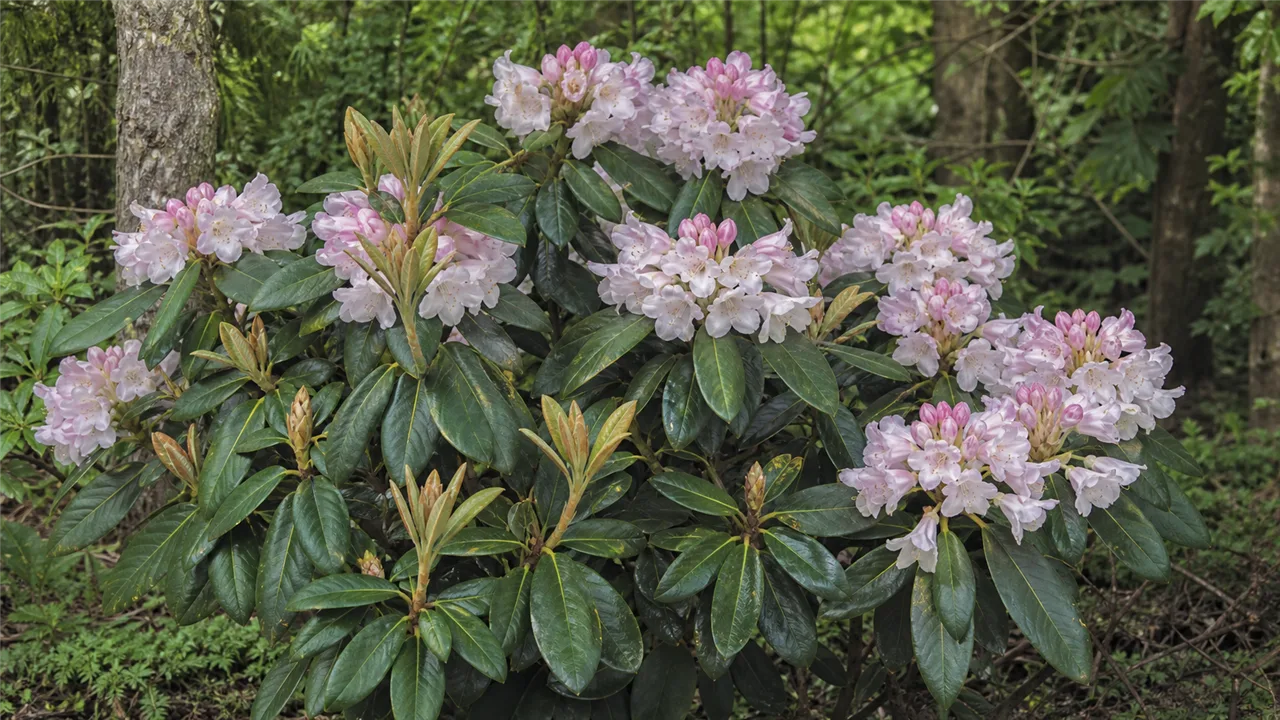
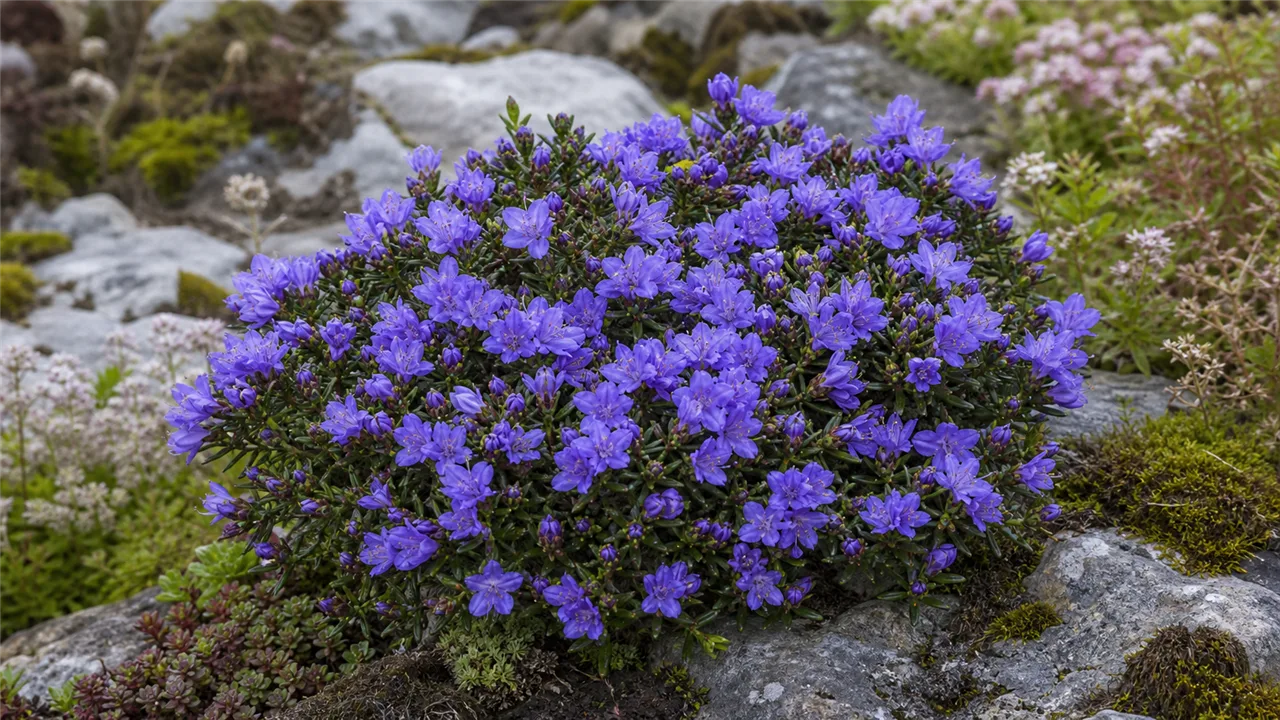
Flowers are the main ornamental feature. They are borne singly or in small, loose trusses of two to four at the ends of the previous year's shoots, opening in late spring. The corolla is bell-shaped to widely funnel-shaped, 2–3 cm across, with a distinctly waxy texture. Colour is the most variable trait: forms in cultivation include shades of pink, rose, mauve, plum, brick-red and a clear, pale yellow, with the yellow-flowered form long considered the most desirable. There is no blue form in this species.
Growing Conditions
Rhododendron campylogynum wants the same conditions most dwarf rhododendrons want: cool, moist, acidic soil with very sharp drainage and plenty of organic matter, in dappled shade.
Soil pH should be in the range pH 4.5–6.0; above about pH 6.5 the plant typically develops interveinal chlorosis (yellowing between the veins) caused by iron and manganese lock-out, and growth deteriorates over a few seasons. In alkaline parts of the UK it is best grown in a raised peat bed, a container with ericaceous compost, or a pocket of imported acidic soil.
Light should be filtered or dappled. The species copes with a few hours of morning sun but resents hot midday and afternoon sun, which scorch the leaves and dry the surface roots. A north- or east-facing slope, the shaded side of a building, or the open edge of a woodland all work well. Avoid exposed, windy sites: the shallow root system dries out quickly and the brittle twigs break in winter storms.
Drainage is more important than many gardeners realise. Rhododendron campylogynum grows naturally on slopes and rocky ground where its roots never sit in cold, wet soil. In heavy clay, plant it on a mound or in a raised bed at least 20 cm above the surrounding soil, and work plenty of coarse organic matter and grit into the planting area.
In UK terms the plant is hardy across most of the country. Gardeners in cold inland areas of Scotland and northern England report it surviving temperatures well below −10 °C without damage, provided the soil is free-draining; cold combined with waterlogging is far more damaging than cold alone.
Planting and Care
Planting is best done in early autumn or in spring, when soil is moist and warm enough for roots to establish. Dig a wide, shallow hole — typically twice as wide as the rootball and no deeper — and set the plant so the top of the rootball sits level with, or slightly above, the surrounding soil. Backfill with a mix of the existing soil, leaf mould, well-rotted ericaceous compost and a little sharp sand or horticultural grit. Water in thoroughly with rainwater, and apply a 5–8 cm mulch of leaf mould, pine needles or bark.
Watering matters most in the first two to three summers after planting. Rhododendron campylogynum has a small, shallow root system and is intolerant of drought, particularly on light or chalky soils. Water freely during dry spells, always with rainwater rather than tap water where possible, because mains water in hard-water areas is alkaline and will, over months, push the root zone pH upwards.
Feeding should be light. A single annual application of a slow-release ericaceous fertiliser in late winter or early spring is usually sufficient; over-feeding produces soft, leggy growth that is more vulnerable to scorch and pest attack. Mulching every spring with leaf mould or composted bark feeds the soil, keeps roots cool and suppresses weeds without the need for additional fertiliser.
Pruning is rarely needed. The species is naturally compact and slow-growing. If shape correction is required, prune lightly immediately after flowering so that new growth has time to set flower buds for the following year. Older, leggy plants can be rejuvenated by cutting selected stems back to within 15–20 cm of the ground over two or three seasons, again straight after flowering.
Propagation is straightforward from semi-ripe cuttings taken in mid- to late summer. Use current-year side shoots 5–8 cm long, wound the base lightly, dip in a rooting hormone and root in a 50:50 mix of peat-free ericaceous compost and perlite under a covered propagator at 15–20 °C. Rooting typically takes eight to twelve weeks. Seed can be sown fresh in autumn on the surface of a moist, acidic seed compost; germination is erratic and slow, and seedlings take several years to reach flowering size.
Seasonal care in the UK is mostly a matter of keeping the root zone moist in summer and mulched in autumn. In very cold, dry winters, an additional dry mulch of bracken or straw over the crown can reduce damage from desiccating winds, but this is rarely necessary except in exposed upland gardens.
Common Problems
Rhododendron campylogynum shares most of the pest and disease pressures of other dwarf rhododendrons, but a few issues are worth specific mention.
Phytophthora root rot is the most serious. It shows as sudden wilting, poor new growth, dark staining at the base of the stem and die-back, usually in warm, waterlogged soils. The remedy is prevention: free-draining acidic soil, careful watering and prompt removal and destruction of affected plants.
Powdery mildew can affect plants in dry, shaded sites with poor air movement, producing a white bloom on the leaf surface in late summer. Improving air circulation, mulching and watering at the base rather than over the foliage are usually enough to keep it in check.
Rhododendron lace bug is becoming more common in southern England, producing a fine pale stippling on the upper leaf surface and dark, tar-spot faecal deposits beneath. It is rarely fatal but disfigures foliage. Encourage natural predators, avoid hot dry sites and treat outbreaks with a proprietary systemic insecticide if necessary.
Vine weevil grubs are a particular hazard for container-grown plants, severing roots and causing sudden collapse. Use a biological nematode treatment in late summer, or grow the plant in the ground where possible.
Leaf chlorosis (yellowing between the veins) is almost always a soil-pH issue rather than a disease. Correct the underlying pH with ericaceous fertiliser and mulch, and water only with rainwater.
Popular Varieties
There is little cultivar development in Rhododendron campylogynum compared with larger rhododendrons, and most plants sold in the UK are raised from wild-collected or garden seed, which means considerable natural variation between seedlings. The names below represent well-known selections and seed-raised strains that have stable reputations in British horticulture.
- Rhododendron campylogynum cream / pale yellow form: the most sought-after colour in the species, with clear, pale creamy-yellow, waxy bells. Often sold simply as the cream or pale yellow form; named clonal selections circulate in specialist collections.
- Rhododendron campylogynum pink / rose form: the most commonly encountered colour in cultivation, with clear rose-pink to salmon-pink flowers on compact plants.
- Rhododendron campylogynum brick-red form: a distinct, warmer-coloured strain with dusky brick-red to plum flowers, occasionally offered by specialist nurseries.
- Rhododendron campylogynum 'Bodnant Red': a clonal selection raised at Bodnant Garden in North Wales, noted for its deeper, plum-red flowers and tidy habit.
- Rhododendron campylogynum 'Leucanthum': a name used in older references for white or near-white forms, though such plants remain rare in general cultivation.
- Seed-raised strain 'Myrtillifolium': sometimes listed in older catalogues as a compact, myrtle-leaved selection; plants in trade under this name are typically seed-raised and variable.
Buyers should treat cultivar names with caution. Some names circulate in older reference works but are not consistently applied across nurseries, and many plants sold simply as Rhododendron campylogynum are unselected seedlings. Where colour matters — particularly for the yellow and brick-red forms — buy in flower from a specialist rhododendron nursery.
Pests and Diseases
| Problem | Symptoms | Management |
|---|---|---|
| Vine weevil | Notched leaf margins and wilting or death of plants due to root feeding by larvae. | Apply biological nematodes in autumn or use systemic insecticides for severe infestations. |
| Powdery mildew | White, dusty fungal growth on leaves and shoots, potentially causing distortion. | Improve air circulation and apply a fungicide if infection is heavy; avoid overhead watering. |
| Rhododendron bud blight | Flower buds turn brown, shrivel, and fail to open, often dropping prematurely. | Remove affected buds and apply a copper-based fungicide in late winter before bud swell. |
| Pieris lacebug | Silver or bleached patches on the upper leaf surface with black specks underneath. | Encourage natural predators like ladybirds or use a horticultural oil spray in spring. |
| Root rot (Phytophthora) | General decline, yellowing foliage, and wilting despite moist soil conditions. | Ensure excellent drainage and avoid waterlogging; remove severely affected plants. |
For step-by-step help, read Treating Powdery Mildew. Or browse the full plant problem solver to diagnose an issue by symptom.
Recommended Products
GardenWizz earns a commission from qualifying purchases made through affiliate links on this page (including links within the article) — as an Amazon Associate, and from Thompson & Morgan via the Awin network. This does not affect the price you pay. See our disclaimer for details.