Blackberry
Rubus fruticosus
The Gardening Year
Best months in UK gardens · full planting calendar →
🖨 Printable care card (PDF)At a Glance
| Botanical name | Rubus fruticosus |
|---|---|
| Common name(s) | Blackberry |
| Family | Rosaceae |
| Plant type | shrub |
| Height × Spread | 1–2.5 m × 1–4 m |
| Position | Full sun |
| Soil | rich, well-drained soil |
| Flowering | March–June |
| Toxicity | No specific toxicity is listed by the RHS. This is not a guarantee of safety — check with a vet or the ASPCA before pets or children eat any plant. |
| Native range | European |
Overview
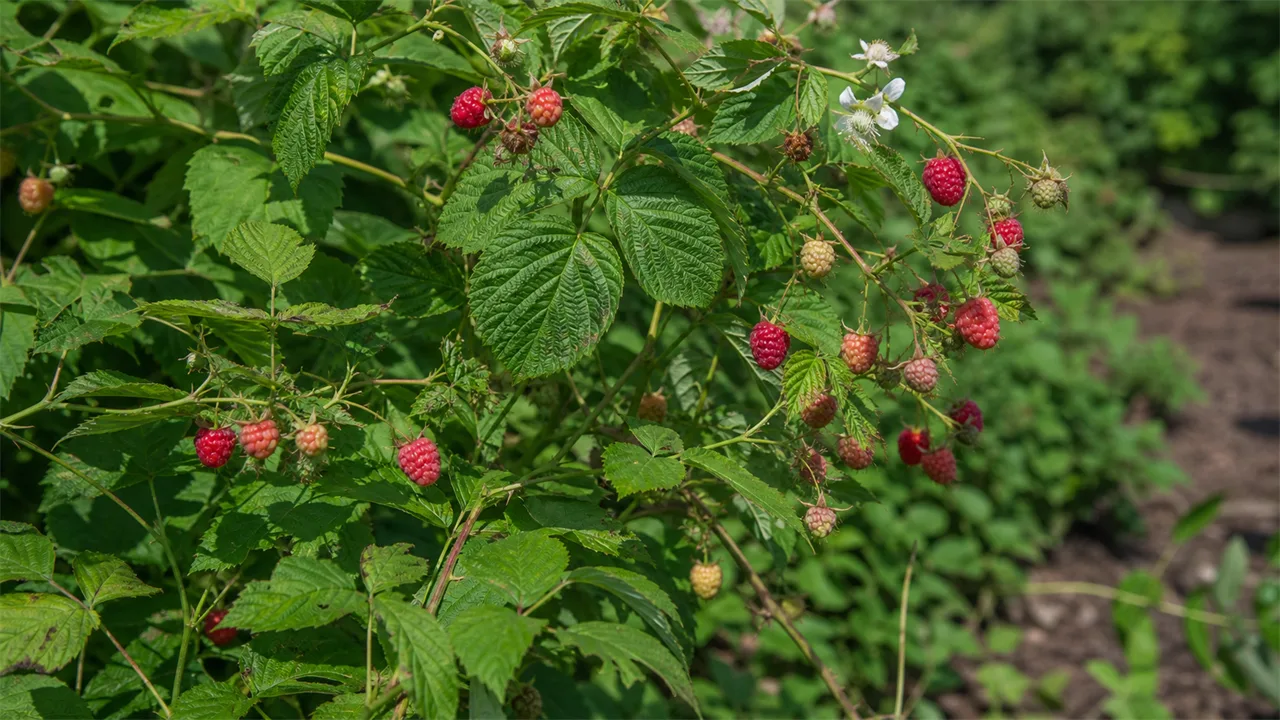
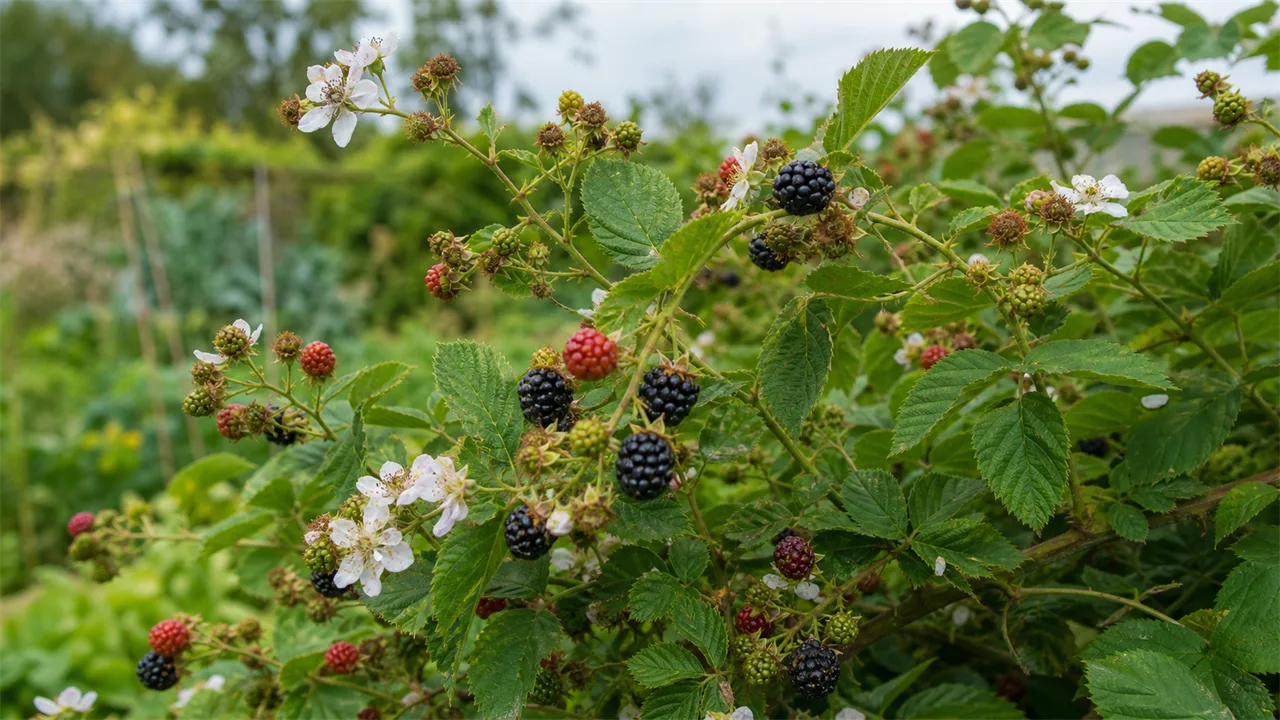
Blackberry (Rubus fruticosus agg.) is the cultivated form of the bramble — a vigorous, cane-bearing perennial fruit grown across the UK for its late-summer berries. The cultivated blackberry is distinct from the wild bramble you find in hedgerows: modern cultivars have been bred for larger fruit, sweeter flavour, fewer thorns, more uniform ripening, and crucially for British growers, better cold-tolerance and later-flower escapes from spring frosts. Garden blackberries are typically American-derivative hybrids (often with R. allegheniensis and other species in the parentage) sold under the Rubus fruticosus aggregate name, and they crop reliably from Cornwall to Inverness with the right cultivar choice and a simple wire support.
Why grow them at home rather than forage? Three reasons. First, flavour: a sun-ripened cultivated blackberry, picked fully black and still warm, is markedly sweeter and more aromatic than a hedgerow fruit picked a day early for fear of the birds. Second, yield: a single trained row of 3–5 m produces 5–10 kg of fruit per season once established — enough for crumbles, jam, cordials and the freezer. Third, season extension: with an autumn-fruiting primocane cultivar such as 'Reuben', the UK harvest stretches from late July through to the first hard frost in November, well beyond anything you can pick in the wild.
A well-sited blackberry row will crop for 15–20 years with only modest annual work, which makes it one of the best-return soft fruits a UK garden or allotment can carry.
Sowing
Blackberries are not raised from seed in any practical UK sense — named cultivars do not come true, and the species itself is apomictic and variable. Grow from bare-root or potted canes bought from a fruit nursery between late October and early April, planted while dormant.
Planting window (UK region-aware):
- Mild south-west (Cornwall, Devon, Dorset, Somerset, the Channel Islands, sheltered urban London): plant any time from late October through to mid-March, avoiding only waterlogged or frozen ground. Autumn planting is ideal — roots establish over winter and the canes crop the following summer.
- South-east, Midlands, south Wales: late November to late February; the earlier end is fine on free-draining soils, hold off until February on heavy clay.
- Northern England, north Wales, lowland Scotland: February to mid-March is the safest window. Ground is often too wet in November–December and bare-root stock held too long sulks.
Site and soil. Blackberries fruit best in full sun but tolerate light shade — useful on north-facing walls where you want fruit but not a sun trap. Soil should be moisture-retentive yet free-draining; a slightly acidic to neutral pH (5.5–7.0) suits them. On thin chalk or pure sand, dig in a generous barrow of well-rotted manure or garden compost per square metre before planting and mulch thickly each spring.
Spacing and depth. Plant 2–2.5 m apart along the row, with 2.5–3 m between rows if you are running more than one. For fan-training against a wall or fence, allow 3–4 m per plant. Set the crown at the same depth it sat in the nursery — usually visible as a soil mark on the cane. Water in well even in winter; a 5 L can per plant at planting is standard.
Container growing. Compact cultivars such as 'Black Cascade' (hanging-basket blackberry) and 'Loch Ness' (thornless, ~1.5 m) will crop in a 40–50 L pot filled with a loam-based compost such as John Innes No. 3, kept moist and fed with a high-potash liquid feed from May onwards.
Cultivars worth planting in the UK. Choose by region and use:
- 'Loch Ness' — thornless, mid-season, heavy cropper, widely available, the default UK allotment choice.
- 'Bedford Giant' — large fruit, vigorous, traditional UK favourite; needs space.
- 'Adrienne' — early to mid-season, sweet, good for the north.
- 'Reuben' — autumn-fruiting primocane, large fruit, fruits on current year's wood; cut to the ground each winter. Best in the south and Midlands; in cold Scottish sites the late crop may not ripen before winter.
- 'Black Butte' — very large fruit, mid-season, less hardy; only for milder regions and sheltered sites.
Growing
Blackberries crop on two-year-old canes (floricanes) — the cane grows one year, fruits the next, then dies back. The exceptions are primocane autumn cultivars such as 'Reuben', which fruit on the current year's growth.
First-year training. After planting, cut the cane(s) back to about 25–30 cm to encourage strong new shoots from the base — these are the canes that will fruit next year. As new canes emerge through summer, tie them in to your wire support, fanning them out so they don't cross.
Wire support (the standard UK setup). Run two horizontal wires at 0.6 m and 1.5 m above ground between 2.4 m posts at the row ends, with the row about 2 m long per plant. Tie floricanes to one side and new canes to the other — this "fan-and-loganberry" method makes pruning and picking much easier and reduces disease.
Watering and feeding. Blackberries are shallow-rooted and resent drought, especially on light soils. From May to September give at least 20 L per plant per week in dry spells — a leaky hose along the row is ideal. Mulch 5–8 cm deep with garden compost or well-rotted manure each March, keeping it clear of the crown. In late spring apply a balanced fertiliser (e.g. blood, fish and bone at 100 g/m²) and switch to a high-potash feed (tomato feed or sulphate of potash) once the fruit has set.
Weeding and mulching. Keep the strip under the canes weed-free — bindweed and couch grass will climb into the canes and become impossible to remove. A thick organic mulch plus a hand-hoe pass every three weeks in summer is enough; do not cultivate deeply, the roots sit close to the surface.
Pruning (the part everyone gets wrong). After fruiting, cut the spent floricanes back to ground level and tie in the new canes that grew that summer. Do this in September–October rather than waiting until winter — it stops fungal spores from overwintering on the dead wood and makes the job much easier. Wear thick gloves; even thornless cultivars have some prickles. For autumn-fruiting 'Reuben', simply cut everything to ground level in late January.
Pests and diseases. The main UK problems are:
- Raspberry beetle (byturus): small grubs in the fruit. Hang a white sticky trap from May to July and spray with Bacillus thuringiensis if numbers are high.
- Birds: net the row as fruit begins to colour in late June — pigeons and blackbirds will strip a plant in a morning.
- Cane spot (Elsinoe) and purple blotch: purple-black lesions on young canes. Improve air circulation, avoid overhead watering, and remove badly affected canes.
- Phytophthora root rot: sudden wilting on wet soils. Plant on raised ridges or in free-draining ground; there is no cure once established.
Harvesting
Harvest window (UK region-aware):
- Mild south-west and south coast: main-crop floricanes from late July to mid-September; autumn-fruiting 'Reuben' from early September to late October.
- South-east, Midlands, east Anglia: main crop early August to late September; 'Reuben' mid-September to early November.
- Northern England, lowland Scotland: main crop mid-August to early October; 'Reuben' is risky — only ripens fully in a warm autumn, often into November.
How to tell when they're ready. A ripe blackberry is uniformly black, slightly soft, and pulls away from its plug (the white core) cleanly. If it resists and tears, it isn't ready. Pick in the morning once the dew has dried but while the fruit is still cool — this gives you a longer shelf life. Pick into a shallow tray, no more than four or five berries deep; deep buckets crush the fruit at the bottom.
Yield. A mature plant in full production yields 5–10 kg per season over a 4–6 week main-crop window. The peak picking window is narrow — a plant can go from under-ripe to over-ripe in three warm days, so plan to pick every two to three days.
Eating
The whole point of growing your own is that the fruit never sees a fridge until you want it to. Fresh blackberries are superb simply with cream and a little sugar, folded into yogurt, scattered over porridge, or blitzed into a smoothie. The flavour deepens within an hour of picking as the fruit continues to ripen slightly on the kitchen counter.
For the kitchen:
- Crumbles and pies: blackberries pair with apple (especially Bramley) in roughly equal weight; the apple sets the juice.
- Jam: classic blackberry & apple jam is a UK store-cupboard staple; 1 kg blackberries, 500 g Bramley, 1 kg jam sugar, juice of two lemons. Setting point in 20–25 minutes.
- Cordial and shrub: steep 1 kg crushed berries with 500 g sugar and the zest of a lemon for 24 hours, strain, and bottle with a splash of citric acid. Dilute 1:4 with cold water.
- Vinegar: blackberry vinegar (fruit steeped in cider vinegar for two weeks, strained, sweetened lightly) is excellent for winter salads and deglazing.
- Liqueur: blackberry gin or sloe-style "blackberry whisky" — fruit, sugar, spirit, two months patience.
A handful of blackberries in a green salad with goats' cheese and walnuts is one of the best August lunches a UK garden can produce.
Supporting
Blackberries are canes that must be supported — left to sprawl they fruit on the ground (slimy, slug-eaten, hard to pick) and become a thicket within two seasons. The standard UK garden setup:
- Post-and-wire system: 2.4 m posts at row ends, two horizontal wires at 60 cm and 150 cm.
- Fan against a wall or fence: anchor horizontal wires 30 cm apart up to 1.8 m, fan the canes out like a pear tree. Walls give reflected heat and earlier ripening in the north.
- Arch or pergola training: vigorous cultivars such as 'Bedford Giant' look spectacular grown over a 2 m arch, with fruiting canes tied along the top and new canes trained up the sides.
- Replacements: replace any broken post or wire in late winter; a leaning support tears at the crown in a strong summer storm.
Storing
Fresh blackberries keep in the fridge for 2–4 days in a single layer on a paper-lined tray. For longer keeping:
- Freezing: spread on a tray to freeze individually, then bag — keeps 9–12 months. Best for crumbles and jam later in the year.
- Bottling in sugar syrup: traditional UK method; berries in cold 40% sugar syrup, water-bath processed 20 min for 500 g jars. Keeps a year unopened.
- Jam and chutney: the classic preserving route; properly potted and sealed, keeps 12–18 months.
- Drying: blackberries dry poorly on their own but make excellent fruit leather when puréed and spread thin.
- Cordial and liqueur: as above; bottled and sealed, keeps 12 months in a cool dark cupboard.
Don't wash before storing — water on the surface speeds mould. Wash only immediately before using, gently, in a colander.
Pests and Diseases
| Problem | Symptoms | Management |
|---|---|---|
| Birds | Fruits are pecked, damaged, or entirely stripped from the canes during ripening. | Cover the crop with bird netting or horticultural fleece once fruits begin to colour. |
| Grey mould | Fruits and flowers become covered in a fuzzy grey spore mass and rot rapidly. | Improve air circulation by pruning and ensure good drainage to reduce humidity around the plants. |
| Powdery mildew | A white, dusty fungal growth appears on young leaves, shoots, and developing fruit. | Prune for open habit and apply a suitable fungicide if infection is severe in hot weather. |
| Slugs and snails | Irregular holes are eaten into young leaves and soft, ripening fruit. | Use physical barriers like copper tape or apply slug pellets around the base of plants. |
| Rust | Orange or yellow pustules develop on the undersides of leaves, causing them to yellow and drop. | Remove and destroy infected leaves to reduce spore spread and improve air circulation. |
For step-by-step help, read Dealing with Slugs and Snails and Treating Powdery Mildew. Or browse the full plant problem solver to diagnose an issue by symptom.
Blackberry in our guides
- How to Get Rid of Brambles
- UK Gardeners Warned To Check for These Weeds Before They
Recommended Products
GardenWizz earns a commission from qualifying purchases made through affiliate links on this page (including links within the article) — as an Amazon Associate, and from Thompson & Morgan via the Awin network. This does not affect the price you pay. See our disclaimer for details.