Long-Scape Iris
Iris delavayi
The Gardening Year
Best months in UK gardens · full planting calendar →
🖨 Printable care card (PDF)At a Glance
| Botanical name | Iris delavayi |
|---|---|
| Common name(s) | long-scape iris |
| Family | Iridaceae |
| Plant type | perennial |
| Height × Spread | 60–150 cm × 45–60 cm |
| Position | Full sun, Partial shade |
| Soil | Moist but well-drained; Clay, Loam, Sand; Acid, Alkaline, Neutral pH |
| Flowering | May–August |
| Toxicity | Harmful if eaten |
| Native range | South western China (Guizhou, Sichuan, Tibet, Yunnan) |
Overview
Iris delavayi (Delavay's iris) is a robust, clump-forming bearded iris native to alpine meadows and forest margins of south-west China, and one of the more statuesque members of the genus to perform reliably in UK gardens. The Royal Horticultural Society has awarded it the Award of Garden Merit (AGM) in recognition of its dependable flowering, good constitution and reliable hardiness across most of the United Kingdom. The following quick-care table summarises the essentials; the full article covers each in detail.
Iris delavayi is a member of the Iridaceae and belongs to the bearded, or pogon, section of the genus — the same group as the better-known Iris germanica cultivars, but distinct in its later flowering season, taller stems and generally more graceful habit. It was introduced to European horticulture in the late nineteenth century by the French missionary and plant collector Jean Marie Delavay, after whom it is named, and remains a specialist favourite among enthusiasts of species irises. Mature clumps produce a succession of large, net-veined lilac-purple flowers held well above the foliage in late spring and early summer, providing a strong vertical accent in herbaceous borders, island beds and gravel gardens. The plant is reliably hardy throughout the UK, including most lowland Scotland and the colder inland counties of northern England, and it is undemanding once established. It is also a useful late-flowering iris, filling the gap between the main flush of border bearded irises in May and the later June blooming of many June-flowering perennials.
Appearance
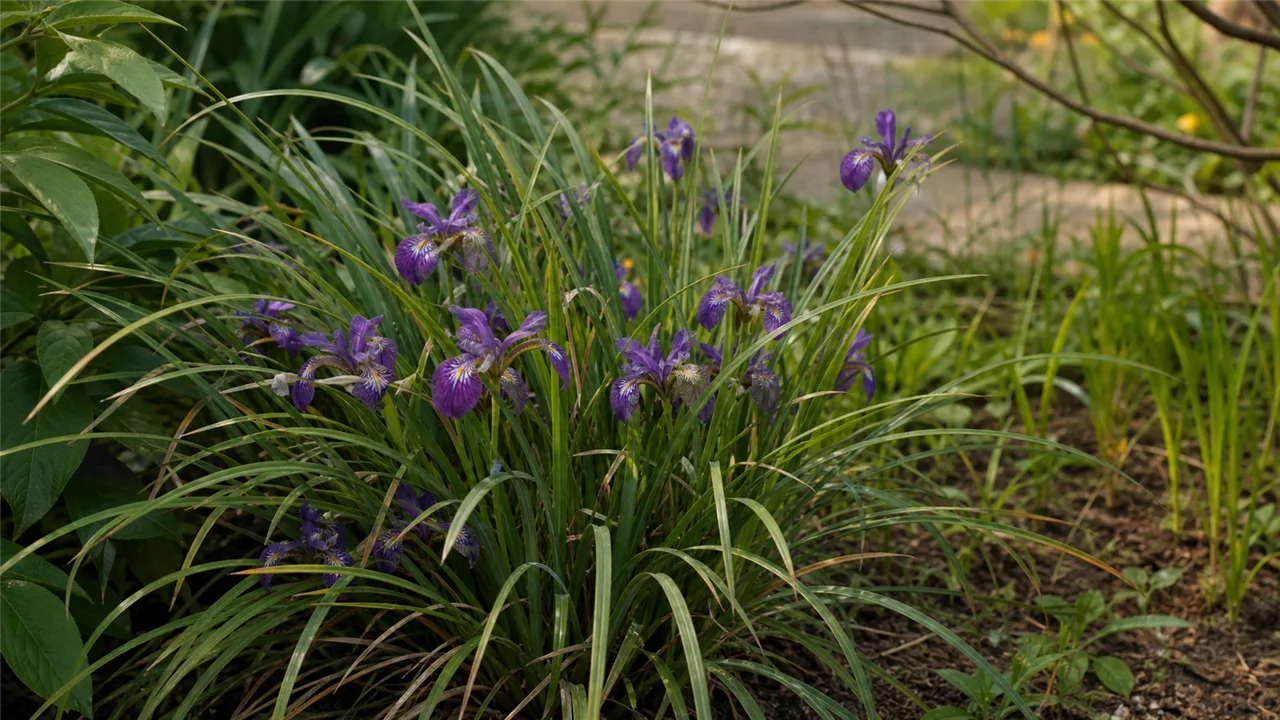
Iris delavayi is a vigorous herbaceous perennial that builds into a broad, leafy clump with a short creeping rhizome at the base. The rhizomes are thick, pale brown and sit at or just below the soil surface, sending out fibrous roots below and fans of sword-shaped leaves above. Each fan consists of five to eight bright green, glaucous, ensiform leaves 30 to 60 cm long and 1.5 to 3 cm wide, arching gracefully outward and tapering to a fine point. The leaves die back in autumn, leaving a low crown that survives the winter underground.
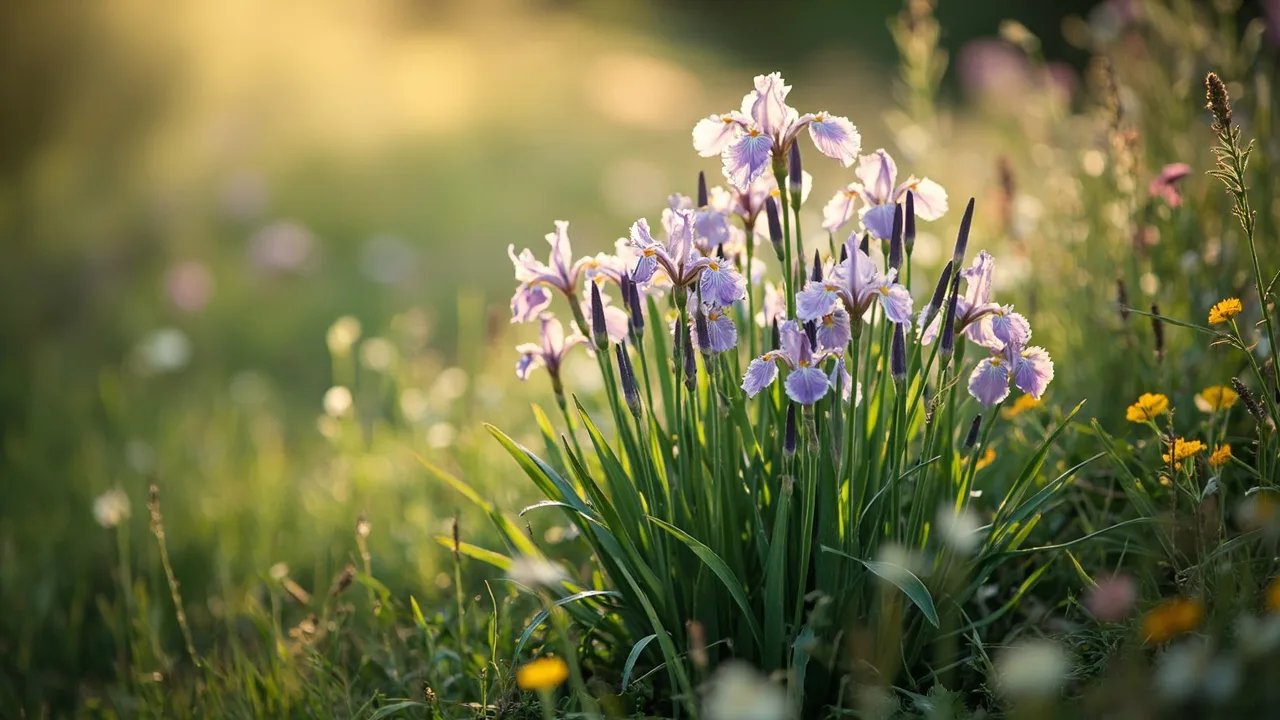
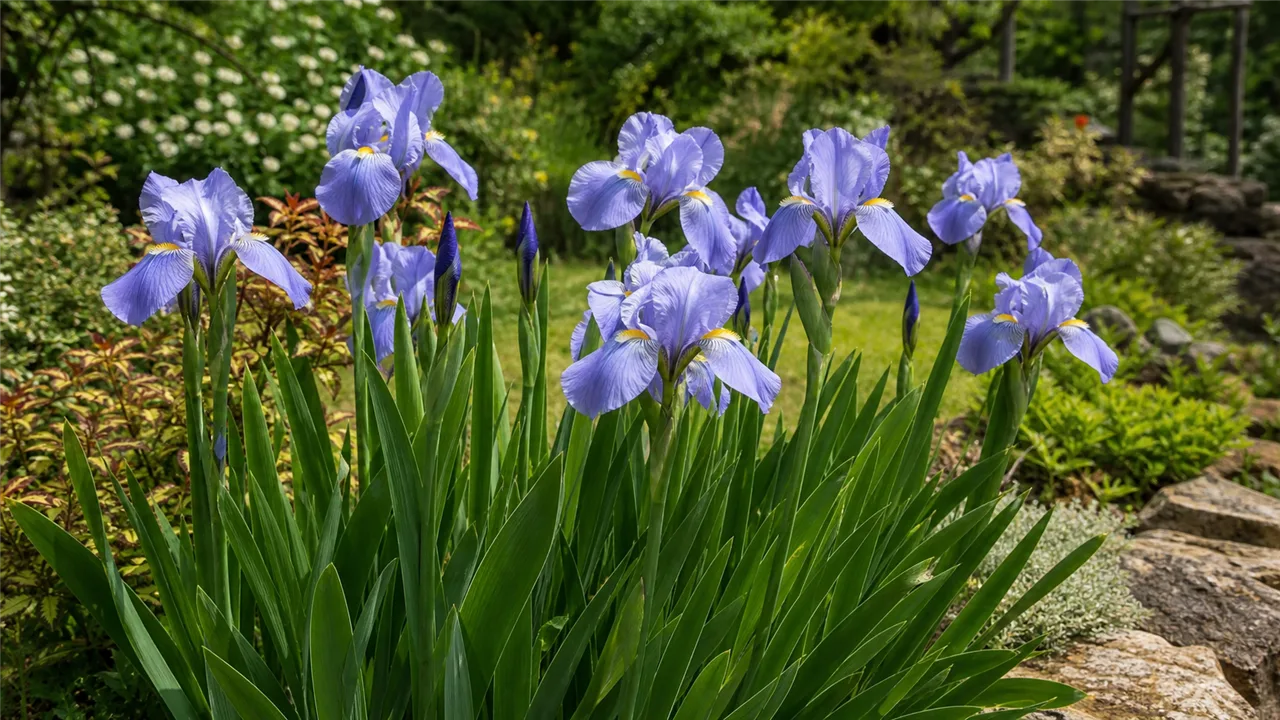
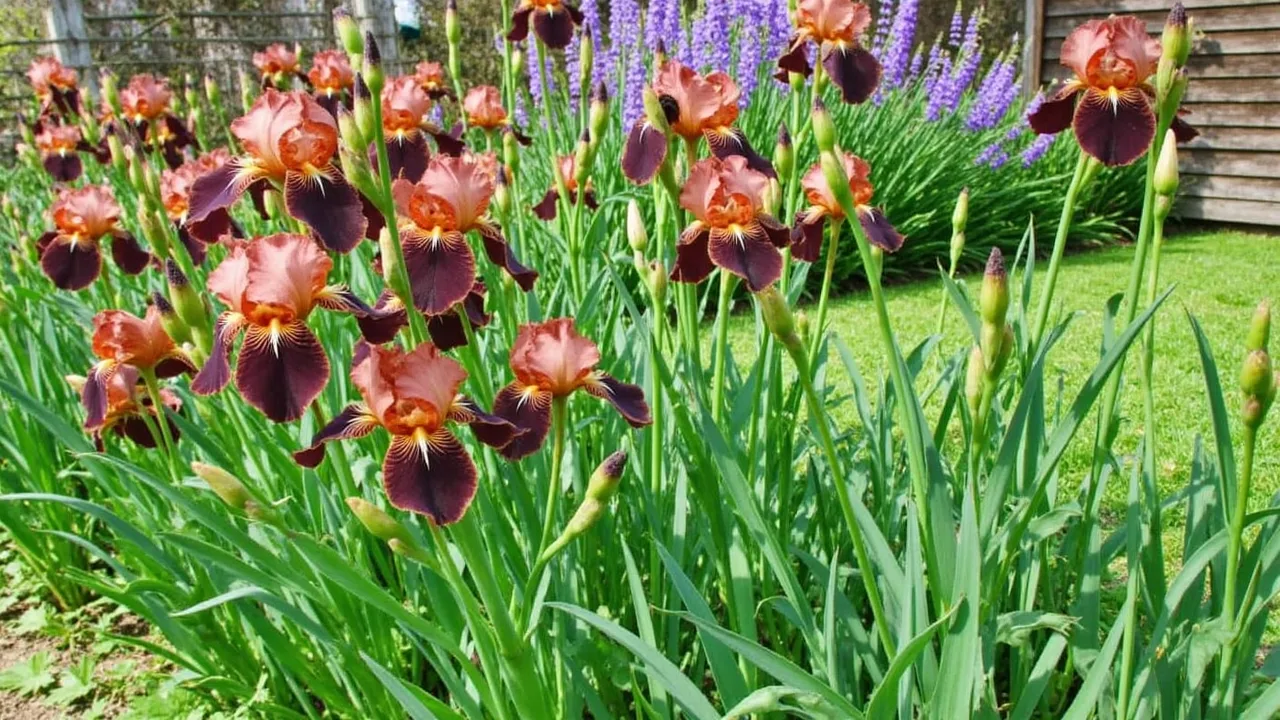
Flowering stems are typically 60 to 90 cm tall — occasionally reaching a little over a metre in well-grown, established clumps — and are usually unbranched, though strong plants may produce a low side branch bearing a second bud. Each stem carries one or, more commonly, two flowers, opening in succession over a period of ten to fourteen days in late May and June. The flowers are of typical bearded iris form, with three upright standards and three pendent falls, and measure roughly 8 to 12 cm across. The ground colour is a clear lilac-purple to violet, overlaid with intricate darker purple veining on the falls and a paler, almost silvery, area around the beard. The beard itself is pale yellow to white, conspicuous against the darker ground colour. The standards are usually held a little more openly than those of I. germanica cultivars, giving the flower a softer, more relaxed outline. The blooms are lightly scented and last two to three days each, with a well-grown clump flowering for two to three weeks overall.
After flowering, the seed pods develop rapidly and may reach 4 to 6 cm long, three-sided and tapering, containing rows of pale brown seeds. These can be left to ripen for propagation, or removed once the flowers fade to redirect the plant's energy back into the rhizome. By late summer the foliage begins to yellow at the tips; this is normal die-back and is not a sign of disease. The rhizome creeps outward slowly each year, extending the clump by a few centimetres annually, and forms the basis of the standard division cycle used to maintain vigour.
Growing Conditions
Iris delavayi performs best in full sun, in well-drained, neutral to slightly alkaline loam. It tolerates a wide pH range in practice — anything from around pH 6.0 to 8.0 — but the single most important condition is drainage. Wet, heavy ground in winter is the most common cause of failure, leading to rot at the rhizome and the loss of the clump in a single cold, damp season. In the United Kingdom this means free-draining sites are far more reliable than retentive clay unless the bed has been improved with sharp grit and well-rotted organic matter. Raised beds, gravel gardens, the top of a sunny slope and the foot of a warm south- or west-facing wall are all excellent positions.
The RHS rates Iris delavayi as hardy to H6, meaning it tolerates winter temperatures down to about –20 °C and is suitable for gardens throughout the United Kingdom, including most lowland Scotland, the Midlands and the colder inland counties of northern England. It does not require winter protection in any part of the UK, and established clumps come through cold, snowy winters with no special treatment. The plant is, however, susceptible to wind damage on exposed sites; the tall flower stems catch the wind, and the large flowers are easily bruised. A position sheltered from prevailing westerlies — for example, in the lee of a hedge, wall or shrub border — produces markedly better blooms.
Although Iris delavayi is sun-loving, it tolerates very light, dappled shade for part of the day, particularly in the south of England. In deeper shade the plant will grow leaves but flower poorly, and the rhizomes are more likely to remain soft and prone to rot. Soil fertility should be moderate: rich, heavily mulched borders produce lush leaf growth at the expense of flowers, and the soft growth is more vulnerable to winter damage. A lean, well-drained soil produces the strongest flowering.
Planting and Care
Plant container-grown specimens at any time of year when the ground is workable and the soil is not frozen or waterlogged, though late summer and early autumn — immediately after the plant has finished flowering — is the traditional and best time for bearded irises of all kinds, because the rhizome can re-establish its roots in warm soil before winter. Bare rhizomes lifted from a friend or nursery are best planted in August or September. Set the rhizome with its top surface just visible above the surrounding soil, and spread the roots out firmly beneath it; planting too deep is the single most common cause of failure. Space plants 30 to 45 cm apart for a drift, or closer for a bold single clump.
Water in well at planting and keep the soil just moist during the first growing season. Once established, Iris delavayi is notably drought-tolerant and rarely needs supplementary watering except in prolonged dry spells on the most free-draining soils. Feeding should be light: a single application of a low-nitrogen, high-potash fertiliser such as a 5-10-10 or a bone-meal-based feed in early spring, with a second light dressing after flowering, is sufficient. Avoid fresh manure and rich garden compost around the rhizomes, which encourage soft growth and rot.
Pruning in the strict sense is not required, but tidying is. Remove spent flower stems down to the base as soon as the last bloom fades, taking care not to damage the surrounding leaves. In autumn, once the foliage has yellowed and died back naturally, it can be cut down to a short fan 5 to 10 cm tall, or left in place over winter and cleared in early spring. Mulching should be done with care: a thin layer of coarse grit around — but not over — the rhizomes suppresses weeds, improves surface drainage and reflects light and warmth onto the rhizomes, encouraging good flowering. Organic mulches such as bark or garden compost should be kept away from the crown, as they hold moisture against the rhizome and promote rot.
Propagation is straightforward by division of established clumps every three to four years, in late summer after flowering. Lift the clump with a fork, shake off loose soil, and break the rhizomes apart, retaining the younger outer sections and discarding the older, woody centre. Cut the leaves back to about 15 cm to reduce water loss and replant the divisions at once at the correct depth. Seed propagation is possible but slow: sow fresh seed in autumn in a gritty, free-draining compost and overwinter outdoors; germination is erratic and may take one to two growing seasons, with seedlings typically reaching flowering size in their third or fourth year.
Common Problems
The most serious problem in UK cultivation is rhizome rot, almost always caused by waterlogged or poorly drained soil, planting too deep, or a heavy organic mulch against the crown. The first sign is often a soft, foul-smelling area at the base of the leaves in late winter or early spring; affected rhizomes should be cut back to firm, healthy tissue, the cut surface dusted with sulphur, and the plant lifted and replanted in better-drained soil at the correct depth. In severe cases the entire clump may need to be replaced.
Slugs and snails can be a nuisance, particularly on young growth in spring and on the soft bases of new divisions. They will tunnel into rhizomes sitting at or just below the surface, especially in damp conditions, and the entry wound then allows bacterial rot to develop. Organic slug pellets, beer traps or hand-picking in the evening are all effective; copper rings around choice clumps also help in mixed borders.
Leaf spot, caused by Mycosphaerella species, produces small brown spots with a yellow halo on the foliage in damp summers. It is rarely serious in the UK, but badly affected leaves should be removed and destroyed (not composted) in autumn, and air circulation around the clump improved by thinning out neighbouring plants.
Aphids may cluster on the emerging flower stems in May but rarely cause lasting damage; a strong jet of water or insecticidal soap is usually sufficient. The plant is not considered toxic to humans, dogs or cats, though, as with most garden plants, ingestion of substantial quantities may cause mild gastric upset.
Poor flowering is most often due to one of three causes: planting depth incorrect (most often too deep), the clump has become overcrowded and needs division, or the plant is in too much shade. Plants that have been overfed with high-nitrogen fertiliser also tend to make leaf at the expense of flower.
Popular Varieties
Iris delavayi is grown predominantly as a species, and the RHS Award of Garden Merit is awarded to the species itself rather than to a specific clone. The form most widely cultivated in UK gardens is the robust, typical large-flowered form raised from wild-collected Chinese seed in the late nineteenth and early twentieth centuries, and seedlings show some natural variation in flower size, depth of veining, stem height and the exact shade of lilac-purple. Specialist iris nurseries occasionally list selected seedling forms under clonal names, but availability is limited, named cultivars are not consistently in commerce, and the species itself remains the safest and most widely available choice for most gardeners.
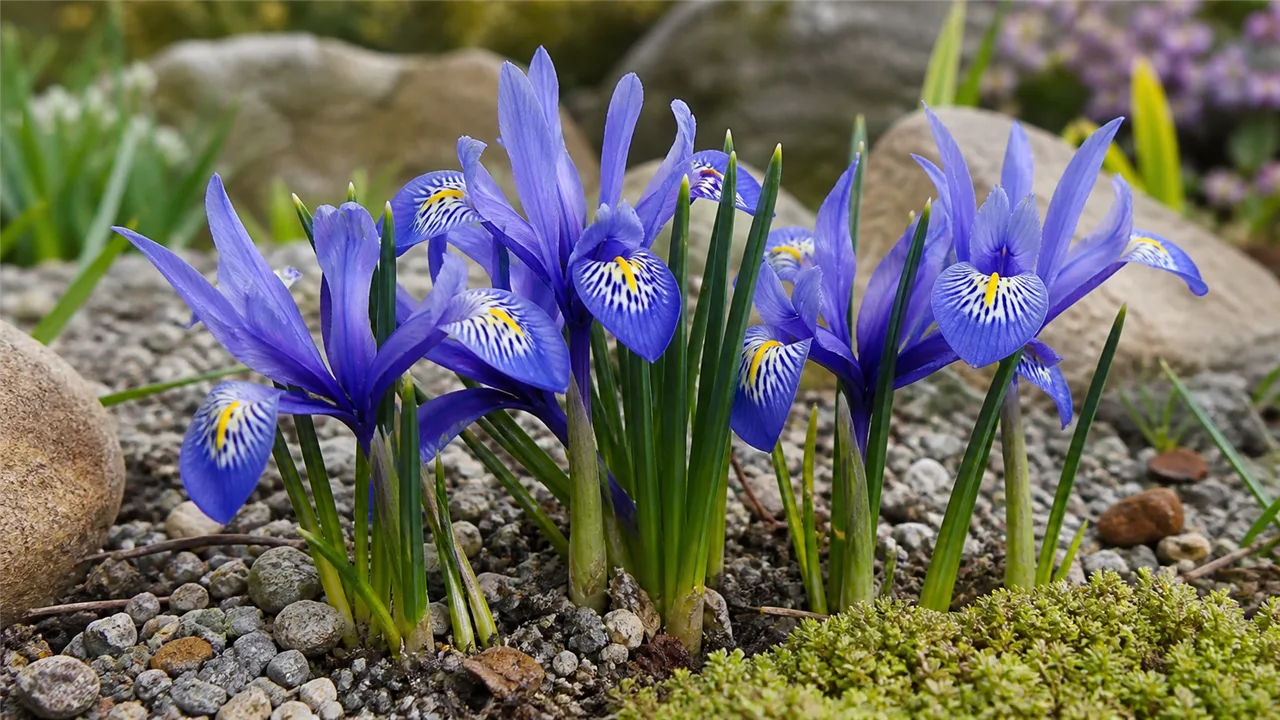
Two closely related species sometimes confused with I. delavayi in catalogues and older literature are worth mentioning. Iris clarkei is a smaller blue-purple-flowered species from the same region of south-west China, flowering a little earlier in May, with narrower falls and a more compact habit. Iris bulleyana has paler, more variable blue flowers and noticeably branched stems carrying several flowers per stem, giving a looser, more candelabra-like effect. Both are excellent garden plants in their own right and are sometimes grouped with I. delavayi under the informal heading of Sino-Himalayan series Sibiricae irises, but neither should be confused with the true species. Where the AGM-rated form is required, the species I. delavayi as commercially sold is the appropriate choice.
Pests and Diseases
| Problem | Symptoms | Management |
|---|---|---|
| Slugs and snails | Irregular holes chewed in young leaves and flower buds, often accompanied by slimy trails. | Use physical barriers like copper tape or beer traps, and hand-pick pests at night. |
| Bacterial soft rot | Rhizomes become soft, mushy, and foul-smelling, causing the plant to collapse. | Ensure well-drained soil and partially exposed rhizomes; cut away affected tissue with a disinfected knife. |
| Iris leaf spot | Small, circular brown or purple spots appear on the leaves, sometimes with yellow halos. | Remove and dispose of infected foliage at the end of the year to reduce overwintering spores. |
| Iris rust | Orange-brown pustules form on the leaves, leading to yellowing and premature leaf death. | Pick off lightly infected leaves to slow spread, but avoid removing too much foliage. |
| Aphid-borne viruses | Young leaves show mottling, streaking, or distortion, and plant vigor declines. | Dispose of severely affected plants to prevent transmission to healthy neighbors. |
For step-by-step help, read Controlling Aphids Naturally and Dealing with Slugs and Snails. Or browse the full plant problem solver to diagnose an issue by symptom.
Recommended Products
GardenWizz earns a commission from qualifying purchases made through affiliate links on this page (including links within the article) — as an Amazon Associate, and from Thompson & Morgan via the Awin network. This does not affect the price you pay. See our disclaimer for details.