
Common Sorrel
Rumex acetosa
The Gardening Year
Best months in UK gardens · full planting calendar →
🖨 Printable care card (PDF)At a Glance
| Botanical name | Rumex acetosa |
|---|---|
| Common name(s) | Common Sorrel |
| Family | Polygonaceae |
| Plant type | perennial |
| Height × Spread | 60 cm × — |
| Position | — |
| Soil | poor soil |
| Flowering | June |
| Toxicity | Harmful if eaten in large amounts. Wear gloves and other protective equipment when handling Pets: Harmful if eaten in large amounts - for further information and contact numbers regarding pets, see the HTA guide to potentially harmful plants |
| Native range | Eurasia |
Common sorrel (Rumex acetosa) is a hardy herbaceous perennial of the dock family (Polygonaceae), widely naturalised across the UK and long cultivated as a leafy culinary herb. Sometimes sold as garden sorrel or spinach dock, it is grown for its sharply acidic, lemony leaves — a flavour that has earned it a permanent place in herb gardens, allotments and kitchen borders from Cornwall to the Highlands. Easy to raise from seed, tolerant of a wide range of soils and reliably hardy throughout British winters, common sorrel is one of the most useful leafy herbs for UK growers who want fresh, lemony foliage from late spring through to the first frosts.
Overview
Common sorrel is a native of temperate Europe and much of Asia, and has been a familiar feature of British meadows, roadside verges and field edges for centuries. It was once gathered from the wild as a spring tonic and a pot herb long before it became a garden plant. The generic name Rumex covers a wide range of docks and sorrels, but R. acetosa is distinguished by its distinctly arrow-shaped, or "halberd", basal leaves and a clean, acidic bite rather than the coarser flavour of true docks.
In the kitchen garden, common sorrel fills a niche that ordinary spinach cannot: it provides a bright, lemony sharpness that holds its flavour when cooked briefly and cuts through richer ingredients such as cream, eggs and oily fish. It is the principal sorrel of French cuisine — known as oseille — where it is the basis of sorrel soup and the classic butter sauce served with salmon. UK growers will find it equally at home in a mixed herb border, a dedicated potager, or a window-box of culinary herbs, provided it is given steady moisture and not allowed to run to seed.
Appearance
Common sorrel forms a clump of upright to slightly arching stems arising from a central rootstock. At maturity it typically reaches 30–60 cm in height with a similar spread, although plants grown in rich, moist soil can push taller. The leaves are the main ornamental and culinary feature: oblong to lance-shaped, 5–15 cm long, with a pointed tip and a truncate or shallowly heart-shaped base. Margins are entire (smooth-edged), and the surface is a fresh, slightly glaucous green that often develops attractive red or bronze tints in autumn as temperatures fall.
The leaf shape and habit give rise to the common name: "sorrel" derives from the Old French sorel, meaning sour, a reference to the oxalic acid content that produces the characteristic sharp taste. The flavour is at its cleanest and most lemony in young, tender leaves harvested in spring and early summer; older leaves become tougher and more strongly acidic.
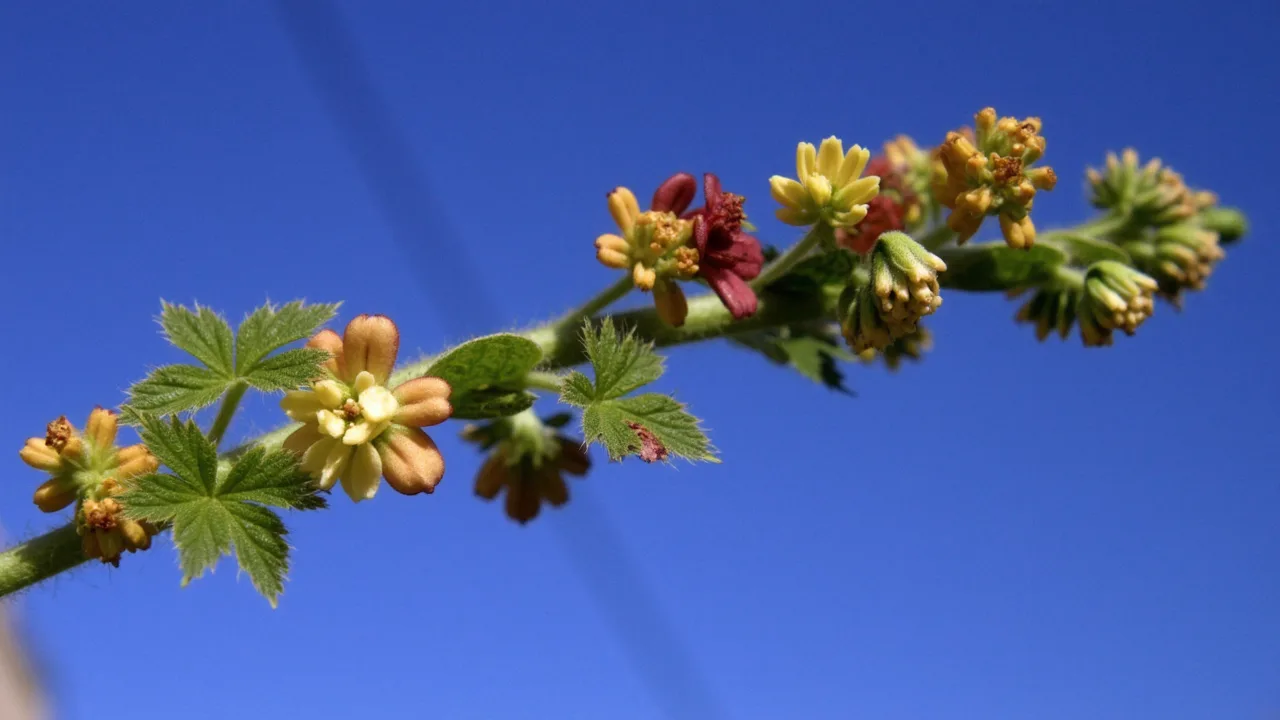
Flowering occurs from late spring into mid-summer. Tall, slender stems rise above the foliage and carry loose, branching panicles of small, greenish to rust-red flowers. Common sorrel is typically dioecious, meaning individual plants are either male or female, and the two sexes can be told apart once in flower by the slightly different inflorescence structure. After pollination, female plants set small, three-angled seeds that turn a warm copper-brown at maturity. As with many leafy herbs, flowering is best prevented if the goal is a continuous harvest of tender leaves, because plants that run to seed become coarse and stop producing useful foliage.
Growing Conditions
Common sorrel succeeds across most of the UK, from the mild, wet climate of the west country to the colder, drier conditions of the east and north. It is fully hardy, withstanding frost and prolonged winter cold without protection; the top growth dies back in late autumn and the plant regrows from the crown each spring.
It performs best in a moisture-retentive but well-drained soil. A slightly acidic to neutral pH of around 5.5–7.0 is ideal, although the species is adaptable and tolerates a wider range than many herbs. Soils that dry out sharply in summer are unsuitable: drought is the single most common cause of poor performance, leading to tough leaves, reduced growth and premature bolting. Where soil is light or sandy, generous additions of well-rotted organic matter before planting will improve both water-holding capacity and structure.
The plant tolerates a position in full sun, but in most parts of the UK it does at least as well in light or partial shade, particularly in the south where summer sun can be intense. A site that receives morning sun and afternoon shade is ideal in warmer districts. Common sorrel is also tolerant of cooler, shadier corners where Mediterranean herbs would struggle, making it a useful choice for less obvious spots in the garden.
Planting and Care
Sowing can begin under cover in February, with seed trays or modules kept at 15–20°C; germination usually takes 7–14 days. Seedlings are pricked out once large enough to handle and hardened off before planting out after the last frosts. Direct sowing outdoors is reliable from March to May, once the soil has warmed and is workable. Sow thinly in shallow drills and thin established seedlings to 20–30 cm apart, with rows 30–45 cm apart. In a mixed herb bed, allow similar spacing to neighbouring plants so that each clump has room to develop.
Watering is the most important ongoing task. Common sorrel has poor drought tolerance and will respond to any check in moisture by hastening to flower. Aim to keep the soil consistently damp through the growing season, particularly from late spring onwards when growth is most vigorous. A spring mulch of well-rotted compost or leaf mould, applied 5–7 cm deep around the crown, helps to conserve moisture, suppress weeds and feed the plant slowly through the season.
Feeding needs are modest. The annual mulch usually provides enough nutrition for healthy leaf production on most garden soils. On very poor ground, an occasional liquid feed of a balanced organic fertiliser in early summer will sustain leafy growth, but rich feeding is not required and can encourage soft growth that is more prone to mildew.
Pruning is largely a matter of harvesting and tidying. Pick young leaves regularly from six to eight weeks after sowing, taking the outer leaves first and leaving the central crown to keep producing. Remove any flower stems as soon as they appear, cutting back to the basal rosette, to delay bolting and prolong the harvest. At the end of the season, cut down the dying top growth in late autumn and tidy around the crown to reduce overwintering pest habitat.
Propagation is straightforward. Named forms are best increased by division of established clumps in spring or autumn, every two to three years, which also rejuvenates ageing plants. Seed is the simplest method for species plants and germinates freely when fresh; saved seed from garden plants will not come true if more than one form is grown nearby, because of cross-pollination between separate male and female plants.
For container cultivation, choose a deep pot of at least 20 cm to accommodate the tap-root. Use a loam-based or good-quality multipurpose compost, water daily in warm weather, and liquid-feed every few weeks through the summer. Pots dry out faster than open ground, so container-grown plants are usually the first to bolt in a hot spell.
Common Problems
Bolting is by far the most frequent complaint, particularly in dry summers or after root disturbance. The cure is prevention: sow at the right time, thin rather than transplant where possible, mulch in spring and water consistently during dry periods. Allowing plants to set seed also accelerates bolting, so prompt removal of flower stems is essential.
Powdery mildew can affect leaves in hot, dry conditions where air circulation is poor, coating the foliage with a white dusty bloom. Avoid overhead watering, space plants adequately, and remove badly affected leaves. Rust, caused by the fungus Puccinia phragmitis and related species, appears as orange-brown pustules on the undersides of leaves; remove and dispose of affected foliage promptly and avoid wetting the leaves when watering.
Slugs and snails are partial to the young seedlings and tender new growth, especially in damp conditions. Standard organic controls — night-time hand-picking, beer traps, wildlife-friendly pellets based on ferric phosphate — are usually sufficient. Aphids occasionally colonise the soft growing tips; a spray of soapy water or a strong jet from the hose will dislodge them. Leaf spot, presenting as small brown lesions, may appear in prolonged wet weather and is best managed by improving air flow and removing affected leaves.
Popular Varieties
Named cultivars of common sorrel are relatively few; the refined kitchen-garden forms most often offered are described below.
Common sorrel is widely grown as the species, but a number of more refined forms are offered by UK herb nurseries. 'Belleville' is a French selection traditionally grown for the kitchen, valued for its large, broad leaves and reliably lemony flavour. Profusion is a vigorous, broad-leaved strain selected for cutting, returning quickly after regular harvests. 'Blonde de Lyon' is a paler-leaved French form with a milder acidity, often recommended for those who find common sorrel too sharp when eaten raw.
In addition to true R. acetosa, two related species are commonly sold alongside it: French sorrel (Rumex scutatus), with smaller, shield-shaped leaves and a milder flavour, and red-veined sorrel (Rumex sanguineus), grown more for ornament than the kitchen but with edible, mild leaves. Both are excellent companion plants in a herb bed and are grown in essentially the same way as common sorrel.
Pests and Diseases
| Problem | Symptoms | Management |
|---|---|---|
| Slugs and snails | Irregular holes chewed in young leaves and silky slime trails on foliage. | Use copper tape barriers, beer traps, or iron phosphate pellets to control populations. |
| Aphids | Clusters of small green or black insects on stems and leaf undersides causing curling. | Squash by hand, blast with water, or apply insecticidal soap if infestations are heavy. |
| Powdery mildew | White, dusty fungal growth on leaves and stems, often in humid conditions. | Improve air circulation and spray with a bicarbonate of soda solution or fungicide. |
| Leaf spot | Small brown or black spots appearing on leaves, sometimes surrounded by yellow halos. | Remove affected leaves and avoid wetting foliage when watering to reduce spread. |
| Bitterness from bolting | Leaves become tough and excessively sour as the plant sends up flower stalks. | Harvest leaves regularly and cut back flower stems before seed set to maintain quality. |
For step-by-step help, read Controlling Aphids Naturally, Dealing with Slugs and Snails, Treating Powdery Mildew and Tackling Black Spot on Roses. Or browse the full plant problem solver to diagnose an issue by symptom.
As an Amazon Associate, GardenWizz earns from qualifying purchases made through links on this page (including links within the article). This does not affect the price you pay. See our disclaimer for details.