
Wild Mint
Mentha arvensis
The Gardening Year
Best months in UK gardens · full planting calendar →
🖨 Printable care card (PDF)At a Glance
| Botanical name | Mentha arvensis |
|---|---|
| Common name(s) | Wild Mint |
| Family | Lamiaceae |
| Plant type | perennial |
| Height × Spread | 10–100 cm × — |
| Position | Full sun, Partial shade |
| Soil | moist but well drained soil; humus-rich, moist but not waterlogged |
| Flowering | June–August |
| Toxicity | No specific toxicity is listed by the RHS. This is not a guarantee of safety — check with a vet or the ASPCA before pets or children eat any plant. |
| Native range | temperate regions of Europe and western and central Asia, east to the Himalaya and eastern Siberia, and North America |
Overview
Wild Mint (Mentha arvensis), sometimes called corn mint or field mint, is a native perennial herb of damp ground, ditch banks, river margins and woodland rides throughout the United Kingdom and Ireland. It is the only true mint species genuinely indigenous to Britain, distinguishing it from the garden mints, which are mostly hybrids of southern origin. The following quick-care table summarises the essentials for UK growers; the full article below covers each in detail.
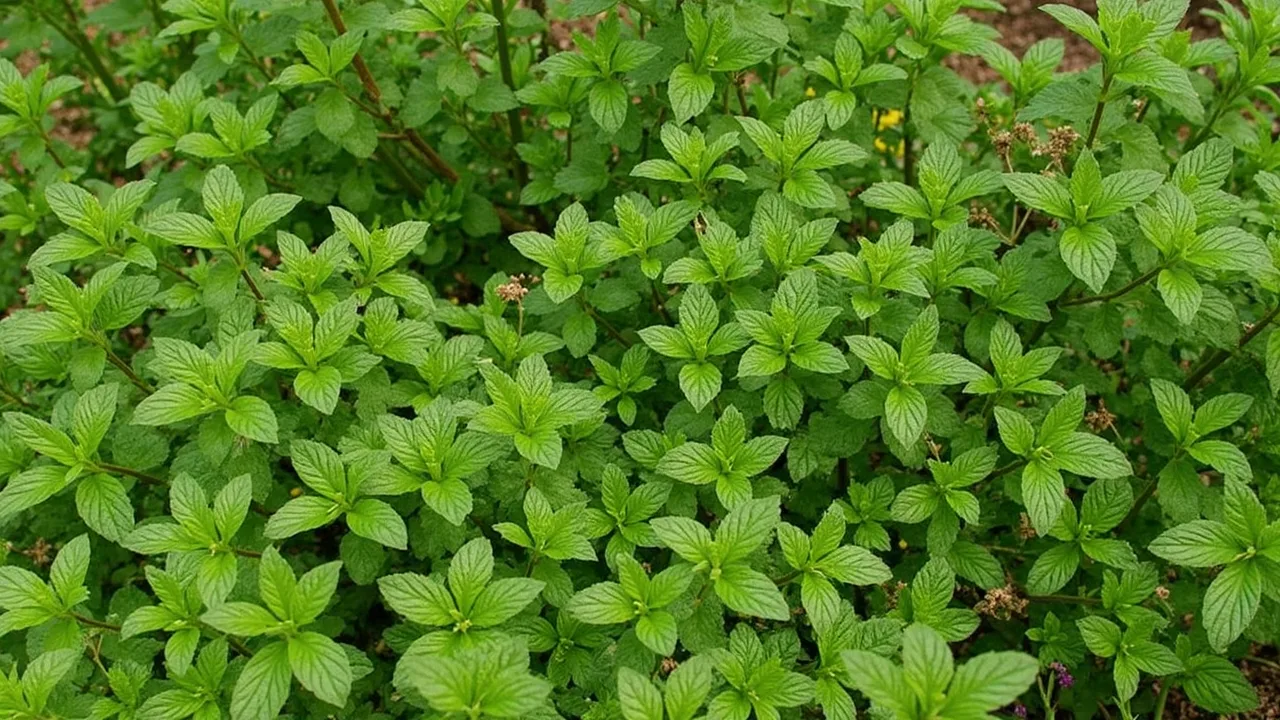
Wild Mint (Mentha arvensis), also called corn mint or field mint, is a creeping herbaceous perennial in the family Lamiaceae and the only Mentha species genuinely native to the British Isles. It grows naturally in damp meadows, on ditch banks, along the margins of arable fields (giving the species its common name), and at the muddy edges of ponds and slow streams, particularly on acidic or neutral soils. In the garden it behaves much as it does in the wild: vigorous, aromatic and spreading indefinitely through creeping rhizomes if left unchecked. The leaves, stems and flowers are strongly scented when bruised, and the small whorled flowers, clustered in the leaf axils rather than at the stem tips, are an important late-summer nectar source for bees, hoverflies and butterflies. Although less commonly grown than Spearmint (M. spicata) or Peppermint (M. × piperita), Wild Mint is the most appropriate choice for naturalised planting, for wildlife ponds and for any site where a genuinely native, fully hardy mint is wanted.
Appearance
Mentha arvensis is a low to medium-height creeping perennial that throws up flowering shoots from a network of slender rhizomes running just beneath the soil surface. The stems are square, weakly branched and often reddish at the base, ranging from about 10 cm in closely cropped turf to 60 cm in lush, shaded ground. The leaves are opposite, ovate to lance-shaped, 2 to 6 cm long, with a pointed tip, a coarsely toothed margin and a short stalk. The upper surface is mid- to dark green and slightly hairy, while the underside is paler and more visibly downy, particularly along the veins. When crushed, the foliage releases the sharp, slightly sweet, menthol-dominated scent characteristic of true mints, though in M. arvensis the aroma is more pungent and less sweet than in Spearmint. The flowers are borne in dense, spherical whorls (verticillasters) sitting in the axils of the upper leaves rather than at the tips of the stems, which is one of the easiest ways to distinguish the species from the tip-flowered garden mints. Each whorl is about 1 to 1.5 cm across and contains numerous small, two-lipped flowers, typically pale lilac to pale violet, occasionally pink or near-white. Flowering runs from July into September, and the plant dies back to ground level in late autumn, re-emerging from the rhizomes the following spring. The root system is the most assertive part of the plant: pale, branching rhizomes spread horizontally through the top 5 to 15 cm of soil, sending up new shoots at intervals and allowing a single plant to colonise a square metre or more in a single growing season where conditions suit it.
Growing Conditions
Wild Mint thrives in full sun or partial shade, in moist to damp, fertile soil that does not dry out for long. In the wild it is most often found on heavy, slightly acidic loams overlying clay, on stream banks and at the upper edges of reed beds where the water table sits within a few centimetres of the surface. In the garden the closest equivalent is the edge of a wildlife pond, a bog garden, a damp partly shaded border, or any patch of ground that stays reliably moist through summer. Unlike Mediterranean mints, M. arvensis does not tolerate prolonged drought: in dry soil the leaves scorch, growth is stunted and the rhizomes retreat. Equally, it tolerates waterlogged ground better than most cultivated mints and will grow with its roots in soil saturated for much of the winter, provided the rhizomes are not buried in airless mud. The species is fully hardy across the UK and Ireland, tolerating winter temperatures well below -15 °C and recovering from hard frosts without protection. It is indifferent to soil pH within the usual garden range, performing equally well on mildly acidic and near-neutral loam. Flowering is heavier and the foliage scent stronger in at least half a day's sun; in deep, dry shade the plant persists but produces few flowers and thinner leaves. As a native species, Wild Mint is also useful for clay-soil gardens where fussier ornamentals refuse to establish, since it accepts the same cool, moisture-retentive conditions that clay provides.
Planting and Care
Plant container-grown specimens or small divisions at any time between early spring and early autumn, provided the soil is moist. Set the rhizomes about 2 to 3 cm below the surface and space plants 30 to 45 cm apart for a continuous carpet; a single clump in a mixed border needs only one plant. Water generously after planting and keep the soil damp during the first growing season; thereafter, rainfall is sufficient except in unusually dry periods on light, free-draining soil, when a deep weekly soak prevents scorching. Feeding is rarely necessary in fertile ground: a single light dressing of garden compost in early spring is enough, and overfeeding produces soft growth prone to mildew. Pruning is largely cosmetic: cut the dead top growth back to ground level in late autumn or early spring, and pinch out shoot tips in early summer for bushier growth. The single most important task is containing spread: M. arvensis runs aggressively by rhizome and, like all running mints, will quickly colonise neighbouring plants if not restricted. The simplest method is to plant it in a 30 to 40 cm container plunged to the rim in the border; alternatively, install a root barrier to at least 20 cm depth. Propagation is straightforward by division in spring or autumn: lift a clump, cut the rhizome network into 5 to 10 cm sections, and replant each piece horizontally just below the surface, where it will root within weeks. Stem cuttings root easily in summer in water or in moist compost under a cold frame. Seed is viable and germinates readily in spring, but offspring are variable and the species hybridises freely with other mints, so seed propagation is used mainly for naturalised plantings. Seasonal care follows a simple rhythm: cut back old growth in early March, watch for new shoots in April and May, water during summer drought, and tidy dying top growth in November.
Common Problems
Wild Mint is largely trouble-free in British gardens, and being native it is well adapted to local pests, diseases and weather. The most frequent complaint is leaf loss and die-back during prolonged summer drought, particularly on light or sandy soil; this is easily prevented by mulching in spring and watering deeply during dry spells. Powdery mildew can affect the foliage in late summer in dry, sheltered sites where plants are crowded without air movement; cutting back the affected growth in autumn and improving air circulation is usually sufficient, and the disease rarely warrants fungicide. The principal insect pests are aphids, which colonise the fresh shoot tips in May and June and can be tolerated, washed off with a jet of water, or controlled with insecticidal soap; and caterpillars of mint moths, which occasionally skeletonise the leaves in July and August but rarely cause lasting damage. Rust (Puccinia menthae) is the disease most feared by mint growers but is uncommon on M. arvensis in the UK, where the cool damp conditions favour the host more than the pathogen; should rust appear, lift and destroy affected plants and restart from clean stock in a fresh site, since the fungus persists on the rhizomes and in the soil. Cats and dogs occasionally bruise the foliage while rolling on established clumps; the plant is not toxic to people or to common domestic pets, although the volatile oils can cause mild gastric upset if large quantities are eaten. As a native wildflower, Mentha arvensis supports pollinators and predatory insects, and routine spraying is not recommended in gardens where wildlife is the goal.
Popular Varieties
Mentha arvensis is a true species rather than a long-cultivated garden hybrid, and named cultivars of pure M. arvensis sold in the UK trade are scarce: most garden centres stock the species under its botanical name, often as a generic "wild mint" or "corn mint". Mentha arvensis var. piperascens, the Japanese wild mint, is the form traditionally cultivated in east Asia for the commercial extraction of menthol and is occasionally offered by specialist herb nurseries, although in appearance and cultivation it is essentially indistinguishable from the European plant. Hybrids in which M. arvensis is one parent, particularly crosses with M. spicata and M. × piperita, are widely grown as Spearmint and Peppermint, but these are distinct plants and not forms of M. arvensis itself. Where regional character matters more than a cultivar name, it is worth sourcing plants or seed collected from a local wild population: British forms tend to be compact and late-flowering, well adapted to damp acidic ground, while Continental forms from eastern Europe can be taller and earlier into flower. Gardeners wanting a named form for culinary use are usually better served by Spearmint or by the apple-scented M. suaveolens, but for naturalised planting, pond edges and wildlife areas the species Mentha arvensis itself remains the most appropriate and most ecologically valuable choice.
Pests and Diseases
| Problem | Symptoms | Management |
|---|---|---|
| Mint rust | Dusty orange, yellow and black spots appear on leaves with distortion of shoots. | Improve air circulation and remove affected foliage; avoid wetting leaves when watering. |
| Slugs and snails | Irregular holes in leaves and slimy trails across foliage, especially after rain. | Use beer traps, copper tape barriers, or iron phosphate-based pellets to control populations. |
| Powdery mildew | White, powdery fungal growth on leaves and stems, often in humid conditions. | Ensure good air circulation and water at the base; apply a fungicide if severe. |
| Vine weevil | Notched leaf margins during the day and root damage visible when checking pots. | Check roots before planting and use nematode treatments or biological controls in soil. |
| Aphids | Clusters of small soft-bodied insects on new growth, causing curled or stunted leaves. | Spray off with water or apply insecticidal soap; encourage natural predators like ladybirds. |
For step-by-step help, read Controlling Aphids Naturally, Dealing with Slugs and Snails, Treating Powdery Mildew and Tackling Black Spot on Roses. Or browse the full plant problem solver to diagnose an issue by symptom.
As an Amazon Associate, GardenWizz earns from qualifying purchases made through links on this page (including links within the article). This does not affect the price you pay. See our disclaimer for details.