Florentine Iris
Iris florentina
The Gardening Year
Best months in UK gardens · full planting calendar →
🖨 Printable care card (PDF)At a Glance
| Botanical name | Iris florentina |
|---|---|
| Common name(s) | Florentine Iris |
| Family | Iridaceae |
| Plant type | perennial (semi-evergreen or evergreen (in mild winters)) |
| Height × Spread | 30–121 cm × 10–50 cm |
| Position | Full sun, Partial shade |
| Soil | moist, well drained soils, in loam; tolerates sandy soils or any common garden soil; tolerates most soil pH levels including very alkali or acid soils |
| Flowering | March–July |
| Toxicity | most parts of the plant are poisonous (rhizome and leaves); ingestion can cause stomach pains and vomiting; handling may cause skin irritation or allergic reaction |
| Native range | central and southern Europe, mainly Italy (including Florence) and France; also found in Mediterranean islands including Malta; historically associated with Middle East and northern Africa |
Iris florentina — commonly known as the Florentine iris, orris or white flag iris — is a hardy rhizomatous perennial in the bearded iris group (family Iridaceae). Native to the eastern Mediterranean, it has been cultivated in Britain since at least the sixteenth century and is particularly associated with the Tuscan city of Florence, from which it takes its common name. The plant is grown today for two quite different reasons: as a stately border perennial with pale, fragrant flowers in late spring, and as the traditional source of orris root, the dried rhizome that has been used in perfumery, potpourri and historically in confectionery for several hundred years. The quick-care table below summarises the essentials; the full article covers each point in detail.
Overview
Iris florentina is unfussy in cultivation, reliably hardy across most of the UK, and well suited to free-draining soils in sunny borders, raised beds and gravel gardens. Where the more familiar purple and violet bearded irises can look heavy or clash with softer planting schemes, the near-white flowers of I. florentina sit easily with silver foliage, white roses, lavender and the pale tones of early summer. Its drought tolerance once established also makes it a useful choice for hot, sunny sites where many border perennials struggle.
Appearance
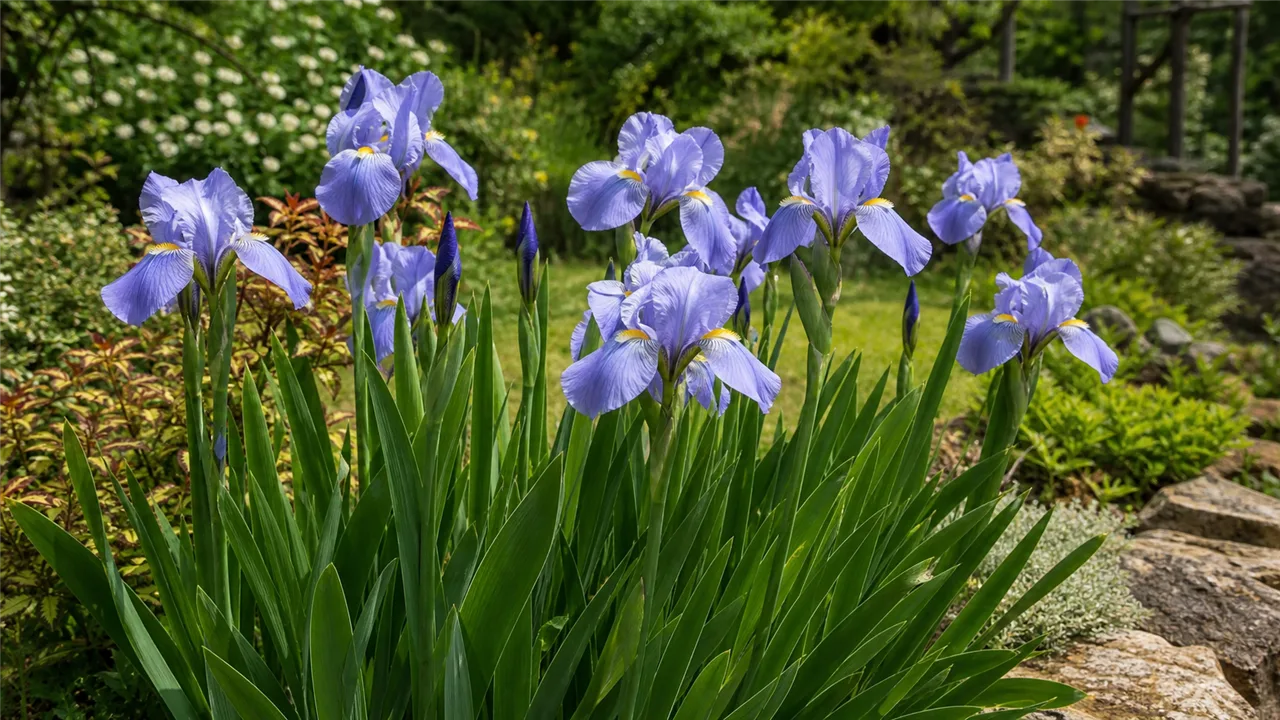
Iris florenta forms a clump of upright, sword-shaped leaves arranged in the characteristic fan of bearded irises. The foliage is grey-green, semi-evergreen, and typically reaches 40–60 cm in height. From each fan, sturdy flowering stems rise in late spring to between 60 cm and 90 cm, carrying two to four blooms held well above the leaves.
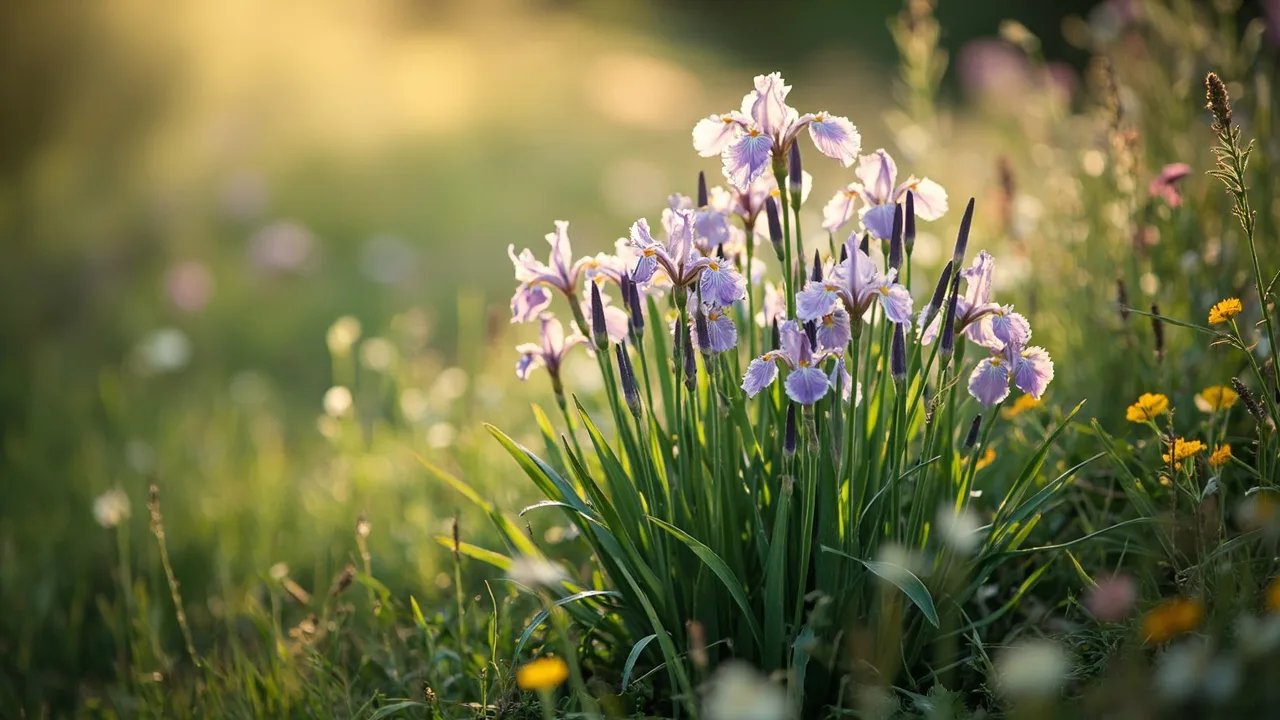
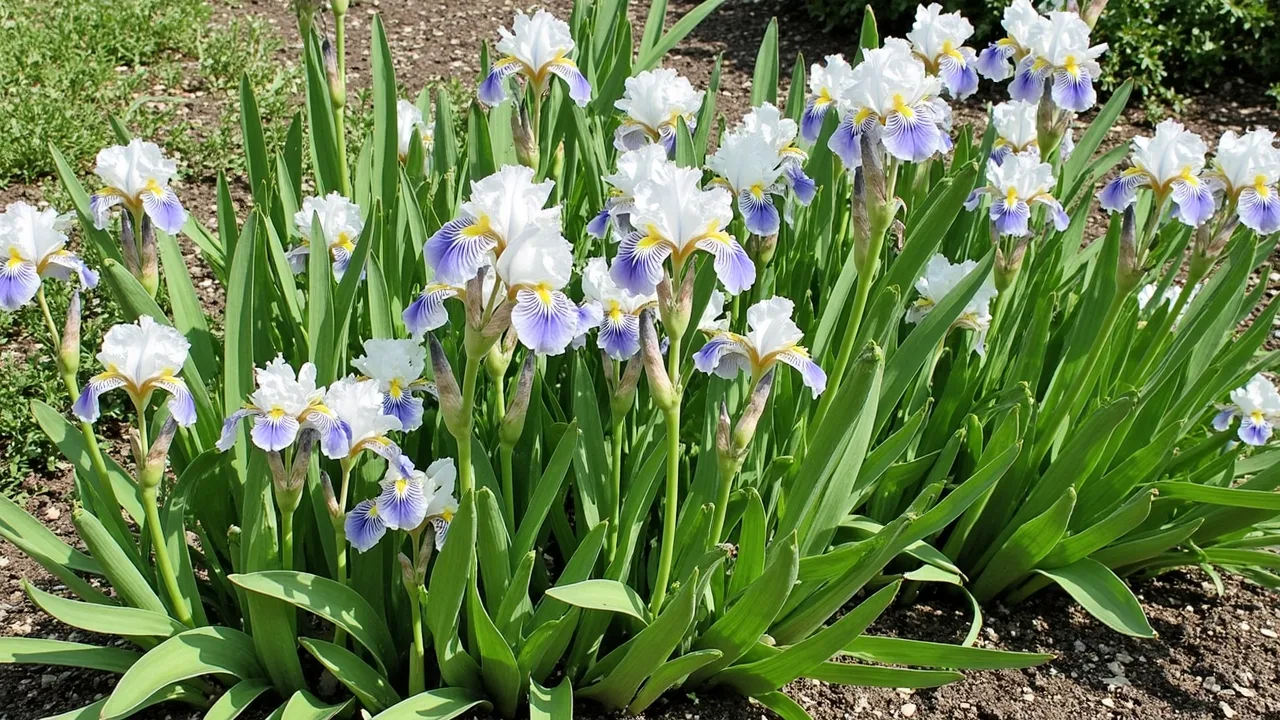
The flowers are pale lavender to almost pure white, with a softly frilled appearance and the distinctive "beard" — a line of soft hairs — along the centre of each outer fall. Subtle veining in deeper violet is common on the falls and sometimes at the base of the standards. The blooms carry a noticeable sweet fragrance, which is one of the species' main attractions for gardeners and cut-flower growers. The principal display is in May and June in the UK, with the main flush in late May and a tail into mid-June in cooler seasons.
Below ground, the plant produces a thick, fleshy, horizontal rhizome. This rhizome is the source of orris root: when lifted, dried slowly and aged for at least two years, it develops the violet-like scent for which it has been valued in perfumery since the Middle Ages.
Growing Conditions
Hardiness. Iris florentina is classified by the Royal Horticultural Society as H5, meaning it tolerates winter temperatures between roughly –15 °C and –10 °C. It is therefore fully hardy across most of lowland and southern Britain, including most of England and Wales, and in milder parts of Scotland and Northern Ireland. In colder inland sites in the north, a light winter mulch of grit over newly planted rhizomes is helpful.
Aspect. Full sun is preferred and produces the strongest flowering. The plant tolerates light, open shade but flowering is noticeably reduced where it receives less than half a day's direct sun.
Soil. The single most important requirement is sharp drainage. Iris florentina performs best on well-drained, neutral to alkaline soils (roughly pH 6.5–8.0) and thrives on the free-draining chalk and limestone soils of southern and eastern England. It tolerates poorer, thinner soils once established and is reasonably drought-tolerant in summer, but it strongly dislikes heavy clay or any ground that lies wet through the winter. Standing water around the rhizome quickly leads to rot.
Planting and Care
Planting time. Late summer to early autumn — roughly late August through September — is the ideal planting window. Soil is still warm, which encourages rapid root establishment before winter, and the rhizomes settle in well before the following spring's growth. Container-grown plants can also be put in during early spring, but autumn planting generally gives a better first-year display.
Planting depth. Unlike most perennials, the rhizome of a bearded iris should sit just below or at the soil surface, with the upper surface partially exposed. Planting too deeply is one of the commonest causes of poor flowering. Firm the soil around the roots to hold the rhizome in position but do not bury it under more than about 2 cm of soil. Space plants 30–45 cm apart.
Watering. Water thoroughly after planting and during the first growing season. Once established, Iris florentina is drought-tolerant and prefers to be kept on the dry side; overhead watering in summer should be avoided, as wet foliage encourages leaf spot. Reduce watering after flowering in late June and July.
Feeding. A light application of a low-nitrogen fertiliser in early spring, as new growth emerges, is sufficient. High-nitrogen feeds promote soft leafy growth at the expense of flowers and can also encourage rot.
Mulching. A thin mulch of grit or crushed stone around the rhizome is ideal: it reflects heat back to the plant, suppresses weeds and keeps the rhizome dry. Heavy organic mulches such as bark or compost should be avoided, as they hold moisture against the rhizome and can cause rot.
Pruning and tidying. Cut back any dead or damaged outer leaves in late autumn or early spring. Spent flower stems should be cut down to the base after flowering unless seed is wanted for propagation.
Propagation. Divide established clumps every three to four years in late summer, immediately after flowering. Lift the clump, discard the old, woody central portion of the rhizome, and replant the younger outer sections with healthy leaves and roots. Fresh seed can be sown in autumn in a cold frame, but germination is slow and erratic; division is the more reliable method.
Common Problems
Iris borer (Macronoctua onusta). The caterpillars of this moth tunnel into the rhizome, causing wilting and often opening the way to bacterial soft rot. Affected rhizomes should be lifted, the damaged tissue cut away cleanly, and the remaining healthy portions replanted.
Soft rot (Erwinia carotovora). The rhizome becomes soft, mushy and foul-smelling. Soft rot is usually secondary to borer damage or to waterlogged soil. Cut out all affected tissue, allow cut surfaces to dry in the air for a day, and dust with a fungicidal sulphur powder before replanting in fresh, well-drained ground.
Leaf spot (Mycosphaerella species). Brown spots appear on the leaves in damp seasons. Improve air circulation by thinning overcrowded clumps, avoid overhead watering, and remove and destroy affected foliage in autumn to reduce overwintering spores.
Slugs and snails. Young foliage and flower buds may be eaten in spring. Thin-shelled organic pellets, beer traps or hand-picking at dusk are usually sufficient; the damage is rarely serious on established plants.
Poor flowering. The most common cause is one of three: planting the rhizome too deeply, overcrowding (the clump needs dividing), or insufficient sun. Address whichever applies before assuming a more serious problem.
Popular Varieties
Iris florentina is a somewhat variable species and is treated by some authorities as a white or near-white form of Iris germanica rather than as a fully separate species. A small number of cultivar names appear in the trade, but the nomenclature is not stable and the same plant is often sold under more than one name. The forms most reliably encountered in British cultivation are:
- Iris florentina (the type form). The classic orris-root iris: pale lavender to near-white blooms, fragrant, on stems around 60–90 cm tall. This is the form grown commercially for orris root in Tuscany.
- 'Alba' (sometimes listed as I. florentina alba or I. germanica 'Alba'). A pure white form with the same grey-green foliage and fragrant blooms; particularly valued in white garden schemes where the blue or violet tones of bearded irises would be intrusive.
- 'Giant White' (synonym I. germanica 'Giant White'). A taller, more vigorous selection, sometimes reaching 1 m or more in flower, often considered by growers as a clone of I. florentina selected for size and purity of flower colour. Names such as 'Queen of the Whites' have been used loosely for similar plants in older catalogues; growers should expect variation.
Because the taxonomy of the white-flowered bearded irises is unsettled, any plant sold under these names may also be encountered labelled as Iris germanica 'Florentina' or under the older name Iris alba. The horticultural requirements — sun, drainage, late-summer division, surface-planted rhizomes — are identical in every case.META_DESCRIPTION: Iris florentina (Florentine iris / orris) — a UK guide to growing the bearded iris, including hardiness, soil, planting depth and division.
Pests and Diseases
| Problem | Symptoms | Management |
|---|---|---|
| Iris leaf spot | Small, circular brown or purple spots appear on the leaves, often merging to cause yellowing. | Remove and dispose of affected foliage at the end of the year and maintain good garden hygiene. |
| Bacterial soft rot | The base of the plant and rhizomes become mushy, foul-smelling, and collapse rapidly. | Ensure well-drained soil and plant rhizomes partially exposed to prevent waterlogging. |
| Iris rust | Orange or yellow pustules develop on the leaves, causing them to distort and die back. | Pick off lightly infected leaves to slow spread but avoid removing too much foliage. |
| Ink disease | Leaves turn black and shrivel, often starting from the base of the plant upwards. | Dig up and destroy affected plants immediately; do not replant bulbs in that soil for several years. |
| Virus infection | Young leaves show mottling, streaking, or distortion, reducing overall plant vigor. | Remove infected plants to prevent spread via aphids or contaminated tools; use virus-free stock. |
Or browse the full plant problem solver to diagnose an issue by symptom.
Recommended Products
GardenWizz earns a commission from qualifying purchases made through affiliate links on this page (including links within the article) — as an Amazon Associate, and from Thompson & Morgan via the Awin network. This does not affect the price you pay. See our disclaimer for details.