Jame Sage
Salvia × jamensis
The Gardening Year
Best months in UK gardens · full planting calendar →
🖨 Printable care card (PDF)At a Glance
| Botanical name | Salvia × jamensis |
|---|---|
| Common name(s) | Jame sage |
| Family | Lamiaceae |
| Plant type | shrub |
| Height × Spread | 50–100 cm × 10–50 cm |
| Position | Full sun, Partial shade |
| Soil | light, moderately fertile, well-drained soil; tolerates chalk, loam, sand; pH acid, alkaline or neutral |
| Flowering | June–November |
| Toxicity | — |
| Native range | northeastern Mexico (Sierra Madre Occidental in Coahuila and San Luis Potosí) |
Quick Answer
Salvia × jamensis (Jame sage) is a long-flowering, aromatic evergreen sub-shrub for a sunny, sheltered UK border or container. Give it free-draining soil, water carefully while it establishes, and make spring pruning and winter protection part of its routine.
Climate metadata
Overview
Salvia × jamensis is a hybrid group of woody salvias grown for aromatic foliage and tubular, two-lipped flowers. In a British garden it is most dependable in a warm, sunny position where winter rain drains away quickly; a pot is useful if your soil stays wet. It suits a gravel garden, mixed border, herb-inspired planting scheme or sunny patio, and flowers can continue well into autumn when spent blooms are removed.
Many gardeners find that a sheltered position beside a wall makes the difference between a plant that returns strongly and one that struggles after a wet winter. It is not the same plant as culinary sage, so grow it as an ornamental salvia rather than assuming its flowers or leaves have the same kitchen use.
Appearance
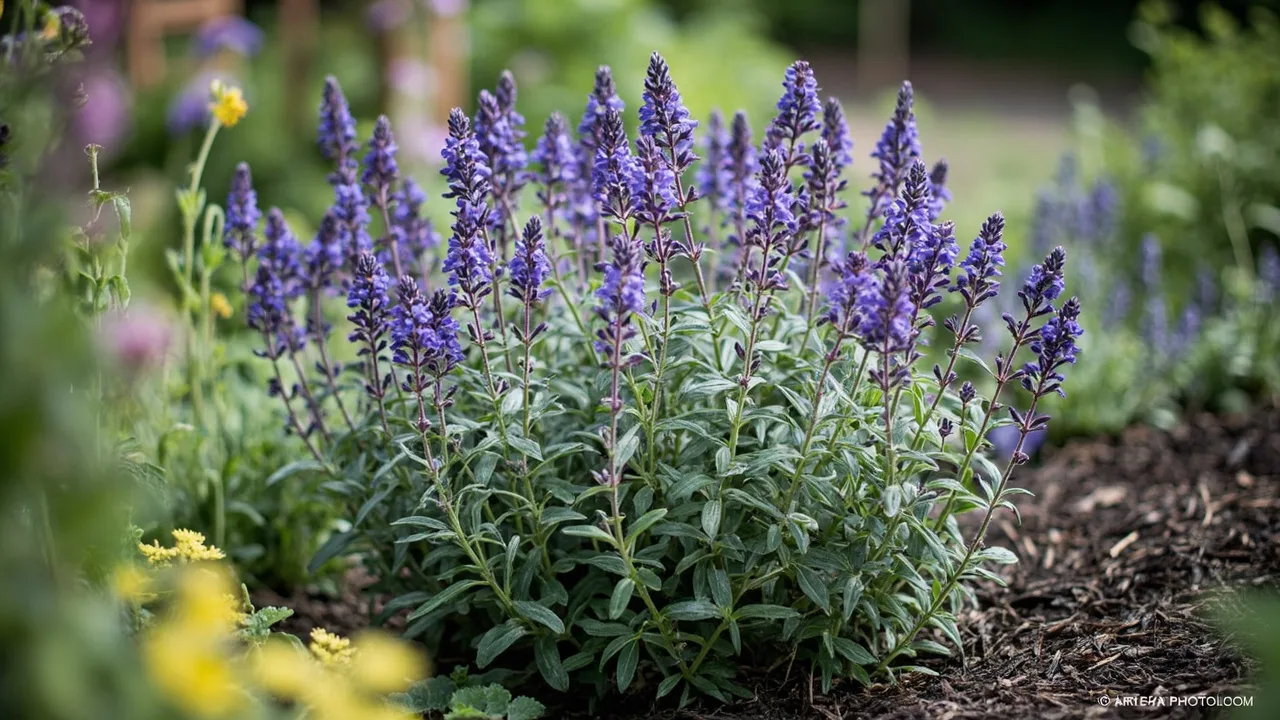
The narrow, ovate leaves are green, lightly textured and aromatic when bruised. The stems become woody at the base while younger growth remains softer and carries the flowers. Depending on the selection, flowers may be red, pink, purple, white or bicoloured, with colour sometimes changing as flowers age or in different weather.
The blooms are arranged along upright or gently arching stems rather than in dense flower heads. This gives the plant a loose, airy outline that works well between grasses and drought-tolerant perennials. Plants are often roughly 60cm to 1m tall and broad, but the final size varies considerably with cultivar, pruning and whether it is grown in the open ground or a container.
A useful trick is to place it where the flowers can be viewed from close to the house: the foliage releases its scent when brushed, while the flower tubes add strong colour above low planting. Deadheading also keeps the outline tidy and encourages further shoots.
Growing Conditions
Full sun is the priority. Aim for at least six hours of direct light during the growing season, particularly in northern or wetter areas. Less light produces weaker, more open growth and fewer flowers. A south- or west-facing border, raised bed, gravel garden or sheltered container is usually preferable to a cool, shaded corner.
The soil should be light or improved so that water moves away from the crown. On heavy clay, incorporate plenty of organic matter before planting and consider raising the planting area with grit or a low mound; do not leave the root ball sitting in a winter puddle. A pot should have generous drainage holes and a free-draining peat-free compost mixed with grit or other coarse material.
These salvias prefer moderate fertility rather than rich, lush conditions. Too much nitrogen can encourage soft leafy growth at the expense of a compact plant and can make it more vulnerable to winter damage. A mulch of gravel helps keep the base dry and reflects warmth, but keep it clear of the woody stems.
In the UK, exposed gardens and cold, wet districts need extra care. Grow a small plant in a container until it has made a sturdy framework, or take cuttings in summer as insurance. Move pots to a sheltered position before severe winter weather and avoid standing them in saucers of rainwater.
Planting and Care
Plant container-grown plants from April to June, after the worst frosts, or in early autumn while the soil is still workable. Water the pot before planting, loosen congested roots, and set the plant at the same depth as it was growing. Firm it gently, water thoroughly once, then apply a dry gravel mulch without covering the crown. Allow about 60cm to 1m of space according to the mature size of the chosen selection.
Watering
Water newly planted salvias during dry spells through their first growing season, directing water to the soil rather than the foliage. Once established in the ground, they generally cope with short dry periods, but flowering plants in containers can need frequent checks in July and August. Water deeply when the compost has dried near the surface, then allow excess water to drain completely. Persistent wetness is more dangerous than brief dryness.
Feeding
In spring, spread a thin layer of balanced, slow-release fertiliser around the plant if growth is weak or the soil is poor. Container plants can receive a general-purpose liquid feed during active growth, following the product label. Stop feeding by early autumn so new soft growth has time to mature before winter. Avoid routine heavy feeding on fertile ground.
Pruning and seasonal care
Leave the old woody framework in place over winter rather than cutting hard into bare stems. In April, when new shoots show and the risk of hard frost has reduced, remove dead or damaged growth and cut back to healthy new shoots. This spring pruning is safer than an autumn haircut and helps maintain a bushy shape. During summer, cut flowered stems back to a pair of leaves or a strong side shoot to encourage another flush.
In autumn, clear fallen leaves from around the crown and check that drainage remains open. Do not saturate the plant during wet weather. In colder or exposed gardens, cover the base with a dry, loose mulch and consider horticultural fleece during prolonged severe weather. Container plants benefit from shelter under a porch, beside a wall or in a cold greenhouse, while still needing light and ventilation.
Propagation
Take basal or softwood cuttings in spring or early summer, or semi-ripe cuttings in late summer or autumn with bottom heat. For a straightforward summer cutting, select a healthy non-flowering shoot about 5-8cm long, cut just below a leaf joint, remove the lower leaves and insert it into a small pot of gritty, moist propagation compost. Keep it bright and sheltered, not waterlogged. Once rooted, pot on and overwinter young plants somewhere protected before planting out the following spring.
A simple trick is to take several cuttings rather than relying on one: named salvias can vary in winter survival, and rooted replacements preserve a plant that has performed well in your garden.
Common Problems
Winter loss and root rot
One common mistake is treating poor winter survival as a lack of frost tolerance when the underlying issue is often cold, saturated soil. Blackened stems, collapsing growth and a soft crown point to prolonged wetness or severe exposure. Move container plants under cover, improve drainage before planting and keep winter mulch loose and dry. Remove rotted material with clean secateurs; do not replant immediately into the same wet pocket.
Sage leafhopper
Sage leafhopper can cause pale speckling or small damaged areas on leaves, with insects moving quickly when foliage is disturbed. Inspect the undersides of leaves from late spring onwards and encourage a varied planting scheme for predators. Remove badly affected leaves and use only a pesticide approved for the crop and situation, following its label; avoid spraying open flowers when pollinators are active.
Slugs and snails
Slugs and snails may rasp young shoots, especially during mild, damp spring weather. Check plants after dusk and look beneath pots, foliage and nearby debris. Hand-pick pests, reduce hiding places and protect vulnerable new growth with established, wildlife-conscious methods. A healthy, woody plant usually outgrows light damage.
Rosemary beetle
Rosemary beetle may feed on aromatic salvias, leaving holes and ragged leaf edges. Look for metallic adults and larvae in spring and summer, particularly where rosemary and other aromatic plants grow nearby. Pick beetles and larvae into soapy water where practical, inspect regularly and follow current UK guidance before considering any treatment.
Powdery mildew and leaf disease
Powdery mildew appears as a pale coating on leaves, while other foliar diseases can produce spots or dieback. Crowded plants, drought stress followed by damp conditions and poor air movement increase risk. Water the ground, not the leaves; thin congested growth, remove affected material and avoid wetting foliage overnight. Dispose of diseased debris rather than composting it if the infection is severe.
Popular Varieties
The hybrid name covers many named garden selections, and availability changes between UK nurseries. Confirm the botanical name on the label before buying, because not every plant sold simply as “sage” belongs to this hybrid group.
'Hot Lips'
Salvia × jamensis 'Hot Lips' is a bushy selection with small aromatic green leaves and flowers commonly showing red and white colouring, although individual flowers can appear more solidly coloured. It is widely listed by UK suppliers and works in a sunny border or large container. Give it excellent drainage and prune in spring rather than cutting it hard in autumn.
'Amethyst Lips' ('Dyspurp')
'Amethyst Lips' is associated with vivid purple and white, sometimes more solidly purple, flowers. UK nursery listings make it a practical choice when a darker flower colour is wanted. Its compact, branching habit suits a container near a sunny wall, where the pot can be moved to shelter in winter.
'Trenance'
Salvia × jamensis 'Trenance' is a named selection recorded by the RHS and offered by UK plant suppliers. Check the current label and supplier description for the flower colour and mature dimensions, as catalogue details can differ. The general care remains the same: sun, free drainage, spring pruning and careful watering.
'California Sunset'
'California Sunset' is another RHS-recorded selection, valued for warm-toned flowers. It can bring late-season colour to a mixed border when deadheaded regularly. Treat it as a woody salvia in the UK, protecting the crown from winter wet rather than assuming a sheltered site will remove every risk.
The RHS plant profile is the best place to check the accepted name and current details for a particular selection. Do not attach an RHS Award of Garden Merit to a cultivar unless the current RHS record explicitly confirms it.
Internal links: salvia plants, sage plants, well-drained soil, gravel gardens, container gardening, spring gardening, summer gardening, autumn gardening, winter protection, cuttings, slugs and snails, powdery mildew.
Sources & Further Reading
- Source: RHS: Salvia × jamensis, accessed 2026-07-22.
- Source: RHS: How to grow salvias, accessed 2026-07-22.
- Source: RHS: Salvia cuttings, accessed 2026-07-22.
- Source: RHS: Salvia × jamensis 'Hot Lips', accessed 2026-07-22.
- Source: RHS: Salvia × jamensis 'Trenance', accessed 2026-07-22.
Pests and Diseases
| Problem | Symptoms | Management |
|---|---|---|
| Root rot | General decline, yellowing foliage, and soft, blackened roots due to waterlogged soil. | Plant in well-drained soil and avoid overwatering, especially in winter. |
| Sage leafhopper | Small, pale spots on leaves that may turn brown or cause distortion. | Monitor for damage and remove heavily infested leaves; natural predators often control populations. |
| Slugs and snails | Irregular holes chewed in leaves and stems, often accompanied by slimy trails. | Use physical barriers like copper tape or organic pellets to protect young growth. |
| Powdery mildew | White, dusty fungal growth on the upper surfaces of leaves and stems. | Ensure good air circulation and water at the base to keep foliage dry. |
| Verticillium wilt | Sudden wilting and yellowing of lower leaves, often affecting one side of the plant. | Remove and destroy infected plants; avoid replanting salvias in the same spot. |
For step-by-step help, read Dealing with Slugs and Snails and Treating Powdery Mildew. Or browse the full plant problem solver to diagnose an issue by symptom.
Recommended Products
GardenWizz earns a commission from qualifying purchases made through affiliate links on this page (including links within the article) — as an Amazon Associate, and from Thompson & Morgan via the Awin network. This does not affect the price you pay. See our disclaimer for details.