Tulip
Tulipa
The Gardening Year
Best months in UK gardens · full planting calendar →
🖨 Printable care card (PDF)At a Glance
| Botanical name | Tulipa |
|---|---|
| Common name(s) | tulip |
| Family | Liliaceae |
| Plant type | perennial (Perennial herbaceous bulbiferous geophytes that bloom in spring and die back after flowering to an underground storage bulb.) |
| Height × Spread | 5–65 cm × — |
| Position | Full sun, Partial shade |
| Soil | Fertile, well-drained soil. Dislikes very heavy clay soils where bulbs may rot if the ground becomes waterlogged. |
| Flowering | March–May |
| Toxicity | Tulipanin A and B are toxic to horses, cats and dogs. |
| Native range | Southeast of Europe (Greece, Albania, North Macedonia, Kosovo, Southern Serbia, Bulgaria, most part of Romania, Ukraine, Russia) and Turkey in the west, through the Levant (Syria, Israel, Palestinian Territories, Lebanon and Jordan) and the Sinai Peninsula. From there it extends eastwards through Jerevan (Armenia), and Baku (Azerbaijan) and on the eastern shore of the Caspian Sea through Turkmenistan, Bukhara, Samarkand and Tashkent (Uzbekistan), to the eastern end of the range in the Pamir-Alai and Tien-Shan mountains in Central Asia, which form the centre of diversity. Further to the east, Tulipa is found in the western Himalayas, southern Siberia, Inner Mongolia, and as far as the northwest of China. |
Overview
Tulips are spring-flowering bulbous perennials belonging to the genus Tulipa in the family Liliaceae. The genus contains around 75 species, the majority of which are native to an area stretching from Central Asia through Turkey and Iran, with the largest concentration of wild species found in the mountains of the Tien Shan and Pamir-Alay ranges. All commercial garden tulips trace their parentage to a small number of these species, principally Tulipa gesneriana, and the plants have been cultivated in Europe since the sixteenth century following their introduction from the Ottoman Empire.
In the United Kingdom, tulips are grown primarily as ornamental spring bulbs, planted in autumn and flowering from late March through May depending on cultivar and location. They are widely used in formal bedding displays, mixed herbaceous borders, containers, and naturalised lawn plantings, and they form the backbone of the cut-flower tulip industry centred on Lincolnshire and the east of England. They are hardy throughout most of the British Isles and are one of the most accessible ornamental bulbs for the home gardener.
Tulips are toxic to cats, dogs, and horses if ingested, and the bulbs in particular contain allergenic lactones. Gardeners handling large quantities of bulbs are advised to wear gloves.
Appearance
The tulip plant produces a single, sometimes branched, flowering stem rising from an underground bulb. The bulb itself is ovoid, papery-skinned, and typically 3–6 cm across in flowering-sized stock. Roots emerge from a basal plate at the base of the bulb in autumn and persist through the winter.
Leaves are basal, usually two to six per stem, broad, lance-shaped to strap-shaped, glaucous blue-green or mid-green, and sometimes mottled or striped with purple-brown, depending on cultivar. Leaves generally emerge in late winter, several weeks before the flower bud is visible.
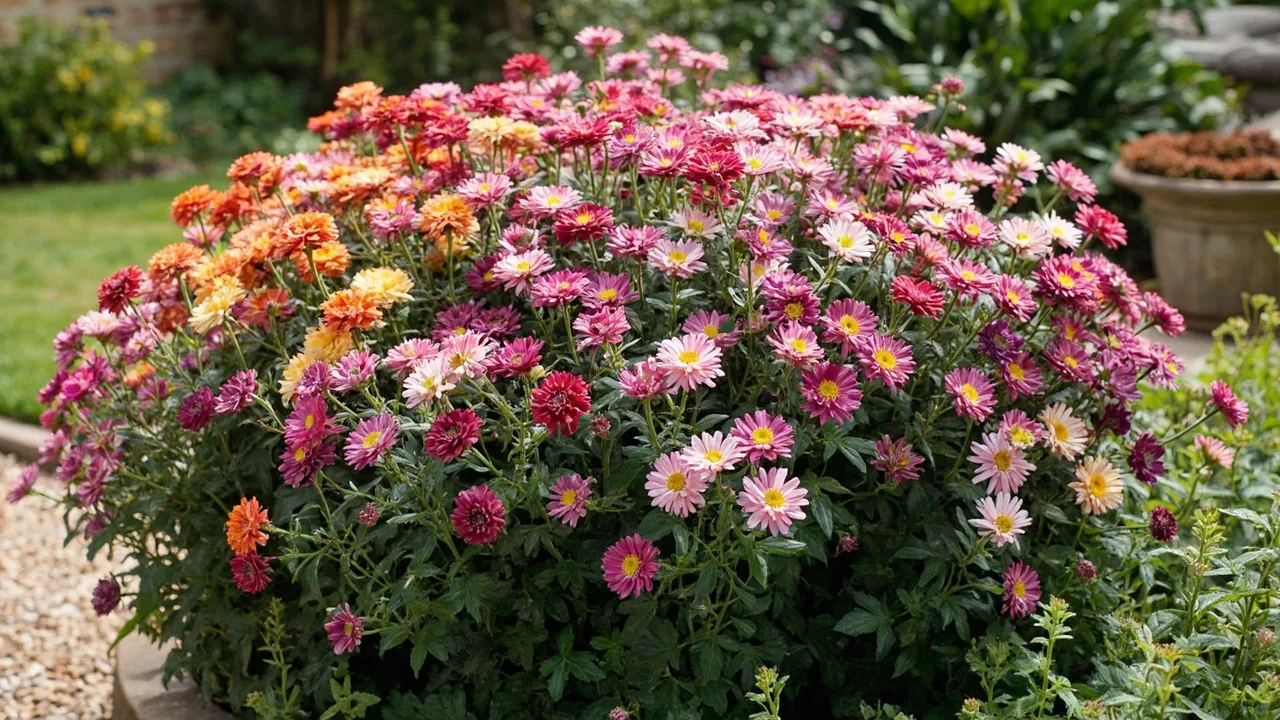
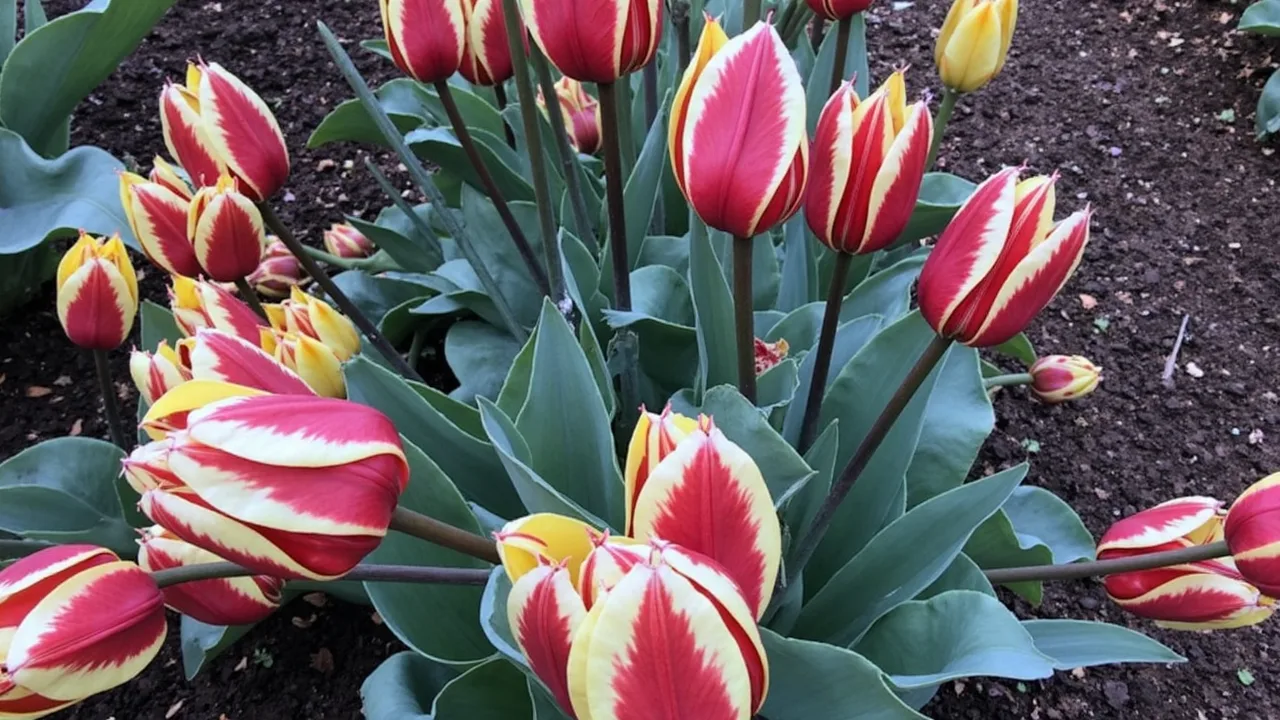
The flower is a solitary, terminal bloom composed of six tepals arranged in two whorls of three, although in some cultivated forms additional tepals create a peony-, parrot-, or fringed appearance. Wild-type flowers are simple and cup-shaped; cultivated forms range from single cups through doubles, lily-flowered, fringed, and split-corona types. Flower colour spans almost the full spectrum except true blue, and includes white, cream, yellow, orange, pink, red, near-black, and bicolours. Each flower is borne on a sturdy stem and is followed by a three-valved seed capsule, which is rarely allowed to develop in cultivated plants.
Mature flowering size varies enormously by type. Botanical species tulips such as Tulipa tarda and T. clusiana may reach only 10–20 cm, whereas tall Darwin Hybrid cultivars such as 'Apeldoorn's Elite' can exceed 60 cm in good conditions.
Growing Conditions
Tulips grow well across virtually the whole of the UK, from the relatively mild south-west to colder inland Scotland, though they perform best in regions with cold winters and dry summers that mimic their ancestral climate. They tolerate temperatures well below freezing when dormant and require a period of winter chilling to flower well the following spring.
The single most important cultural requirement is sharp drainage. Tulip bulbs rot readily in waterlogged ground, particularly during their summer dormancy. Heavy clay soils should be improved with grit and well-rotted organic matter before planting, or tulips should be grown in raised beds or containers. Soil pH is not critical: a slightly acidic to neutral pH of 6.0–7.5 suits them well, though they will tolerate mildly alkaline conditions.
Sunlight is the second key factor. Tulips flower most prolifically in full sun, where the stems remain sturdy and the petals open fully. They will tolerate light, dappled shade beneath deciduous trees, but deep shade produces weak, leggy growth and sparse flowering. A site that receives sun during the early part of the year and is not overhung by evergreen canopies is ideal.
Hardiness varies between tulip species and cultivars. Most commonly sold garden tulips overwinter outdoors in well-drained UK soil, while more tender or unusual forms may need a sheltered position in colder inland or northern gardens. Check the current supplier and RHS genus profile for the particular tulip being grown.
Planting and Care
Bulbs are best planted in autumn, from late September through November, and ideally at least six weeks before the ground is expected to freeze hard. Planting depth is roughly three times the height of the bulb; for typical garden bulbs this is 10–15 cm. Spacing depends on effect: 10–15 cm apart for dense formal bedding, wider for naturalised drifts.
Watering. Autumn-planted bulbs usually receive adequate moisture from autumn and winter rainfall and do not need supplementary watering. During the growing season, water moderately during dry spells in spring; once foliage begins to yellow after flowering, withhold water to encourage dormancy and prevent basal rot. Container-grown tulips need more attentive watering and should not be allowed to dry out completely while in growth, nor to sit in saturated compost.
Feeding. Apply a slow-release bulb fertiliser or a high-potash feed, such as a tomato fertiliser, at planting time and again as shoots emerge in early spring. Bonemeal is traditional but is not strictly organic and can attract foxes. An annual top-dressing of well-rotted garden compost after flowering helps maintain soil fertility.
Pruning. No pruning is required. The spent flower head should be beheaded once the petals drop, to prevent seed formation and direct energy back into the bulb. The foliage must be left to die back naturally for at least six weeks after flowering, until it yellows and detaches easily. Tying or braiding the leaves is no longer recommended as it reduces photosynthesis and weakens the bulb.
Propagation. Commercial tulips are propagated by lifting and separating offset bulblets after the foliage has died down in early summer. The largest offsets can be re-planted in autumn; small bulblets are best grown on in a nursery bed for a year or two before being planted out. Species tulips and some older cultivars often reproduce by seed, but seed-raised plants take four to seven years to reach flowering size and will not come true to type in the case of hybrids.
Seasonal care. In UK gardens the most common approach to modern hybrid tulips is to treat them as annuals, lifting the bulbs after flowering and replacing them with fresh stock the following autumn. This produces the most reliable displays and avoids the build-up of disease. Gardeners wishing to keep tulips from year to year should lift bulbs once the foliage has died back, dry them in a cool, airy place, and store them in nets or paper bags until replanting in late autumn. Tulip fire (Botrytis tulipana) is best avoided by not replanting bulbs in the same bed for at least three years.
Common Problems
Tulip fire is the most serious disease of tulips in the UK. Caused by the fungus Botrytis tulipana, it produces scorched, twisted leaves, distorted or spotted flowers, and grey fungal sporulation in damp weather. Infected plants and bulbs must be destroyed, and tulips should not be replanted in affected soil for at least three years. Resistant cultivars are not generally available.
Bulb rot is typically caused by Fusarium oxysporum or by water moulds such as Pythium and occurs in poorly drained soils. Affected bulbs fail to shoot or produce stunted, yellow growth. Prevention is through improved drainage and the purchase of sound, firm bulbs from reputable suppliers.
Squirrel and rodent damage is a widespread problem, particularly in suburban gardens. Tulip bulbs are a favourite food of grey squirrels, mice, and voles. Deterrents include laying chicken wire over newly planted beds, planting more deeply, or interplanting with daffodils (which rodents tend to avoid) or with fritillaries.
Aphids colonise tulip stems and buds in late spring and can transmit viral diseases. They are generally controlled by natural predators and rarely need treatment, though a strong jet of water will dislodge heavy infestations.
Tulip breaking virus and tulip virus X produce colour-breaking patterns in petals once prized as the basis of the historic 'broken' tulips of the Dutch trade. The viruses are insect-transmitted and incurable; affected plants should be lifted and destroyed, and hands and tools disinfected.
Popular Varieties
The following cultivars are widely available from UK bulb merchants in autumn and have a long record of reliable garden performance.
- 'Queen of Night' — a single late tulip with very dark, maroon-black flowers on 50 cm stems; flowers in May, holds its colour well, and is one of the best-known near-black tulips.
- 'Apricot Beauty' — a single early tulip with soft apricot-pink, scented flowers; 35–40 cm tall and excellent for forcing and for front-of-border positions.
- 'Red Impression' — a Darwin Hybrid with large, bright red flowers on 55 cm stems in mid-spring; one of the most reliable bedding tulips for UK conditions.
- 'Spring Green' — a viridiflora tulip with creamy white petals flushed green along the centre; late-flowering and excellent for cutting, reaching 50 cm.
- 'Ballerina' — a lily-flowered tulip with slender, orange flowers flushed with red and a light fragrance; 55 cm tall and flowers in late April to May.
- 'Negrita' — a triumph tulip with deep purple flowers on 45 cm stems; mid-season flowering and useful for combining with white and pink cultivars.
Botanical species of interest for UK rock gardens and naturalised plantings include Tulipa sylvestris, the wild tulip, which naturalises in undisturbed grass in some English gardens, and Tulipa tarda, a low-growing species with star-shaped yellow flowers.
Cultivars and Varieties
| Cultivar | Height | Flower | Notes | AGM |
|---|---|---|---|---|
| 'Ad Rem' | — | — | RHS AGM (H6) | ✓ |
| 'Albert Heijn' | — | — | RHS AGM (H4) | ✓ |
| 'Alfred Cortot' | — | — | RHS AGM (H6) | ✓ |
| 'Ali Baba' | — | — | RHS AGM (H6) | ✓ |
| 'Ancilla' | — | — | RHS AGM (H6) | ✓ |
| 'Angélique' | — | — | RHS AGM (H6) | ✓ |
| 'Angels Wish' | — | — | RHS AGM (H6) | ✓ |
| 'Apricot Beauty' | — | — | RHS AGM (H6) | ✓ |
| 'Apricot Parrot' | — | — | RHS AGM (H6) | ✓ |
| 'Arma' | — | — | RHS AGM (H6) | ✓ |
| 'Artist' | — | — | RHS AGM (H6) | ✓ |
| 'Ballade' | — | — | RHS AGM (H6) | ✓ |
| 'Ballerina' | — | — | RHS AGM (H6) | ✓ |
| 'Barcelona' | — | — | RHS AGM (H6) | ✓ |
| 'Beau Monde' | — | — | RHS AGM (H6) | ✓ |
| 'Belle du Monde' | — | — | RHS AGM (H6) | ✓ |
| 'Big Chief' | — | — | RHS AGM (H6) | ✓ |
| 'Black Parrot' | — | — | RHS AGM (H6) | ✓ |
| 'Blue Heron' | — | — | RHS AGM (H6) | ✓ |
| 'Burning Flame' | — | — | RHS AGM (H6) | ✓ |
| 'Burning Heart' | — | — | RHS AGM (H6) | ✓ |
| 'Calgary' | — | — | RHS AGM (H6) | ✓ |
| 'Calgary Flames' | — | — | RHS AGM (H6) | ✓ |
| 'Calypso' | — | — | RHS AGM (H6) | ✓ |
| 'Canasta' | — | — | RHS AGM (H6) | ✓ |
| 'Candela' | — | — | RHS AGM (H6) | ✓ |
| 'Candy Prince' | — | — | RHS AGM (H6) | ✓ |
| 'Cape Town' | — | — | RHS AGM (H6) | ✓ |
| 'Capri' | — | — | RHS AGM (H6) | ✓ |
| 'Carnaval de Nice' | — | — | RHS AGM (H6) | ✓ |
| 'Casa Grande' | — | — | RHS AGM (H6) | ✓ |
| 'China Pink' | — | — | RHS AGM (H6) | ✓ |
| 'China Town' | — | — | RHS AGM (H6) | ✓ |
| 'Colour Fusion' | — | — | RHS AGM (H6) | ✓ |
| 'Concerto' | — | — | RHS AGM (H6) | ✓ |
| 'Coors' | — | — | RHS AGM (H6) | ✓ |
| 'Corsage' | — | — | RHS AGM (H6) | ✓ |
| 'Couleur Cardinal' | — | — | RHS AGM (H6) | ✓ |
| 'Cricko' | — | — | RHS AGM (H6) | ✓ |
| 'Crystal Beauty' | — | — | RHS AGM (H6) | ✓ |
| 'Curly Sue' | — | — | RHS AGM (H6) | ✓ |
| 'Czaar Peter' | — | — | RHS AGM (H6) | ✓ |
| 'Daydream' | — | — | RHS AGM (H6) | ✓ |
| 'Diamond Jubilee' | — | — | RHS AGM (H6) | ✓ |
| 'Donald Duck' | — | — | RHS AGM (H6) | ✓ |
| 'Don Quichotte' | — | — | RHS AGM (H6) | ✓ |
| 'Dordogne' | — | — | RHS AGM (H6) | ✓ |
| 'Double Trouble' | — | — | RHS AGM (H6) | ✓ |
| 'Dreamland' | — | — | RHS AGM (H6) | ✓ |
| 'Dressing' | — | — | RHS AGM (H6) | ✓ |
| 'Drumline' | — | — | RHS AGM (H6) | ✓ |
| 'Early Harvest' | — | — | RHS AGM (H6) | ✓ |
| 'Easter Moon' | — | — | RHS AGM (H4) | ✓ |
| 'Easter Surprise' | — | — | RHS AGM (H6) | ✓ |
| 'Esperanto' | — | — | RHS AGM (H6) | ✓ |
| 'Evening Breeze' | — | — | RHS AGM (H6) | ✓ |
| 'Exotic Emperor' | — | — | RHS AGM (H6) | ✓ |
| 'Exotic Sun' | — | — | RHS AGM (H6) | ✓ |
| 'Fantasy' | — | — | RHS AGM (H6) | ✓ |
| 'Fidelio' | — | — | RHS AGM (H6) | ✓ |
| 'Fire Queen' | — | — | RHS AGM (H6) | ✓ |
| 'Fire Wings' | — | — | RHS AGM (H6) | ✓ |
| 'Flamenco' | — | — | RHS AGM (H6) | ✓ |
| 'Flames Mystery' | — | — | RHS AGM (H4) | ✓ |
| 'Flaming Baby' | — | — | RHS AGM (H6) | ✓ |
| 'Flaming Baltic' | — | — | RHS AGM (H6) | ✓ |
| 'Flaming Purissima' | — | — | RHS AGM (H6) | ✓ |
| 'Flaming Youth' | — | — | RHS AGM (H6) | ✓ |
| 'Flashback' | — | — | RHS AGM (H6) | ✓ |
| 'Fly Away' | — | — | RHS AGM (H6) | ✓ |
| 'Foxtrot' | — | — | RHS AGM (H6) | ✓ |
| 'Foxy Foxtrot' | — | — | RHS AGM (H6) | ✓ |
| 'Fringed Beauty' | — | — | RHS AGM (H6) | ✓ |
| 'Fringed Elegance' | — | — | RHS AGM (H6) | ✓ |
| 'Friso' | — | — | RHS AGM (H6) | ✓ |
| 'Fritz Kreisler' | — | — | RHS AGM (H4) | ✓ |
| 'Gavota' | — | — | RHS AGM (H6) | ✓ |
| 'Gerbrand Kieft' | — | — | RHS AGM (H6) | ✓ |
| 'German Flag' | — | — | RHS AGM (H6) | ✓ |
| 'Glück' | — | — | RHS AGM (H6) | ✓ |
| 'Gorilla' | — | — | RHS AGM (H6) | ✓ |
| 'Goudstuk' | — | — | RHS AGM (H4) | ✓ |
| 'Grand Perfection' | — | — | RHS AGM (H6) | ✓ |
| 'Grand Style' | — | — | RHS AGM (H6) | ✓ |
| 'Green Mile' | — | — | RHS AGM (H6) | ✓ |
| 'Greenstar' | — | — | RHS AGM (H6) | ✓ |
| 'Halcro' | — | — | RHS AGM (H6) | ✓ |
| 'Helmar' | — | — | RHS AGM (H6) | ✓ |
| 'Hermitage Double' | — | — | RHS AGM (H6) | ✓ |
| 'Honky Tonk' | — | — | RHS AGM (H6) | ✓ |
| 'Huis Ten Bosch' | — | — | RHS AGM (H6) | ✓ |
| 'Ice Stick' | — | — | RHS AGM (H6) | ✓ |
| 'In Love' | — | — | RHS AGM (H6) | ✓ |
| 'I to Holland' | — | — | RHS AGM (H6) | ✓ |
| 'Ivory Floradale' | — | — | RHS AGM (H6) | ✓ |
| 'Juan' | — | — | RHS AGM (H6) | ✓ |
| 'Kiev' | — | — | RHS AGM (H6) | ✓ |
| 'Kingsblood' | — | — | RHS AGM (H6) | ✓ |
| 'La Douce France' | — | — | RHS AGM (H6) | ✓ |
| 'Lady Jane' | — | — | RHS AGM (H6) | ✓ |
| 'Lambada' | — | — | RHS AGM (H6) | ✓ |
| 'La Perla' | — | — | RHS AGM (H6) | ✓ |
| 'Little Beauty' | — | — | RHS AGM (H6) | ✓ |
| 'Little Princess' | — | — | RHS AGM (H6) | ✓ |
| 'Little Star' | — | — | RHS AGM (H6) | ✓ |
| 'Louvre' | — | — | RHS AGM (H6) | ✓ |
| 'Louvre Orange' | — | — | RHS AGM (H6) | ✓ |
| 'Mariage' | — | — | RHS AGM (H6) | ✓ |
| 'Mariette' | — | — | RHS AGM (H6) | ✓ |
| 'Marilyn' | — | — | RHS AGM (H6) | ✓ |
| 'Mariss Jansons' | — | — | RHS AGM (H4) | ✓ |
| 'Marit' | — | — | RHS AGM (H6) | ✓ |
| 'Mary Ann' | — | — | RHS AGM (H6) | ✓ |
| 'Maskovri' | — | — | RHS AGM (H6) | ✓ |
| 'Maureen' | — | — | RHS AGM (H6) | ✓ |
| 'Menton' | — | — | RHS AGM (H6) | ✓ |
| 'Merlot' | — | — | RHS AGM (H6) | ✓ |
| 'Mondial' | — | — | RHS AGM (H6) | ✓ |
| 'Moneymaker' | — | — | RHS AGM (H6) | ✓ |
| 'Monte Carlo' | — | — | RHS AGM (H6) | ✓ |
| 'Moonblush' | — | — | RHS AGM (H6) | ✓ |
| 'Moonlight Girl' | — | — | RHS AGM (H6) | ✓ |
| 'My Lady' | — | — | RHS AGM (H6) | ✓ |
| 'New Santa' | — | — | RHS AGM (H6) | ✓ |
| 'Nirvana' | — | — | RHS AGM (H6) | ✓ |
| 'Noordeinde' | — | — | RHS AGM (H6) | ✓ |
| 'Ollioules' | — | — | RHS AGM (H6) | ✓ |
| 'Olympic Flame' | — | — | RHS AGM (H6) | ✓ |
| 'Orange Bouquet' | — | — | RHS AGM (H6) | ✓ |
| 'Orange Boy' | — | — | RHS AGM (H4) | ✓ |
| 'Orange Emperor' | — | — | RHS AGM (H6) | ✓ |
| 'Orange Princess' | — | — | RHS AGM (H6) | ✓ |
| 'Oranje Nassau' | — | — | RHS AGM (H6) | ✓ |
| 'Oranjezon' | — | — | RHS AGM (H6) | ✓ |
| 'Oratorio' | — | — | RHS AGM (H6) | ✓ |
| 'Oriental Beauty' | — | — | RHS AGM (H6) | ✓ |
| 'Oxford' | — | — | RHS AGM (H6) | ✓ |
| 'Pamplona' | — | — | RHS AGM (H6) | ✓ |
| 'Parade' | — | — | RHS AGM (H6) | ✓ |
| 'Partitura' | — | — | RHS AGM (H4) | ✓ |
| 'Passionale' | — | — | RHS AGM (H6) | ✓ |
| 'Paul Scherer' | — | — | RHS AGM (H6) | ✓ |
| 'Peppermintstick' | — | — | RHS AGM (H6) | ✓ |
| 'Pieter de Leur' | — | — | RHS AGM (H6) | ✓ |
| 'Pink Impression' | — | — | RHS AGM (H6) | ✓ |
| 'Pinocchio' | — | — | RHS AGM (H6) | ✓ |
| 'Pirand' | — | — | RHS AGM (H6) | ✓ |
| 'Plaisir' | — | — | RHS AGM (H6) | ✓ |
| 'Poco Loco' | — | — | RHS AGM (H4) | ✓ |
| 'Pretty Princess' | — | — | RHS AGM (H6) | ✓ |
| 'Princesse Charma nte' | — | — | RHS AGM (H6) | ✓ |
| 'Princess Househ old' | — | — | RHS AGM (H4) | ✓ |
| 'Prins Carnaval' | — | — | RHS AGM (H6) | ✓ |
| 'Prinses Irene' | — | — | RHS AGM (H6) | ✓ |
| 'Purissima' | — | — | RHS AGM (H6) | ✓ |
| 'Purissima Design' | — | — | RHS AGM (H6) | ✓ |
| 'Purple Crystal' | — | — | RHS AGM (H6) | ✓ |
| 'Purple Prince' | — | — | RHS AGM (H6) | ✓ |
| 'Red Georgette' | — | — | RHS AGM (H6) | ✓ |
| 'Red Hat' | — | — | RHS AGM (H6) | ✓ |
| 'Red Impression' | — | — | RHS AGM (H6) | ✓ |
| 'Red Paradise' | — | — | RHS AGM (H6) | ✓ |
| 'Red Princess' | — | — | RHS AGM (H6) | ✓ |
| 'Red Riding Hood' | — | — | RHS AGM (H6) | ✓ |
| 'Red Shine' | — | — | RHS AGM (H6) | ✓ |
| 'Red Wing' | — | — | RHS AGM (H6) | ✓ |
| 'Reputation' | — | — | RHS AGM (H6) | ✓ |
| 'Rosanna' | — | — | RHS AGM (H4) | ✓ |
| 'Royal Gift' | — | — | RHS AGM (H6) | ✓ |
| 'Russian Princess' | — | — | RHS AGM (H6) | ✓ |
| 'San Clemente' | — | — | RHS AGM (H6) | ✓ |
| 'Sanne' | — | — | RHS AGM (H6) | ✓ |
| 'Sarah Raven' | — | — | RHS AGM (H6) | ✓ |
| 'Seadov' | — | — | RHS AGM (H6) | ✓ |
| 'Sensual Touch' | — | — | RHS AGM (H6) | ✓ |
| 'Sevilla' | — | — | RHS AGM (H6) | ✓ |
| 'Showwinner' | — | — | RHS AGM (H6) | ✓ |
| 'Sonnet' | — | — | RHS AGM (H6) | ✓ |
| 'Sorbet' | — | — | RHS AGM (H6) | ✓ |
| 'Spring Green' | — | — | RHS AGM (H6) | ✓ |
| 'Spryng' | — | — | RHS AGM (H6) | ✓ |
| 'Stockholm' | — | — | RHS AGM (H6) | ✓ |
| 'Stresa' | — | — | RHS AGM (H6) | ✓ |
| 'Striking Match' | — | — | RHS AGM (H6) | ✓ |
| 'Strong Gold' | — | — | RHS AGM (H6) | ✓ |
| 'Synaeda King' | — | — | RHS AGM (H6) | ✓ |
| 'Temple of Beauty' | — | — | RHS AGM (H6) | ✓ |
| 'The First' | — | — | RHS AGM (H6) | ✓ |
| 'Timeless' | — | — | RHS AGM (H6) | ✓ |
| 'Tinka' | — | — | RHS AGM (H6) | ✓ |
| 'Toronto' | — | — | RHS AGM (H6) | ✓ |
| 'Trinket' | — | — | RHS AGM (H6) | ✓ |
| 'United States' | — | — | RHS AGM (H6) | ✓ |
| 'Vincent van Gogh' | — | — | RHS AGM (H6) | ✓ |
| 'White Triumphator' | — | — | RHS AGM (H6) | ✓ |
| 'Wildhof' | — | — | RHS AGM (H6) | ✓ |
| 'Wirosa' | — | — | RHS AGM (H6) | ✓ |
| 'Wisley' | — | — | RHS AGM (H6) | ✓ |
| 'World Expression' | — | — | RHS AGM (H6) | ✓ |
| 'Yellow Baby' | — | — | RHS AGM (H6) | ✓ |
| 'Yellow Pompenette' | — | — | RHS AGM (H6) | ✓ |
| 'Yellow Purissima' | — | — | RHS AGM (H6) | ✓ |
| 'Yume no Murasaki' | — | — | RHS AGM (H6) | ✓ |
| 'Zampa' | — | — | RHS AGM (H6) | ✓ |
Pests and Diseases
| Problem | Symptoms | Management |
|---|---|---|
| Tulip breaking virus | Variegated patterns in the tulip flowers | — |
Or browse the full plant problem solver to diagnose an issue by symptom.
Tulip in our guides
- Designing a Cottage Garden
- Gravel Gardens Explained
- Small Garden Design Ideas
- Autumn Garden Jobs
- Gardening Jobs for December in the UK
- Gardening Jobs for November in the UK
Recommended Products
GardenWizz earns a commission from qualifying purchases made through affiliate links on this page (including links within the article) — as an Amazon Associate, and from Thompson & Morgan via the Awin network. This does not affect the price you pay. See our disclaimer for details.