Garden Dahlia
Dahlia pinnata
The Gardening Year
Best months in UK gardens · full planting calendar →
🖨 Printable care card (PDF)At a Glance
| Botanical name | Dahlia pinnata |
|---|---|
| Common name(s) | garden dahlia |
| Family | Asteraceae |
| Plant type | perennial (Tender perennial; top growth dies back in winter and re-sprouts in spring. Grows from underground tubers.) |
| Height × Spread | 70–160 cm × — |
| Position | Full sun |
| Soil | Fertile, moist but well-drained soil. Enrich with organic matter such as well-rotted manure. If growing on heavy clay, add grit to the planting hole. |
| Flowering | June–November |
| Toxicity | No specific toxicity is listed by the RHS. This is not a guarantee of safety — check with a vet or the ASPCA before pets or children eat any plant. |
| Native range | Central America |
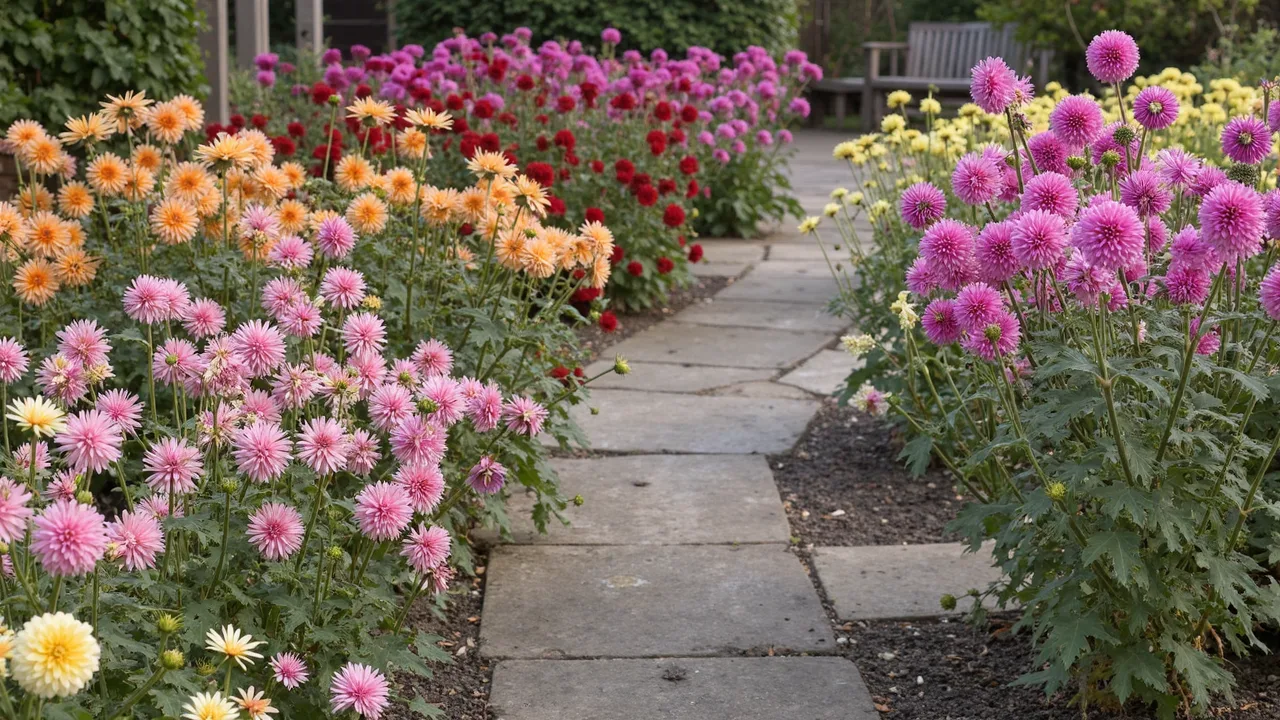
Dahlias are tuberous, herbaceous perennials grown across the UK for their flamboyant late-summer and autumn display. The garden dahlia is a complex hybrid largely derived from Dahlia variabilis (Desf.) Asch., a species native to the highlands of Mexico and Central America and a member of the Asteraceae (daisy) family. Bred for over two centuries, the modern dahlia is among the most diverse of cultivated ornamentals, with flower forms ranging from simple singles to intricate balls, cactus types and the famously oversized "dinner-plate" decoratives. In British gardens dahlias bridge the late-summer colour gap left by roses and fill borders with bloom from July until the first hard frost.
Overview
Dahlia variabilis was first described from cultivated Mexican material and is unusual among dahlias in being genuinely variable in flower form, which is why the early taxonomists gave it the epithet variabilis. Almost all dahlias sold in the UK today, however, are hybrids involving several species, and the name D. variabilis is now most often used in a broad sense to refer to the seed-raised bedding strains such as the 'Dwarf Mixed' and 'Bishop's Children' types, rather than to a single uniform wild species. These seed-raised strains are typically grown as annuals, started under glass in early spring and planted out after the last frost.
Tuber-grown cultivars, which constitute the great majority of named dahlias in British cultivation, are propagated vegetatively from named clones and remain true to type. The Royal Horticultural Society classifies these into ten recognised flower-form groups: single, anemone, collarette, peony, decorative, ball, pompon, cactus, semi-cactus and stellar. Dwarf bedding types reach 30–60 cm in height, while the largest border dahlias can exceed 1.5 m and may need stout staking.
Dahlias are half-hardy in the UK. In mild coastal districts and inner London they can be left in the ground through winter with a deep dry mulch, but in most of the country the tubers must be lifted after the first frosts and stored frost-free until spring.
Appearance
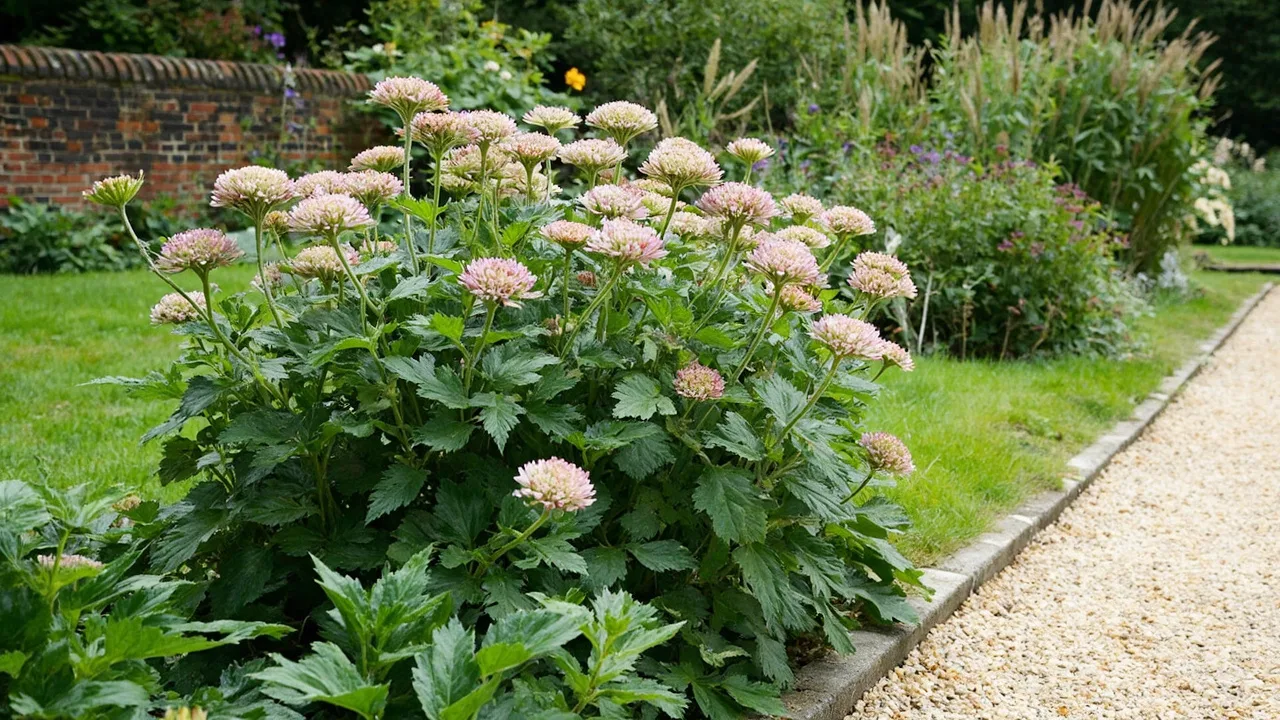
Dahlias grow from a swollen root system composed of clustered tubers attached to a central basal plate, the same structure from which next year's shoots emerge. The stems are hollow, slightly winged, and rise annually from spring growth. Foliage colour ranges from fresh mid-green in most cultivars to a deep bronzed purple in the so-called "dark-leaved" group, of which 'Bishop of Llandaff' is the best-known example. Leaves are typically pinnate or bipinnate, with ovate leaflets edged with shallow teeth; in some cactus and collarette forms the leaflets are more finely divided.
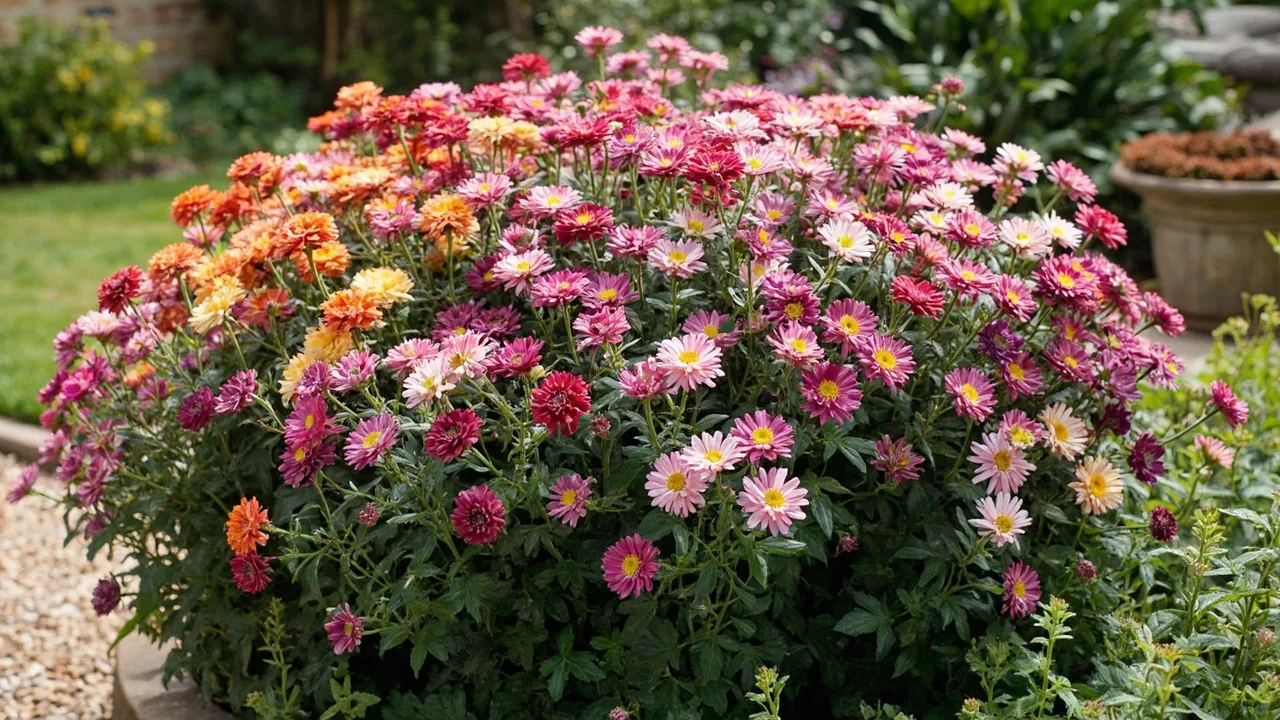
Flowers are borne singly on long, stiff peduncles held above the foliage. The botanical inflorescence is a capitulum — the same structure as a single daisy "flower" — composed of a central disc of tiny tubular florets ringed by ray florets. In single dahlias the disc is exposed and often golden; in double, decorative, ball and cactus forms the disc is hidden by dense layers of ray florets. Colour spans the visible spectrum with the exception of true blue: reds, oranges, yellows, pinks, lavenders, purples, creams and whites are all represented, as are bicolours and picotees. Flower diameter ranges from less than 5 cm in pompons to over 25 cm in giant decorative cultivars.
Growing Conditions
Dahlias grow best in a sunny, sheltered position with at least six hours of direct sun per day. Exposure to strong winds snaps the hollow stems and ruins the flowers, so a south- or west-facing border backed by a wall, fence or hedge is ideal. Light afternoon shade is tolerated but reduces flower production.
The soil should be fertile, well-drained and moisture-retentive, ideally a loam improved with well-rotted manure or garden compost dug in during autumn or early spring. Dahlias prefer a near-neutral pH of about 6.0–7.0 and show iron chlorosis on strongly alkaline soils. They are heavy feeders and respond markedly to good soil preparation, particularly in light sandy soils where organic matter is essential to retain moisture around the tuberous roots.
Dahlias are generally treated as half-hardy in the UK. Their hardiness corresponds approximately to RHS H3 (half-hardy: tolerates -5 °C to 1 °C) and H4 (hardy in coastal and mild urban areas). In USDA terms they are hardy in zones 8–11. The leaf and stem growth is cut down by the first autumn frost, and the tubers themselves are damaged by prolonged soil temperatures below freezing; growers in inland Scotland, northern England and the Midlands should plan to lift tubers in October or November as a matter of routine.
Planting and Care
Dahlia tubers are planted out in spring once the risk of hard frost has passed, typically from late April in the south to early June in colder districts. The tuber is laid horizontally in a hole about 10–15 cm deep with the old stem, or "stubble", just at or above soil level; deeper planting encourages the development of feeding roots along the buried stem but can rot the tuber in heavy ground. Tall cultivars are best staked at planting time with a stout bamboo cane or hazel pole driven 30 cm into the soil beside the tuber, so the stake does not later pierce the tubers.
Tuberous roots can be started into growth indoors from March. Place the tuber in a 2-litre pot of multipurpose compost with the stump at the surface, water sparingly until shoots appear, and grow on in a frost-free greenhouse or porch until late May. Pinching out the growing tip once shoots reach about 30 cm produces a bushier plant with more flowering stems.
Routine summer care consists of deep watering in dry spells, a high-potash liquid feed (such as a tomato fertiliser) every fortnight from July onwards, and prompt deadheading of spent blooms back to a strong pair of leaves. The large-flowered cultivars appreciate disbudding: removing the two side buds below the central terminal bud directs the plant's energy into one exhibition-quality bloom per stem. Mulching in early summer with garden compost or well-rotted manure suppresses weeds and conserves moisture.
Propagation is by division of the tuber clump in spring, ensuring that each division retains a portion of the basal plate and at least one strong eye. Cuttings of young basal shoots root readily in spring and produce flowering plants the same year; this is the standard method for producing exhibition stock. Dahlias can also be raised from seed, although seed-raised plants are variable and do not come true to the parent except in the F1 bedding strains.
In autumn, when the foliage has been blackened by the first frost, cut the stems back to about 10 cm above soil level, lift the tubers carefully with a fork, and allow them to dry off for a few days. Store them in a cool, dry, frost-free place — typically 5–10 °C — in shallow boxes of just-damp compost, sand or wood shavings. Inspect monthly and remove any tubers showing signs of rot.
Common Problems
Slugs and snails are the most damaging pests on young dahlia growth in spring, often reducing newly emerged shoots to stumps overnight. They can be controlled with ferric phosphate slug pellets, by hand-picking at dusk, by copper rings around the crown, or by applying nematode (Phasmarhabditis hermaphrodita) treatments in warm, moist soil.
Aphids, particularly the peach-potato aphid (Myzus persicae) and the black bean aphid (Aphis fabae), cluster on young shoots and buds from late spring. Heavy infestations check growth and excrete honeydew that becomes colonised by sooty mould. Spray with insecticidal soap or a fatty-acid product, or encourage natural predators such as ladybirds and lacewings by leaving nearby patches of umbellifers and asters.
Powdery mildew, caused by Erysiphe cichoracearum, produces a characteristic white powdery coating on the leaves in late summer during hot, dry weather or in plants grown in still, dry air. Improve air circulation by wider spacing, water at the base of the plant rather than overhead, and remove badly affected foliage.
Earwigs (Forficula auricularia) chew ragged holes in the petals and leaves of large-flowered dahlias. The classic organic control is to invert a 9 cm clay pot stuffed with dry straw on a cane among the plants; earwigs shelter in the straw by day and can be shaken out and disposed of in the morning.
Capsid bugs and thrips can scar the petals and distort young growth; in most seasons their damage is cosmetic rather than serious and does not warrant treatment.
Frost damage is the single most common cause of total loss. Even a light autumn frost blackens the foliage; in colder districts the tubers themselves can be killed if left in the ground when soil temperatures fall below freezing. The remedy is to lift and store tubers as described above.
Tuber rot in store is usually caused by Botrytis cinerea or by bacterial soft rots entering through wounds. Discard any tubers that feel soft or smell sour, and avoid storing tubers that are still wet from the ground.
Vine weevil larvae (Otiorhynchus sulcatus) can chew the tubers of container-grown dahlias, particularly in peat-free composts. Biological control with Heterorhabditis bacteriophora nematodes applied in late summer is effective where the pest is established.
Dahlias are not known to be toxic to humans or pets, although, as with many garden plants, they may cause mild stomach upset if eaten in quantity. Some people develop skin irritation when handling dahlia tubers; wearing gloves avoids this.
Popular Varieties
The following are widely available, well-established cultivars that perform reliably in UK gardens. Ratings given are the Royal Horticultural Society's Award of Garden Merit (AGM), where one has been awarded; otherwise no AGM rating is implied.
Dahlia 'Bishop of Llandaff' is a peony-flowered cultivar with semi-double bright red blooms set against deep bronze-purple foliage. It reaches about 1 m in height, was introduced in the 1920s, and holds the RHS AGM. It is one of the most widely planted dahlias in British gardens and the parent of several dark-leaved seedlings.
Dahlia 'Café au Lait' is a giant decorative cultivar with huge blooms in soft creamy-pink to buff. It reaches about 1.2 m and is extremely popular in wedding floristry. It does not have an AGM at present.
Dahlia 'Arabian Night' is a small decorative or ball dahlia with deep maroon, almost black-red blooms. It grows to about 1 m and holds the RHS AGM.
Dahlia 'Roxy' is a compact single dahlia about 45 cm tall with magenta-pink flowers over bronze foliage, suited to containers and the front of a border.
Dahlia 'David Howard' is a miniature decorative dahlia about 90 cm tall with glowing orange blooms above bronze leaves; AGM.
Dahlia 'Happy Single Kiss' is one of the modern "Happy Single" series bred for container use, with salmon-pink single flowers and dark foliage on compact plants around 50 cm tall.
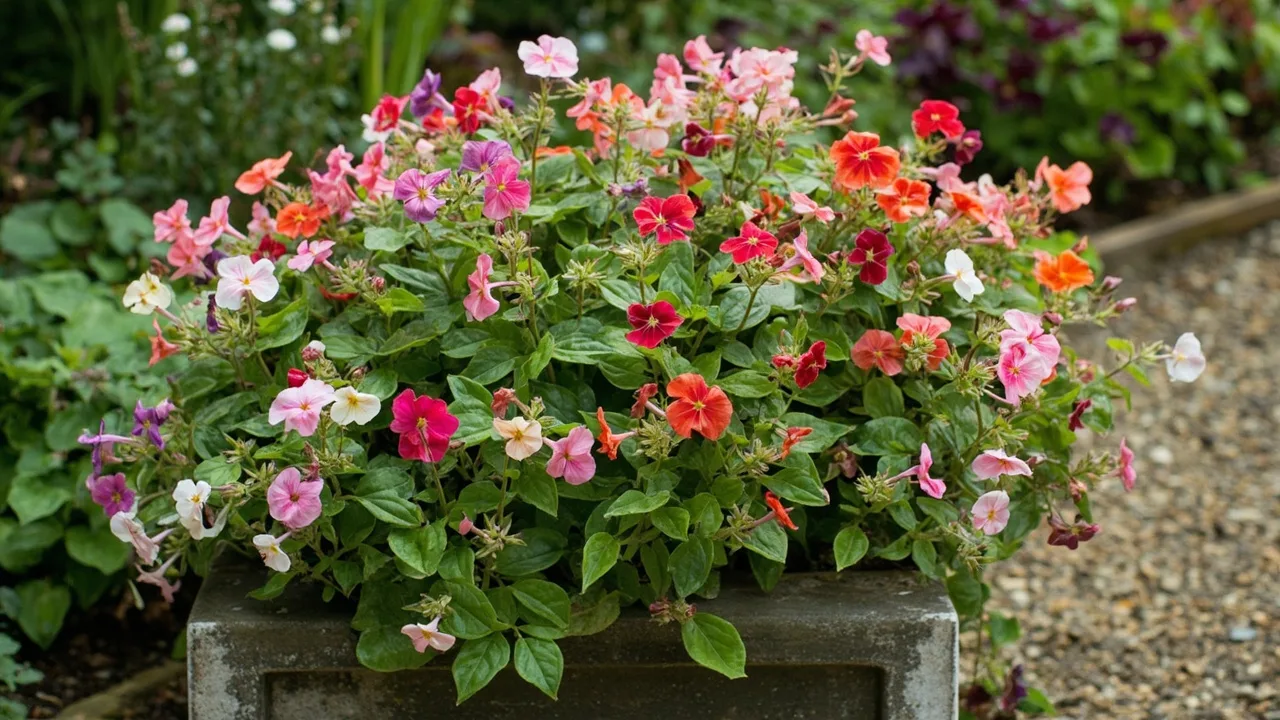
Seed-raised strains such as Dahlia variabilis 'Bishop's Children' and the dwarf Dahlia variabilis 'Rigoletto' mix produce variable plants in a wide range of colours from a single packet and are useful where a mass planting is wanted at low cost. They are typically grown as annuals.
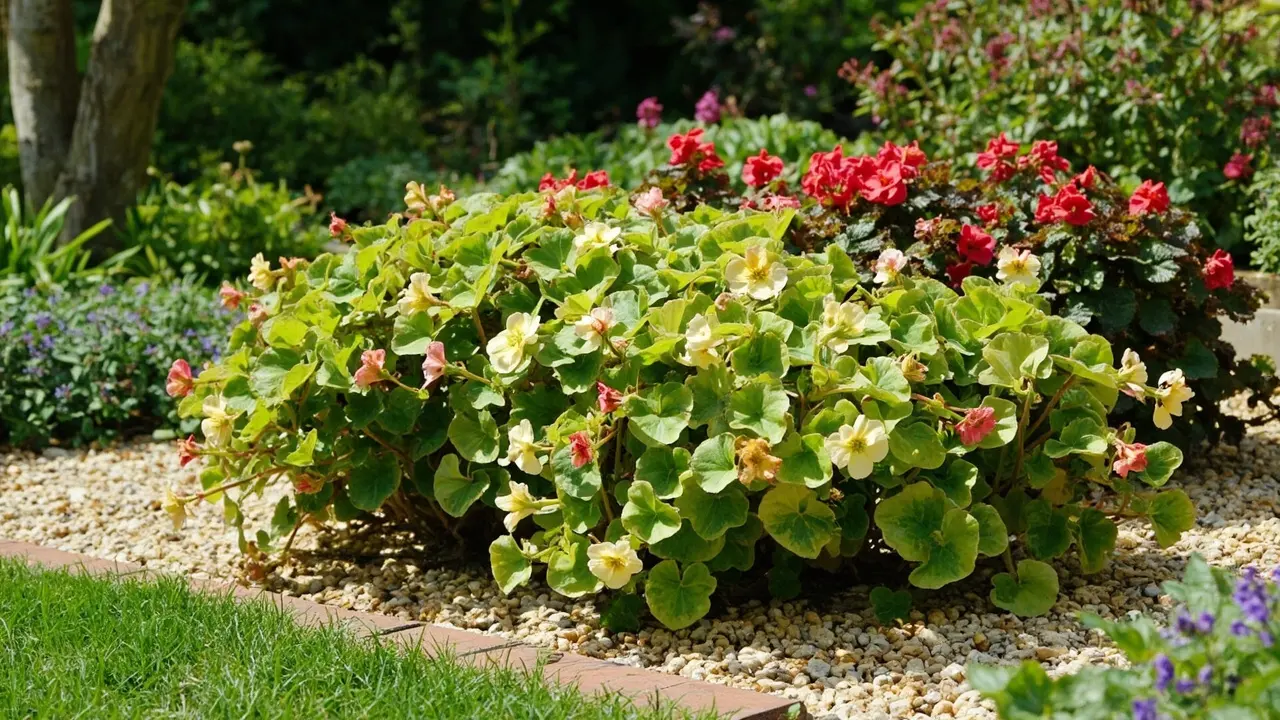
When choosing cultivars, match the plant height to its site: pompons and balls rarely need staking at 80–100 cm; decorative and cactus types over 1.2 m should be staked from the start; giant dinner-plate decoratives need particularly stout support and are best grown in a sheltered cutting patch rather than an exposed mixed border.
Pests and Diseases
| Problem | Symptoms | Management |
|---|---|---|
| Slugs, earwigs, red spider mites, snails, caterpillars, aphids, and thrips | eat the petals, leave slime trails, leave tattered petals, etc. | — |
| Sclerotinia disease, fungal diseases, mildew, Botrytis, Crown Gall | wilt, have spots on the leaves, the leaves can get irregular coloring/ patterning, etc. | — |
For step-by-step help, read Controlling Aphids Naturally, Dealing with Slugs and Snails and Treating Powdery Mildew. Or browse the full plant problem solver to diagnose an issue by symptom.
Garden Dahlia in our guides
- Designing a Cottage Garden
- Gardening Jobs for October in the UK
- June in the Garden
- Winter Garden Preparation
- Gardeners urged to avoid a key mistake to help flowers grow
- It's bloomtime for the UK's flower industry
Recommended Products
GardenWizz earns a commission from qualifying purchases made through affiliate links on this page (including links within the article) — as an Amazon Associate, and from Thompson & Morgan via the Awin network. This does not affect the price you pay. See our disclaimer for details.