Wild Carrot
Daucus carota · European wild carrot · bird's nest · bishop's lace
The Gardening Year
Best months in UK gardens · full planting calendar →
🖨 Printable care card (PDF)At a Glance
| Botanical name | Daucus carota |
|---|---|
| Common name(s) | wild carrot, European wild carrot, bird's nest, bishop's lace |
| Family | Apiaceae |
| Plant type | biennial (herbaceous, biennial (although not always)) |
| Height × Spread | 30–120 cm × 10–50 cm |
| Position | Full sun |
| Soil | light, well-drained, deep soils; Chalk, Loam, Sand; Moisture Well–drained; pH Alkaline, Neutral, Acid |
| Flowering | June–August |
| Toxicity | phytophotodermatitis |
| Native range | temperate regions of the Old World with a number of regional subspecies, and is naturalised widely elsewhere |
Overview
Wild carrot (Daucus carota) is a biennial flowering plant in the Apiaceae family and the wild ancestor of the cultivated garden carrot. Native to much of temperate Europe and western Asia, it is widely naturalised across the British Isles, where it is a familiar sight on chalk grasslands, road verges, field margins and disturbed ground from late spring through to early autumn. Although commonly regarded as a wayside wildflower, wild carrot has a long history of use as a culinary, medicinal and dye plant, and cultivated forms are sold for ornamental and wildlife-friendly planting schemes.
In the garden, wild carrot is valued primarily for its flat, lacy umbels of white flowers, which are exceptionally rich in nectar and pollen, and for its ability to thrive in poor, dry soils where many ornamentals struggle. It is frequently included in wildflower meadows, pollinator borders, naturalistic planting schemes and coastal gardens. Gardeners should be aware, however, that the plant closely resembles several other members of the carrot family, some of which — notably hemlock (Conium maculatum) and fools parsley (Aethusa cynapium) — are highly toxic. Identification should never be based on this article alone; any foraging use should be undertaken only with expert guidance.
Appearance
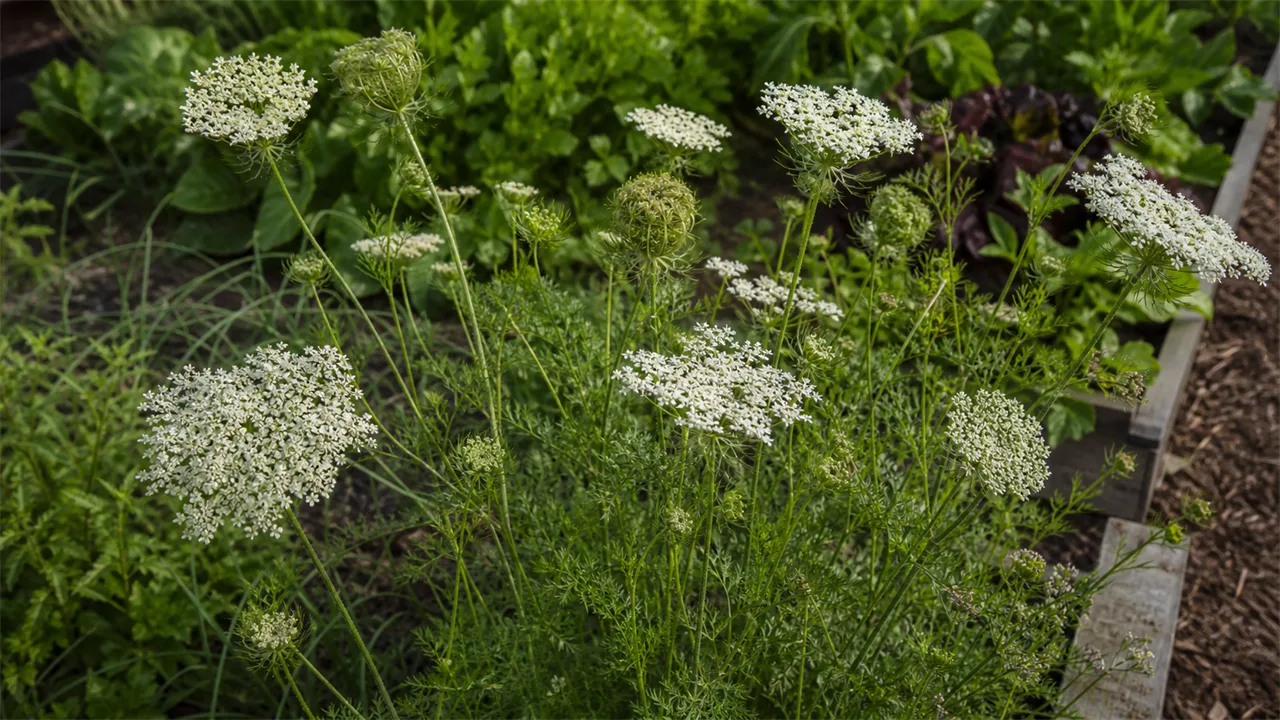
Wild carrot forms a basal rosette of finely divided, feathery leaves in its first year, very similar in shape and texture to the leaves of garden carrots and parsley. The leaves are bi- to tripinnate, soft green, and slightly hairy along the stems and undersides. In the second year the plant sends up one or more erect, branched, ridged and bristly flowering stems that typically reach 30–100 cm in height, though plants in rich ground can exceed a metre.
The flowers are carried in flat-topped compound umbels, usually 5–10 cm across, comprising numerous small white (occasionally pinkish-tinged) five-petalled florets. A characteristic feature of the species is the presence of a single dark purple to black floret, or small cluster of sterile dark florets, at or near the centre of the umbel — a trait that gives rise to the folk name Queen Anne's lace. Beneath each umbel is a whorl of finely divided bracts (an involucre) that is pinnately divided, a useful diagnostic feature when separating wild carrot from other white-flowered umbellifers.
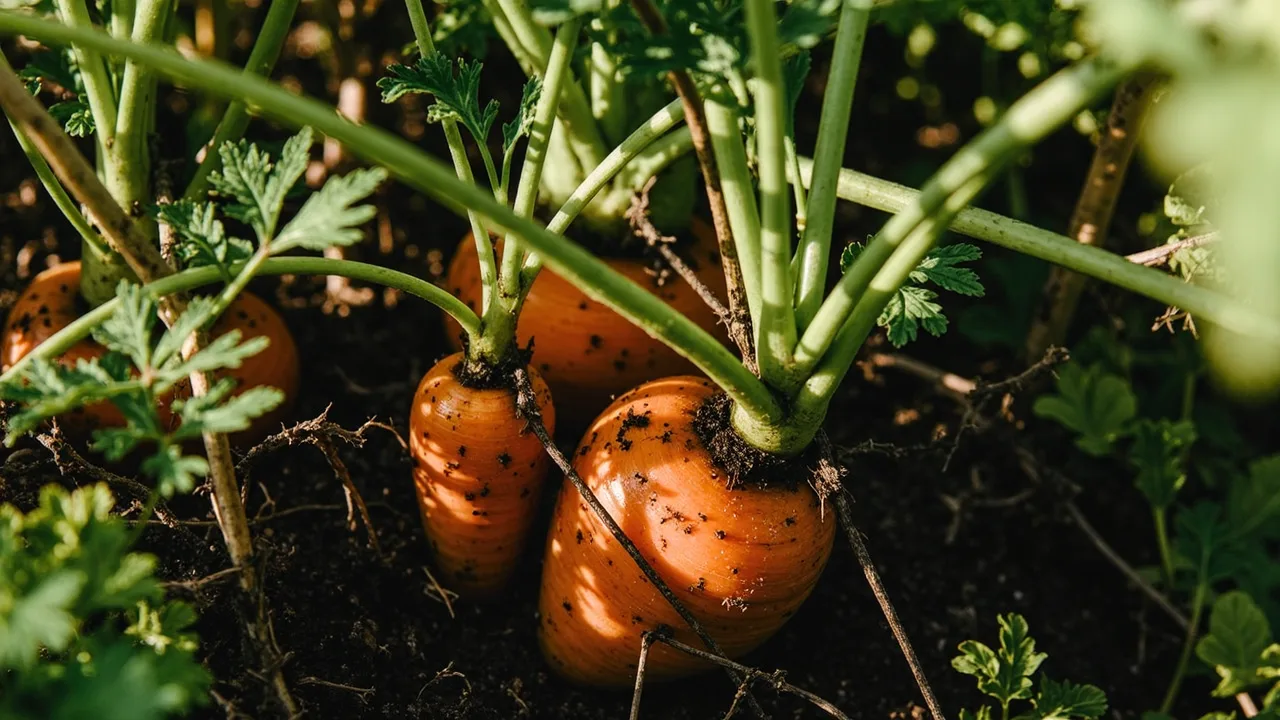
After pollination the umbels curl inwards as the seeds develop, forming the distinctive concave "bird's nest" shape that persists into late summer and autumn. The fruits are small, oval, ribbed mericarps covered in hooked spines, which cling readily to fur and clothing and aid dispersal. The taproot is white to pale cream, slender and woody in mature plants, with a strong carroty aroma when bruised.
Growing Conditions
Wild carrot is highly adaptable and succeeds in a wide range of UK conditions, but performs best in full sun on light, free-draining soils. It is well suited to chalk and limestone grassland, sandy loams and the thin, stony soils typical of brownfield sites and seaside gardens. Heavy, waterlogged ground is unsuitable: the taproot is prone to rotting where drainage is poor, and the plant will rarely persist.
Soil pH is not critical; wild carrot tolerates mildly acidic to strongly alkaline conditions and is indifferent to low fertility. In fact, over-rich soils tend to produce leafy growth at the expense of flowers, so wild carrot is an excellent choice for neglected corners, gravel gardens and the dry, sunny edges of a border where other ornamentals might sulk.
The plant is fully hardy throughout the UK and survives winter temperatures well below those typically experienced even in exposed northern and upland sites. Its main climatic sensitivities are to prolonged wet and to heavy shade, both of which will reduce flowering and shorten the plant's life. In mild, damp gardens it is sometimes short-lived, behaving as an annual or weak biennial rather than completing a full two-year cycle.
In terms of RHS hardiness rating, wild carrot is generally listed in the H5 to H7 range by suppliers, meaning it is hardy in most UK locations including colder inland and northern areas; gardeners in the mildest southern coastal districts should still expect reliable performance. (Some sources may not assign a formal rating to a wild species; where this is the case, growers can reasonably treat it as fully hardy.)
Planting and Care
Sowing is the usual method of introduction, as wild carrot is rarely sold as a potted plant. Seed can be sown directly outdoors in autumn (September to October) or in spring (March to May). Autumn sowings generally produce the strongest plants, mimicking the natural autumn germination of the species. Sow thinly into a weed-free seedbed, either in rows or by broadcasting, and rake in lightly. Mixing the very fine seed with dry sand helps even distribution. Germination takes two to four weeks; seedlings are vulnerable to slug damage in their first weeks and may benefit from a light organic mulch, or from environmentally responsible slug control where pressure is high.
Established plants need very little intervention. Watering is rarely required once the plant is growing away, except during prolonged drought in the first summer after sowing. Wild carrot is deep-rooted and tolerates dry conditions well, drawing moisture from well below the reach of most shallower-rooted weeds.
Feeding is generally unnecessary. On reasonable garden soil the plant will grow and flower without supplementary fertiliser; on very poor soils a single light application of a balanced organic fertiliser in early spring is sufficient. Over-feeding produces lush, floppy growth that is more susceptible to lodging in summer storms.
Pruning is limited to deadheading if self-seeding is not desired, and to cutting back the dead flowering stems in late autumn. Allowing some seed heads to mature is the easiest way to encourage a self-sustaining colony, and the curled "bird's nest" seed heads are themselves an attractive autumn feature. Wear gloves when handling seed heads, as the spiny fruits can irritate skin.
Propagation is by seed. Wild carrot does not transplant well once the taproot has developed, so any division or moving of plants should be done only on very young first-year rosettes. Saved seed remains viable for two to three years if kept cool and dry.
Seasonal care centres on cutting back top growth in late autumn or early winter, after seeds have either been collected or allowed to scatter, and on weeding around young rosettes in their first spring. In a wildflower meadow context, an annual late-summer cut followed by raking off the cuttings will help maintain the open sward that wild carrot prefers.
Common Problems
Wild carrot is generally a healthy and trouble-free plant in the UK. The most frequent issues are cultural rather than pathological. Seedlings are vulnerable to slug and snail grazing, particularly in damp, shaded corners; mature plants are largely ignored by molluscs. Powdery mildew can affect the foliage in hot, dry summers, but rarely to a degree that warrants treatment. Aphids may colonise flower umbels in late summer, but these tend to be kept in check by predatory hoverflies, lacewings and ladybirds, all of which wild carrot actively attracts.
The plant can self-seed enthusiastically in suitable ground, and gardeners with very tidy habits may consider it a slight nuisance. Removing spent flower heads before the spiny seeds ripen is the simplest control. It does not, contrary to occasional worry, hybridise with cultivated garden carrots in any meaningful way in a normal UK garden setting, as the two flower at slightly different times and the cultivated carrot is typically harvested before flowering.
The most serious risk associated with wild carrot is not a horticultural problem but one of misidentification. Hemlock (Conium maculatum), hemlock water-dropwort (Oenanthe crocata) and fools parsley (Aethusa cynapium) are all white-flowered umbellifers found in similar habitats, and all are extremely poisonous. Wild carrot can be distinguished by its carrot-scented root, its finely divided and bristly bracts beneath each umbel, its usually hairy stems, and the single dark floret at the centre of the inflorescence. If there is any doubt, the plant should not be touched or tasted.
Popular Varieties
Wild carrot is most often grown in its wild species form, but a small number of ornamental selections are offered by UK seed suppliers. All are available from specialist wildflower seed merchants such as Emorsgate Seeds, Meadow Mania and Boston Seeds, and as potted plants from a limited number of native plant nurseries.
'Daucus carota' (species) is the standard wild form, with white umbels and the characteristic dark central floret. It is the most vigorous and the best choice for wildlife planting and naturalistic meadow sowings.
Daucus carota 'Black Knight' is a darker-stemmed ornamental selection with deep purple-bronze foliage and stems, contrasting strikingly with the white flowers. It is widely listed by UK seed merchants and is grown as a biennial or short-lived perennial in mixed borders. Note: 'Black Knight' is also the trade name of a different Viola cultivar; buyers should confirm they are purchasing the Daucus carota form.
Daucus carota 'Purple Kisses' is a relatively recent selection, sometimes sold under the marketing name 'Purple Carrot', bred for deeply tinted purple-pink umbels and dark stems. It is offered by several UK suppliers but availability varies year to year.
Daucus carota 'Dara' is a widely available ornamental selection bearing large umbels in shades of white through pink to deep maroon, often sold as a cut-flower and pollinator plant. It is a biennial and is best treated as an annual if reliable first-year flowering is required.
Note on availability: ornamental Daucus carota cultivars are produced by a small number of European seed houses and UK availability fluctuates. Names can shift between suppliers and seasons, and some selections on the market are unstabilised crosses that may not come true from saved seed. If a specific cultivar is essential, order early and confirm the botanical name with the supplier before purchase.
Pests and Diseases
| Problem | Symptoms | Management |
|---|---|---|
| Carrot fly | Roots become tunnelled by white larvae, causing plants to wilt or turn purple. | Sow thinly to avoid thinning and use fine insect mesh barriers at least 60cm high. |
| Slugs and snails | Irregular holes chewed in young leaves and seedlings may be eaten entirely. | Use physical barriers like copper tape or apply iron phosphate pellets around seedlings. |
| Aphids | Clusters of small soft-bodied insects on stems and leaves, often with sticky honeydew. | Encourage natural predators like ladybirds or blast off with a strong jet of water. |
| Wireworm | Roots show irregular tunnels and plants may fail to thrive or die. | Avoid planting in land recently used for potatoes; use brassica trap crops if possible. |
| Carrot leaf blight | Yellowing and browning of foliage, particularly during wet growing conditions. | Ensure good air circulation and avoid overhead watering to keep foliage dry. |
For step-by-step help, read Controlling Aphids Naturally and Dealing with Slugs and Snails. Or browse the full plant problem solver to diagnose an issue by symptom.
Wild Carrot in our guides
- A Guide to Companion Planting
- Composting at Home: A Complete Beginner Guide for UK Gardens
- Containers for Growing Vegetables
- Summer Vegetable Garden: What to Grow and When
- Carrot Fly: How to Protect Your Carrot Crop
- Clubroot: Managing This Brassica Disease in UK Gardens
Recommended Products
GardenWizz earns a commission from qualifying purchases made through affiliate links on this page (including links within the article) — as an Amazon Associate, and from Thompson & Morgan via the Awin network. This does not affect the price you pay. See our disclaimer for details.